Aotearoa and Australia · Volume 02, The Ration, the Milk Bar and the Bush Table
The lamington
Queensland
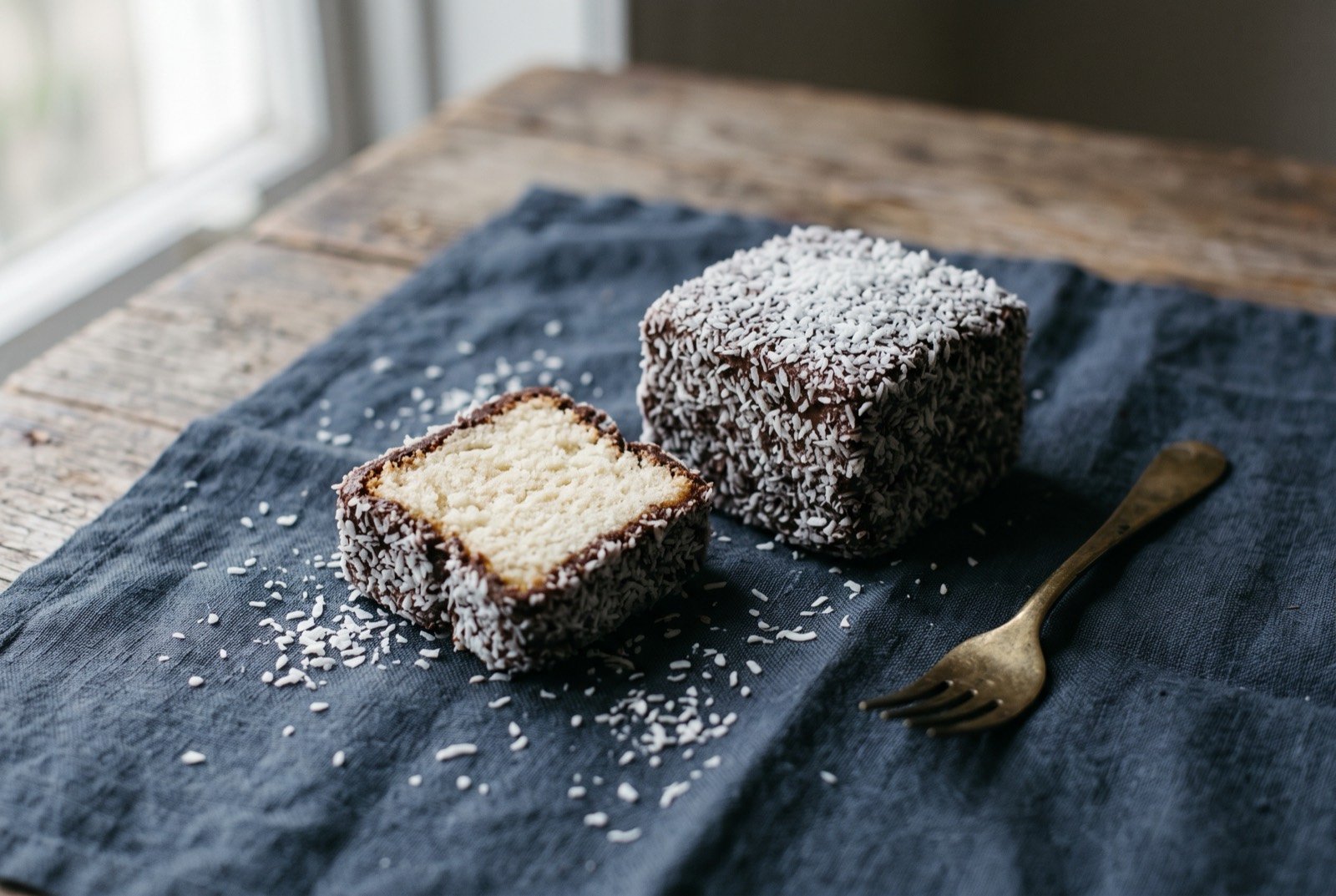
An illustration of the dish, not a photograph of it cooked.
- Time
- Not statedNo source states a time and the atlas has too few comparable dishes to estimate one.
- Reviewed
- Not yet reviewed from inside the tradition
- Cooked
- Not yet cooked and reported
The State Library of Queensland's own investigation treats the lamington's origin as a genuinely open question rather than a solved one, and this chapter follows its lead rather than picking a favourite story. What is verifiable: the cake is named for Charles Cochrane-Baillie, 2nd Baron Lamington, Governor of Queensland from 1896 to 1901; the earliest known printed recipe appears in Queensland Country Life, 17 December 1900, a date that rules out several of the folk-origin stories below simply by predating them. Four competing theories circulate, none proven: a Cloncurry drop-in-gravy accident, sourced only to a 1977 anecdote the library itself calls "almost completely unreliable"; an Ipswich Technical College story directly contradicted by the college opening in 1901, after the 1900 recipe was already in print; a Government House Brisbane story crediting either French chef de cuisine Armand Galland or an unnamed maid, plausible given the scale of the Lamingtons' garden parties but unproven; and a Toowoomba story crediting temporary cook Fanny Young at the Lamingtons' leased Harlaxton House. The famous quote attributing Lord Lamington's own distaste for "poofy woolly biscuits" traces only to a 2007 newspaper article, not to any contemporary source, and this chapter does not repeat it as his genuine words. Similar sponge-chocolate-coconut confections appear across several other food cultures around the same period, the English Neapolitan Roll, the American Cleveland Coconut Bar, Croatian čupavci among them, suggesting the lamington's form may reflect a broader period trend in domestic baking rather than one Queensland invention moment, whichever story is true.
As tradition built it
Reported method, not precisely quantified: no source found in this research gives exact traditional quantities.
Method
- Bake a plain vanilla sponge and cut into squares once fully cooled.
- Dip each square in a thin chocolate icing.
- Roll immediately in desiccated coconut before the icing sets.
What a modern chef changes
No chef-driven precedent for a fine-dining lamington was found in this research; this chapter's own technique work.
Rung 5
Method
- Dip in a proper dark chocolate ganache, chinois-strained smooth, rather than a thin cocoa icing, for real depth and shine.
- Toast the desiccated coconut before rolling, a Big Green Egg or dry pan giving a genuine roasted-coconut flavour a raw coating never offers.
- Fill the sponge's centre with a piped native fruit compote, quandong or Illawarra plum, chinois-strained, giving the finished square a genuine surprise rather than plain sponge throughout.