Aotearoa and Australia · Volume 02, The Ration, the Milk Bar and the Bush Table
Chicken parmigiana, "the parma"
Melbourne (Kew)
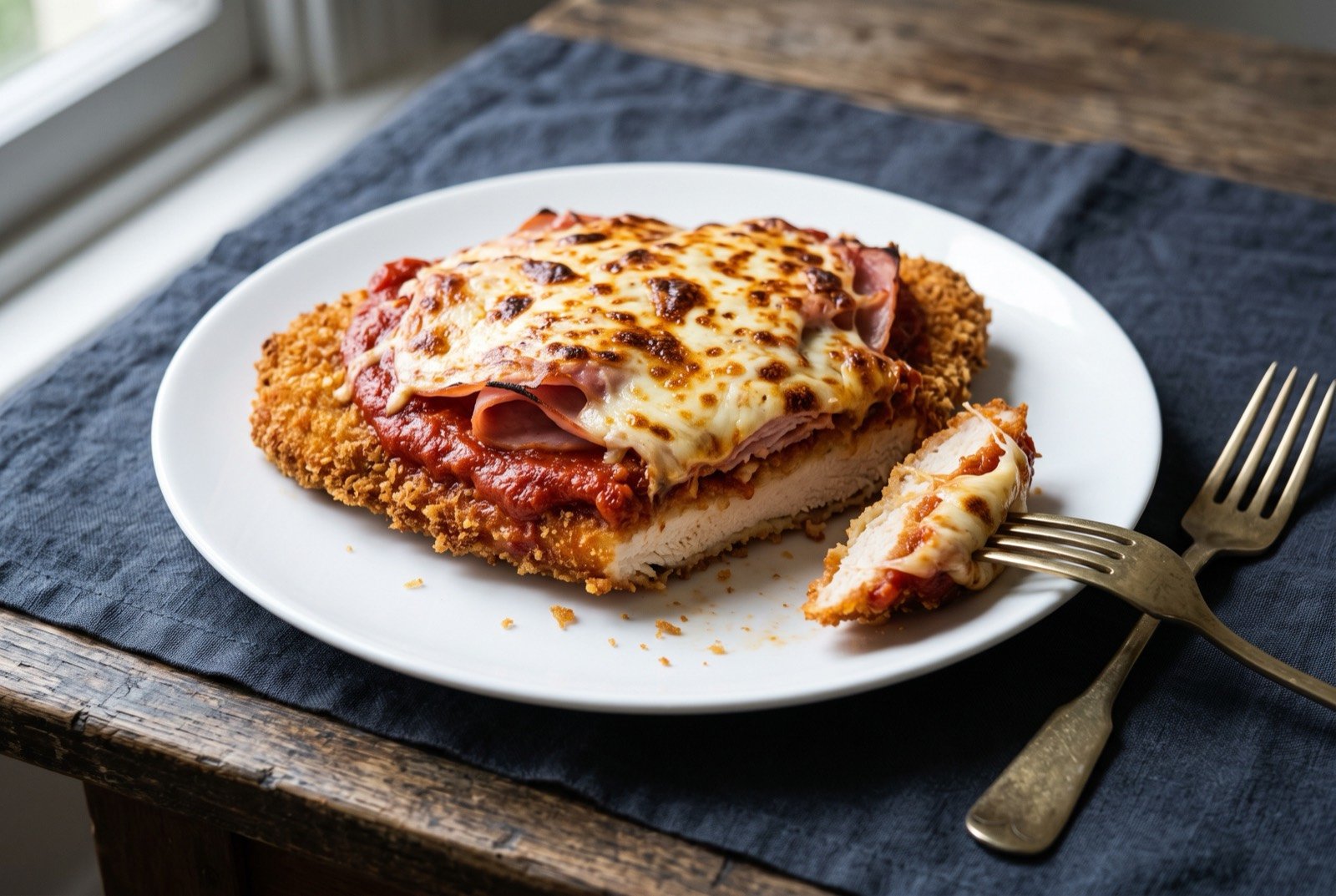
An illustration of the dish, not a photograph of it cooked.
- Time
- Not statedNo source states a time and the atlas has too few comparable dishes to estimate one.
- Reviewed
- Not yet reviewed from inside the tradition
- Cooked
- Not yet cooked and reported
The dish's lineage runs from Italian-American eggplant parmigiana in the 1940s, through a veal parmigiana stage served in Australian Italian restaurants in the 1970s, to chicken parmigiana specifically, dated by food historian Jan O'Connell to a 1980 menu at Melbourne's Pimlico restaurant in Kew, the earliest reliable Australian reference found. A single, unverified search result citing a 1953 Adelaide newspaper reference to a dish called "parmigiana" is flagged here rather than asserted, since it may describe something else entirely and could not be independently corroborated. What is genuinely and distinctively Australian is not the dish's Italian-American ancestry but its pub institutionalisation from the 1980s onward, spreading nationwide through discounted weekly "Parma Night" promotions, and the country's own regional quirk: most states say "parma," Queensland notably favours "parmi," a split this chapter reports as attested colloquial fact without an academic source to date or explain it.
As tradition built it
No exact traditional quantities were sourced in this research; the standard method is well documented.
Method
- Crumb and fry a chicken breast.
- Top with a tomato-based sauce, ham and mozzarella.
- Grill until the cheese browns.
What a modern chef changes
This chapter's own technique work; no fine-dining precedent for the parma was found in this research.
Rung 2
Method
- Sous vide the chicken breast to a precise internal temperature before crumbing, a genuinely common fine-dining move for schnitzel-format dishes generally, applied here rather than attributed to any single named chef.
- Build a proper reduced tomato sugo, cooked down slowly rather than tinned and heated, for real depth under the cheese.
- Use fresh fior di latte rather than processed mozzarella, sliced rather than shredded, for a cleaner melt and a genuinely different texture.