France and the Alps · Volume 12, Choucroute, Bière de Garde and the Double Border
Potjevleesch
The Nord, specifically Dunkerque and the maritime Westhoek
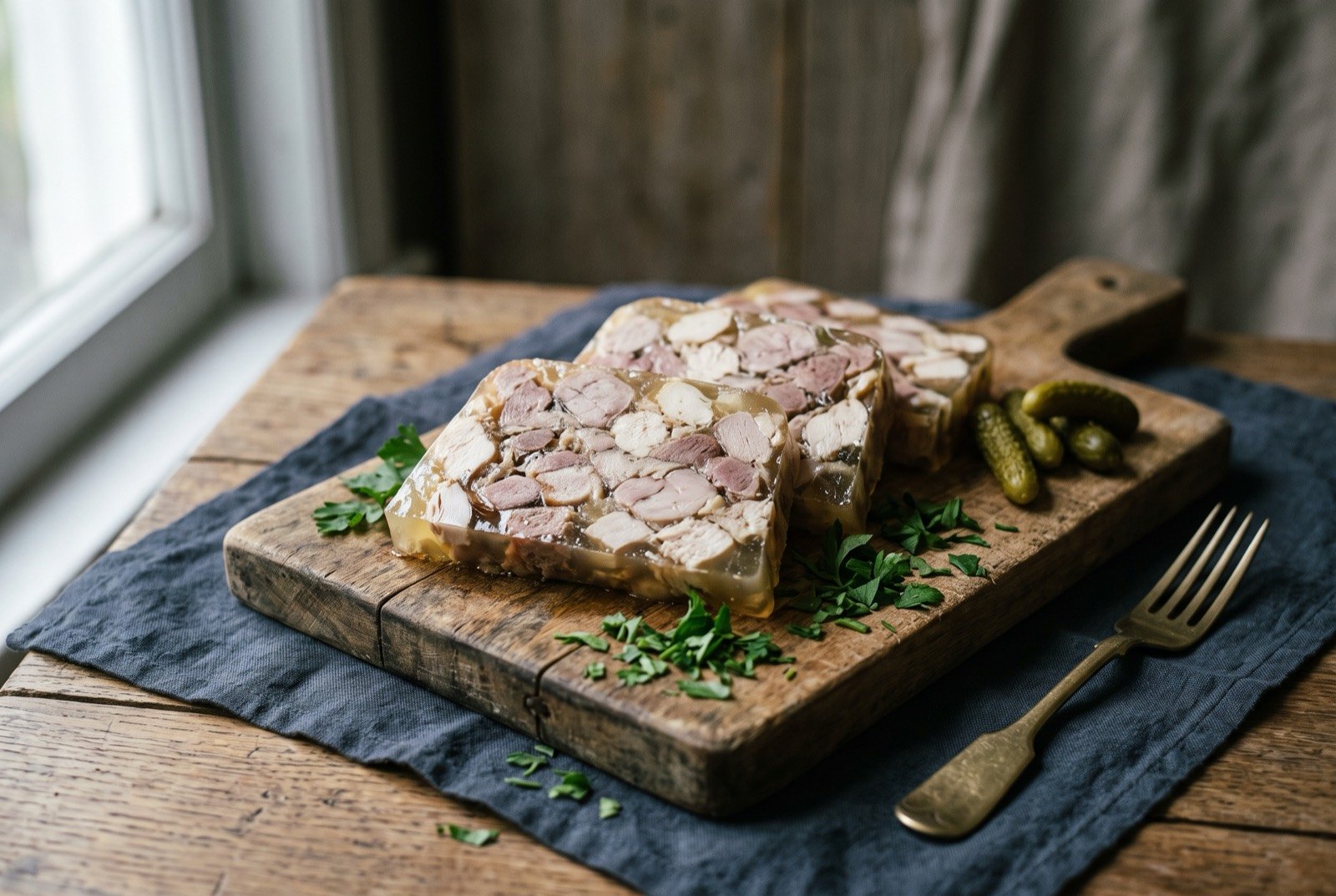
An illustration of the dish, not a photograph of it cooked.
- Time
- 10 hours 30
- Researched
- 10 sources cited
- Reviewed
- Not yet reviewed from inside the tradition
- Cooked
- Not yet cooked and reported
The name means "meat in a little pot", often shortened in speech to "potch'". Its ancestor is identified as ketelvleesch, "cauldron meat", with a version recorded in the Viandier of Taillevent in the mid-fourteenth century, later potted after cooking rather than served straight from the pot. Historically made in winter by Westhoek farmwives from whatever meat was to hand, rabbit, chicken, pork and veal together, set in a lightly vinegared aspic that both cuts the dish's richness and preserves it.
As tradition built it
Serves 8 as a cold starter. About 2.5 hours, then set overnight.
Ingredients
- 400 g each rabbit, chicken, pork, veal, diced
- 2 onions, sliced
- 2 bay leaves, a few thyme sprigs, a few juniper berries bay, thyme, juniper
- 300 ml white wine vinegar
- 500 ml water
- to taste salt and pepper
- as needed, to serve gherkins, to serve
Method
- Layer the rabbit, chicken, pork and veal with the onions, bay, thyme and juniper in a large pot.
- Add the vinegar and water, enough to just cover.
- Season with salt and pepper, bring to a bare simmer, and cook gently, around 2 to 2.5 hours, until all the meats are completely tender.
- Pack the meat into a terrine or individual pots, strain the cooking liquid over to cover.
- Chill until fully set, overnight.
- Serve cold, sliced, with gherkins and fresh frites.
What a modern chef changes
The aspic clarified, and the meats cooked separately for precision rather than compromise.
Rung 2, applied to a cold rather than a sealed-hot dish.
Method
- Cook each of the four meats separately to its own correct doneness, rather than one shared simmer that overcooks the more delicate rabbit and chicken while the pork and veal are still tightening, then combine only at the potting stage.
- Clarify the cooking liquid with an egg-white raft before setting it as aspic, for a clear, bright jelly rather than a cloudy one, a genuine but honest addition rather than a traditional step.
- Sharpen the vinegar balance to taste before setting, since the dish's whole point is a bright, cutting acidity against rich, cold meat; do not let it read as merely savoury.