Aotearoa and Australia · Volume 01, Fire, the Stone Trap and the Reef Garden · Cooked by cue
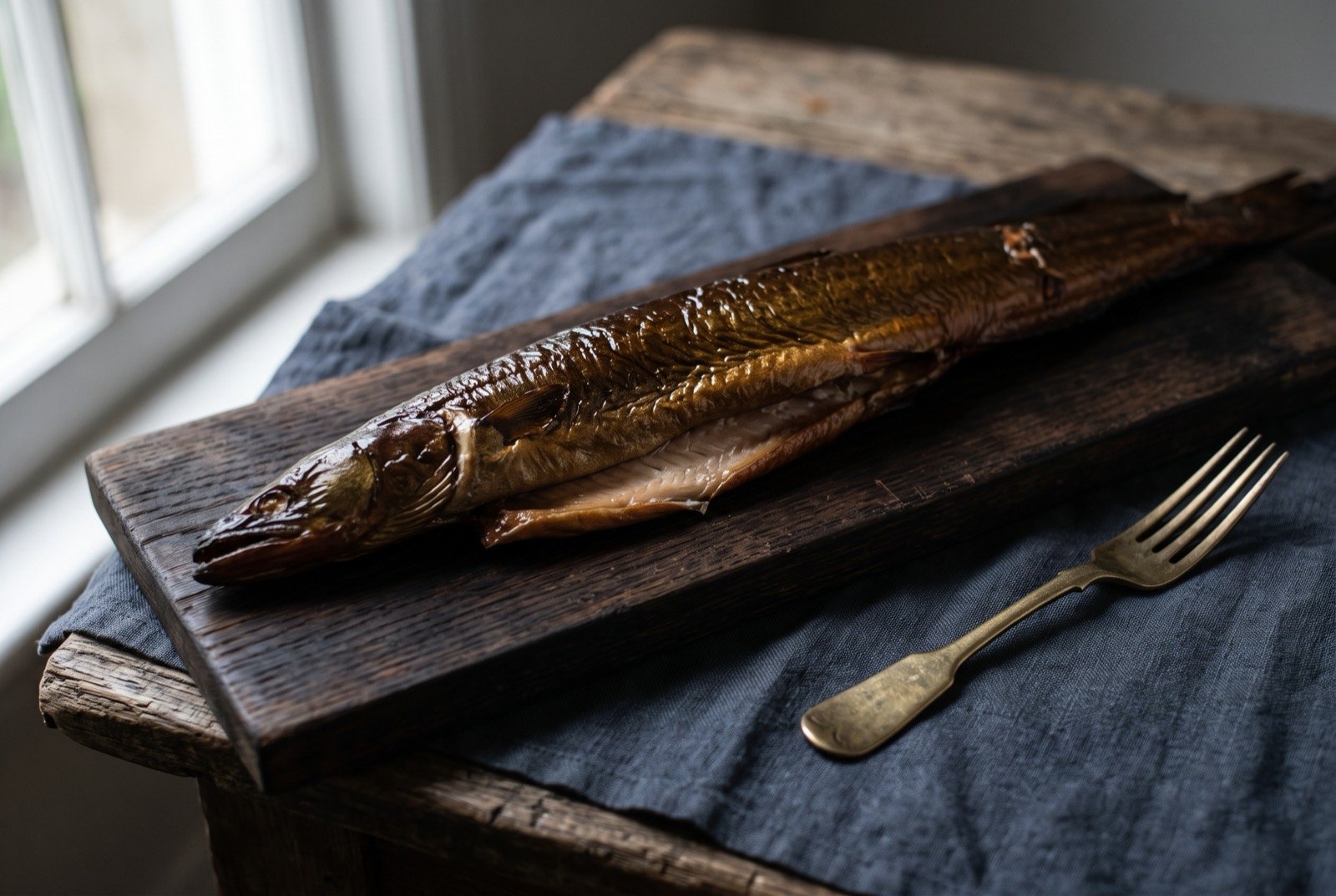
Kooyang, Budj Bim smoked eel
Gunditjmara Country, western Victoria
Illustration
- Researched
- 22 sources cited
Kooyang (Anguilla australis) taken from the Budj Bim weir and channel system in engineered eel baskets of river reed and spear grass, sized to regulate catch, then smoked. No source consulted for this chapter gives a precise traditional smoking time or temperature, and this chapter reports that honestly rather than inventing one.
As tradition built it
No source consulted gives a precise smoking time or temperature; smoked over an open fire for several hours until cured through.
Ingredients
No written recipe exists for kooyang: it is smoked on country in the hollow of a living tree, by the look and feel of the eel, and the chapter gives the method as the Gunditjmara tell it.
- 1 whole short-finned eel (kooyang), gutted
- an open fire, ideally over native hardwood
Method
- Take the eel from a stone weir or trap.
- Smoke it over an open fire until cured through.
What a modern chef changes
The Tae Rak tasting plate, staged with a controlled smoker
Rung 1
Method
- Choose a single smoking wood deliberately rather than whatever is to hand, and run a Big Green Egg at a controlled, low, stable smoking temperature over several hours. Rung 1.
- Season with native seasonings in the spirit of the Tae Rak plate, wattleseed or lemon myrtle worked into the eel's skin before smoking rather than added afterward.
- Rest the smoked eel fully before serving, letting the smoke settle through the flesh rather than serving straight from the smoker.
Notes
After the Gunditj Mirring Traditional Owners Aboriginal Corporation's own Tae Rak Aquaculture Centre and Café, opened on the Budj Bim site itself since July 2022, which serves this eel today as a "Kooyang Tasting Plate" with native seasonings, a real, current, Gunditjmara-run food experience, not an invented restaurant reinterpretation.