Aotearoa and Australia · Volume 01, Fire, the Stone Trap and the Reef Garden · Cooked by cue
Cycad bread or paste
Coastal New South Wales and Queensland, and, using a different method, the southwest
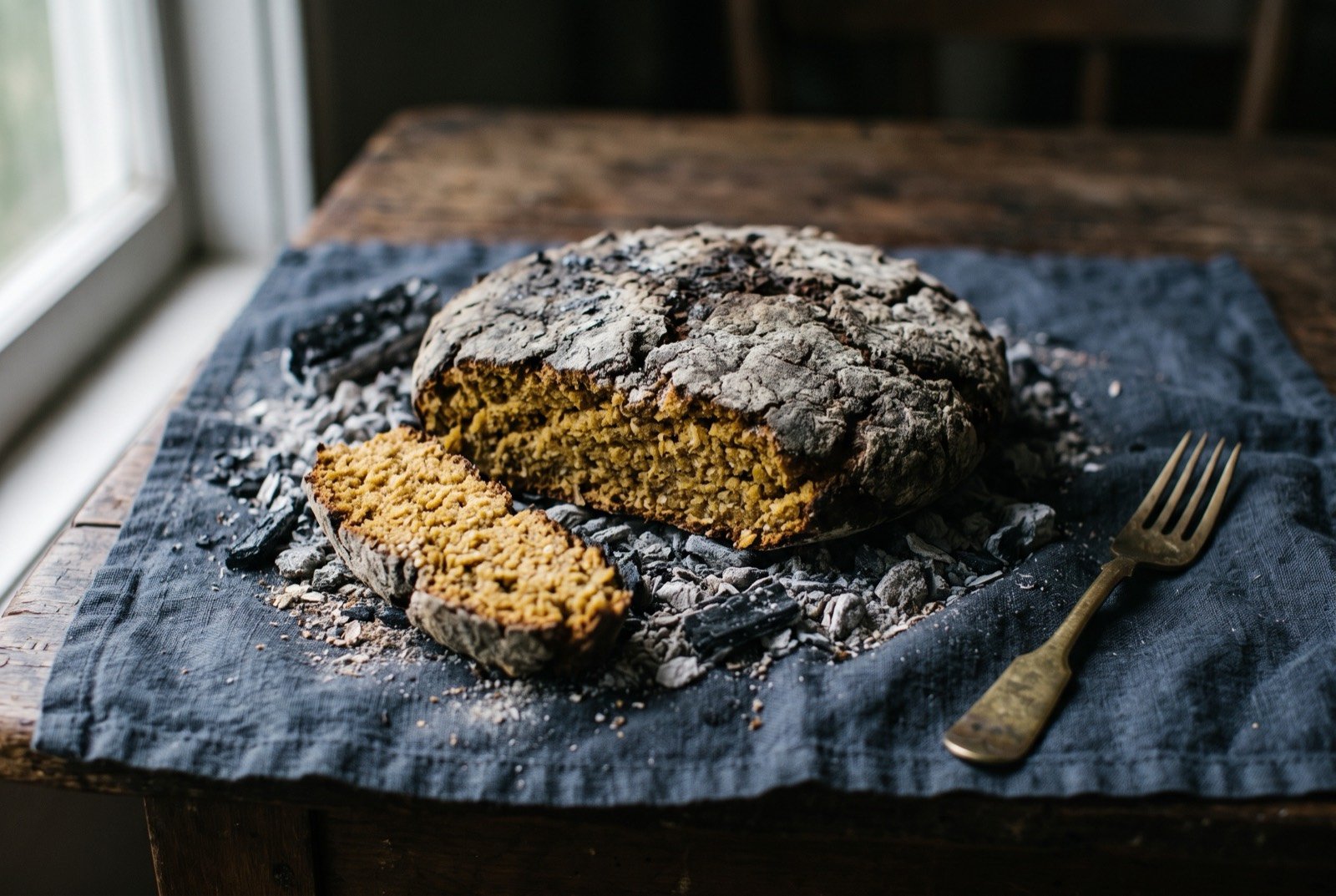
An illustration of the dish, not a photograph of it cooked.
- Researched
- 22 sources cited
- Reviewed
- Not yet reviewed from inside the tradition
- Cooked
- Not yet cooked and reported
Cycad seed, ground and processed by ageing, prolonged water-leaching or, in the southwest, pit fermentation, to remove the toxin cycasin before being ground into bread or paste and baked in ash. This chapter has already stated the real danger plainly above: raw or under-processed seed causes severe poisoning, and the specific, expert knowledge that makes it safe is not something this chapter will attempt to replace with a home recipe.
As tradition built it
Reported in outline only, deliberately; no quantities or timings given.
Ingredients
No written recipe exists for cycad bread: the leaching that makes it safe runs by days and by taste, not by clock or weight, and the chapter gives the method as it is told on country.
- cycad seed, processed only by someone holding the expert knowledge to do so safely
Method
- As documented in outline only, deliberately: seed leached in running water over multiple days, or aged, or pit-fermented, by someone holding the specific knowledge to do so safely, then ground and baked in ash.
- This chapter will not give quantities or timings for this process, because doing so responsibly would require expertise this research does not hold, and because publishing an approximate version of a genuinely dangerous technique is worse than publishing none.
What a modern chef changes
The leaching principle, demonstrated on a genuinely safe substitute
Rung 5
Ingredients
- acorns, or another genuinely safe, UK-available bitter or tannic seed
Method
- Take a genuinely safe, UK-available bitter or tannic seed, such as acorn, which needs the same principle of leaching to remove bitter, water-soluble tannins before it is usable.
- Soak, changing the water regularly, over several days, reproducing the mechanism, not the specific danger, of cycad's own prolonged leach.
- Dry the leached flour in a dehydrator at a low, controlled temperature, for a more even, stable result than open-air drying gives, then grind and bake as damper is baked.
Notes
What this chapter offers instead: the leaching principle, demonstrated honestly on a safe substitute rather than on cycad itself.