Aotearoa and Australia · Volume 01, Fire, the Stone Trap and the Reef Garden · Cooked by cue
Maku, witchetty grub
Central Australia
Illustration
- Researched
- 22 sources cited
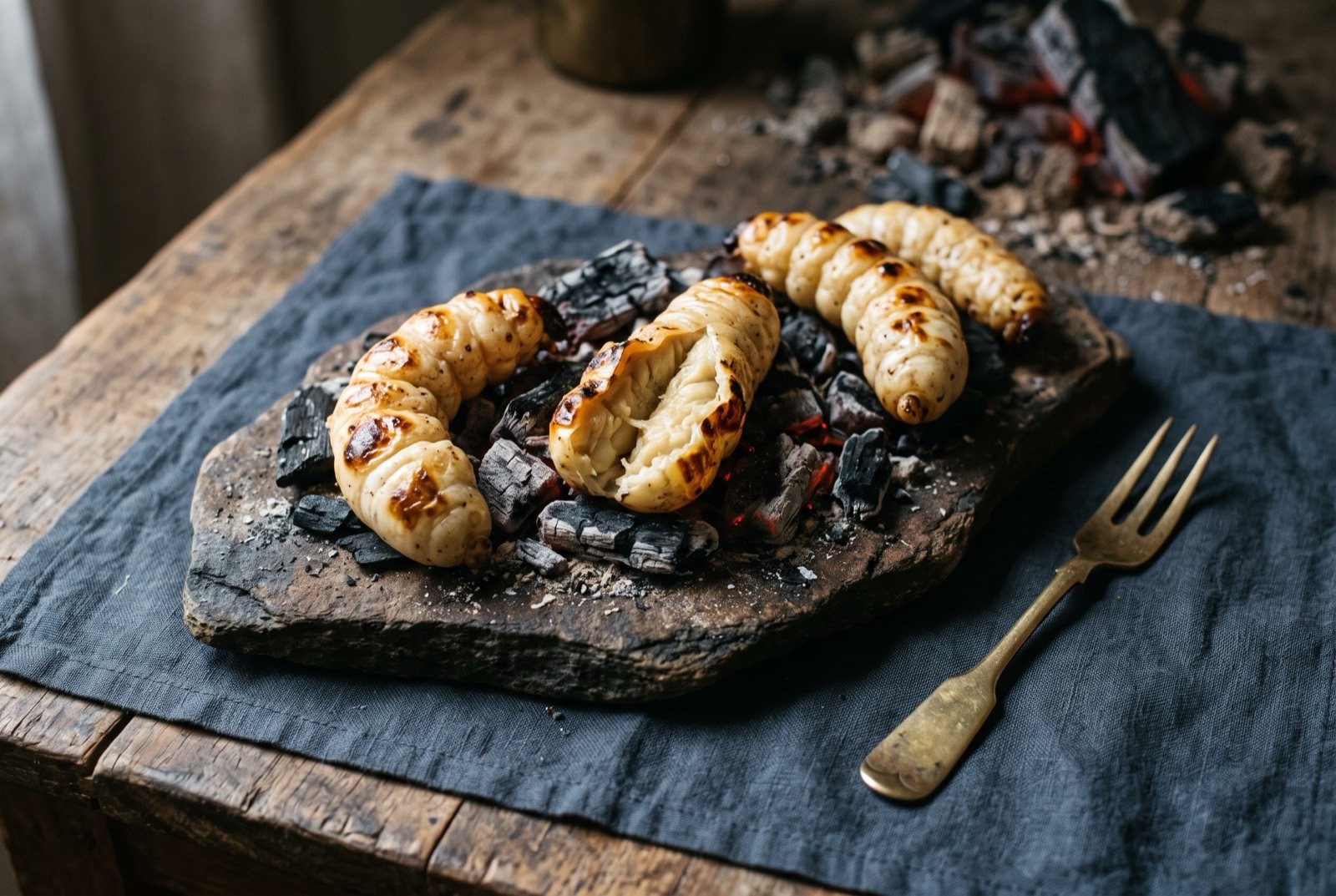
White, wood-eating larvae of the cossid moth, found in the roots of the witchetty bush and river red gum, roasted on coals for under a minute, the head discarded, the flesh described as tasting of egg yolk, popcorn and almonds. Traditionally gathered by women and children. Australian Museum
As tradition built it
Under a minute over coals, or eaten raw.
Ingredients
No written recipe exists for maku: the grubs are eaten raw or rolled in warm ash for a moment, by cue, and the chapter says so.
- maku (witchetty grubs), gathered from the roots of the witchetty bush or river red gum
Method
- Roast the maku (witchetty grubs) briefly, under a minute, directly on hot coals.
- Discard the head.
- Eat immediately, or eat raw.
What a modern chef changes
Matching the tradition's own precision with instruments
Rung 3
Method
- Use a probe thermometer to establish and hold a precise, searingly hot direct temperature on a Big Green Egg, and time the roast to the second rather than by eye, reproducing exactly the traditional method's brief, exact heat.
- Serve immediately, as tradition already does, resisting any temptation to add a sauce or garnish the source material does not call for.
Notes
This chapter states plainly that no professional kitchen anywhere was found reinterpreting this dish, and that the traditional method is already close to precise perfection: the elevation offered here is about matching that precision with instruments, not improving on the technique itself.