Melanesia, Micronesia and Polynesia · Volume 11, The Imu, the Camp and the Plate Lunch
Twice-Cooked Kalbi Short Ribs
Hawaiian Regional Cuisine, Alan Wong's published method
Illustration
- Time
- Hands on 4 hours · Waiting 8 hours
- Researched
- Researched from 66 sources in the brief
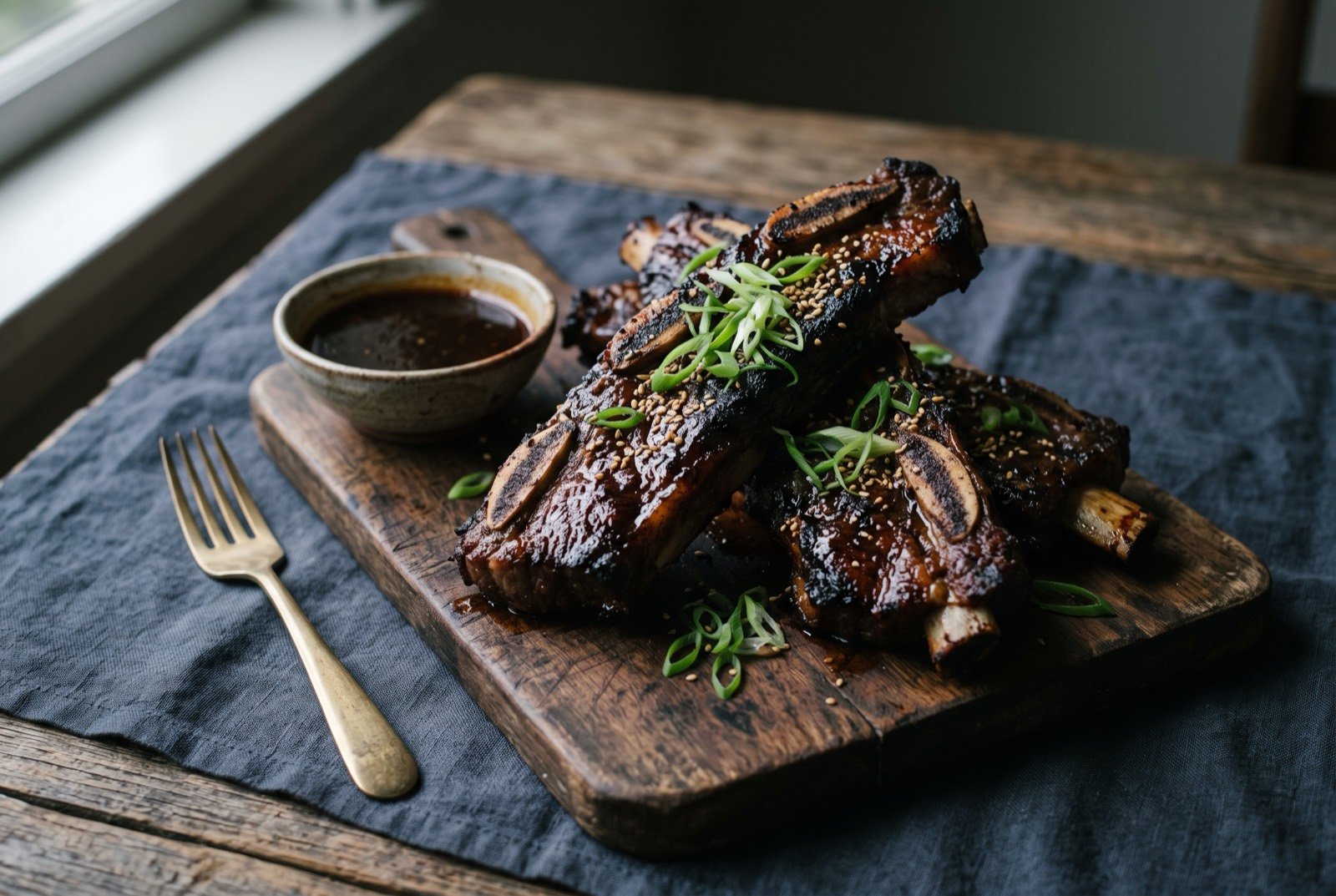
Short ribs simmered to full tenderness, chilled overnight in their own braising liquid, then finished hard over live coals for the char a braise alone can never give. This dish sits deliberately outside strict chronology, Korean labourers arrived from 1903 and kalbi entered the plate lunch's rotating protein list from within the plantation era, but this specific twice-cooked technique is Alan Wong's own, one of the founding twelve chefs of 1991, and belongs here as the clearest worked example of what Hawaiian Regional Cuisine actually did to plantation-era ingredients.
As tradition built it
Serves 4 to 6. About 4 hours plus overnight chilling.
Ingredients
- 1.5 kg bone-in short ribs, flanken-cut
- to cover water, to cover
- 150 ml soy sauce
- 100 ml mirin
- 80 g brown sugar
- a thumb a thumb of ginger, sliced
- 4 cloves garlic, crushed
- 2 spring onions, roughly chopped
Method
- Cover the short ribs with water in a large pot and bring to a simmer, skimming carefully, for 1 hour.
- Add the soy sauce, mirin, sugar, ginger, garlic and spring onion.
- Simmer, uncovered, a further 2 to 3 hours, until the meat is fork-tender.
- Chill the ribs in their own braising liquid overnight, this rest is not optional, it is what lets the meat hold its shape under high heat.
- The next day, lift the ribs out, reduce the reserved liquid to a thick glaze, brush over the ribs, and grill hard over coals until well charred, basting once more partway through.
What a modern chef changes
The braise moved to a controlled bath and the finish treated as an entirely separate, deliberately violent cooking event.
Rung 5
Method
- Sous vide the ribs at 85°C for 10 to 12 hours in place of the stovetop simmer, sealed with the aromatics, for a more evenly, deeply broken-down texture with no risk of catching on the base of an unattended pot.
- Chill under weight, not just in the fridge, pressing the ribs flat under a tray during the overnight rest, for a denser, more uniform slice that holds together better on the grill.
- Reduce a portion of the braising liquid separately into a genuine lacquer, brushed on in thin layers between short, hot flare-ups rather than one thick coat, building char in stages the way a proper Korean galbi grill does, rather than risking one thick glaze simply burning.