Melanesia, Micronesia and Polynesia · Volume 11, The Imu, the Camp and the Plate Lunch
Laulau
Native Hawaiian
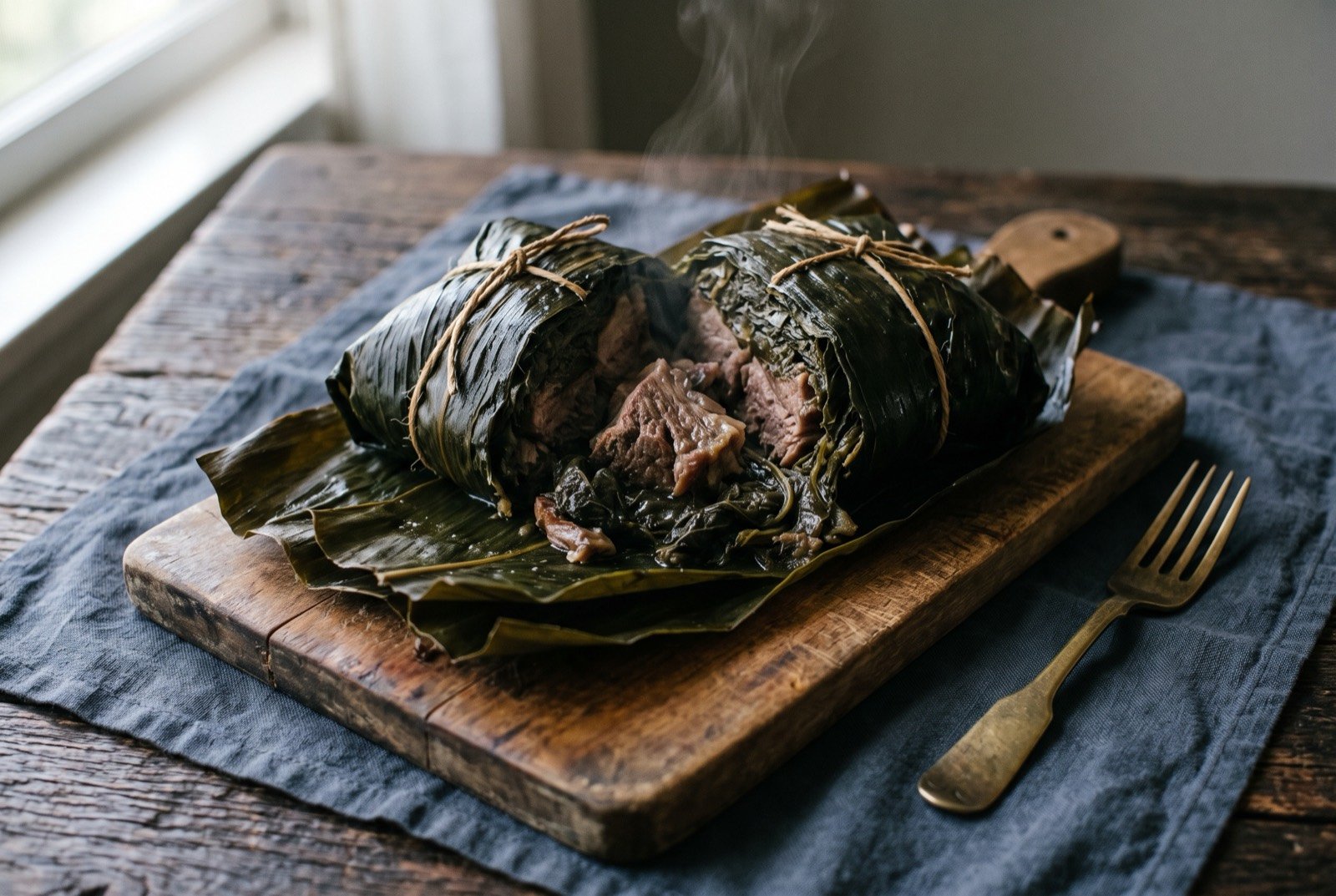
An illustration of the dish, not a photograph of it cooked.
- Time
- 3 hours
- Reviewed
- Not yet reviewed from inside the tradition
- Cooked
- Not yet cooked and reported
Young taro leaf (lūʻau) wrapped around the filling, then tied into a firmer bundle with tougher ti leaf, laid on the imu's banana-leaf steam layer and cooked for hours alongside the pig. The name is literally "leaf leaf," describing the double wrap. Raw taro leaf carries needle-shaped calcium oxalate crystals that sting badly if undercooked; this chapter applies the same safety chemistry the Fiji volume documented for palusami, sustained heat, not a quick blanch, is what actually blunts the crystals, not merely folk wisdom.
As tradition built it
Serves 4. About 3 hours if steamed at home rather than imu-cooked.
Ingredients
- 500 g pork shoulder, cut into large chunks (or salted butterfish, or chicken thigh)
- 20 to 24 fresh taro leaves, stems trimmed
- enough to wrap each bundle ti leaves for the outer wrap (banana leaf is the honest UK substitute, see Sourcing in Britain)
- to taste alaea salt
Method
- Season the pork generously with salt.
- Layer 4 to 6 taro leaves in a cross pattern, place a portion of pork in the centre, and fold the leaves tightly over it.
- Wrap again in ti leaf (or banana leaf), tying securely.
- Steam for at least 2 to 3 hours, well beyond the point the leaves look cooked, since the safety work against the taro leaf's oxalate crystals happens deep in the tissue, not on the surface.
- Unwrap at the table; the taro leaf itself is eaten alongside the meat.
What a modern chef changes
A deliberate double cook grounded in the same peer-reviewed taro-leaf chemistry the Fiji volume applied to palusami, not a texture preference.
Rung 2
Method
- Boil the taro leaves alone for a full 60 minutes before filling and wrapping, following the same protocol confirmed effective for palusami's taro leaf, particularly with shop-bought leaf of uncertain freshness.
- Then wrap around the pork and steam a second time, 45 minutes to 1 hour, so the parcel still gets its proper cook and flavour development on top of the safety work already done.
- If fresh taro leaf genuinely cannot be found, state the substitution honestly: chard or spinach can stand in for shape and appearance, but neither carries taro leaf's mineral note or its oxalate content, a compromise, not an equivalent.