Melanesia, Micronesia and Polynesia · Volume 06, The Root, the Reef and the Earth Oven
Masimasi
Solomon Islands
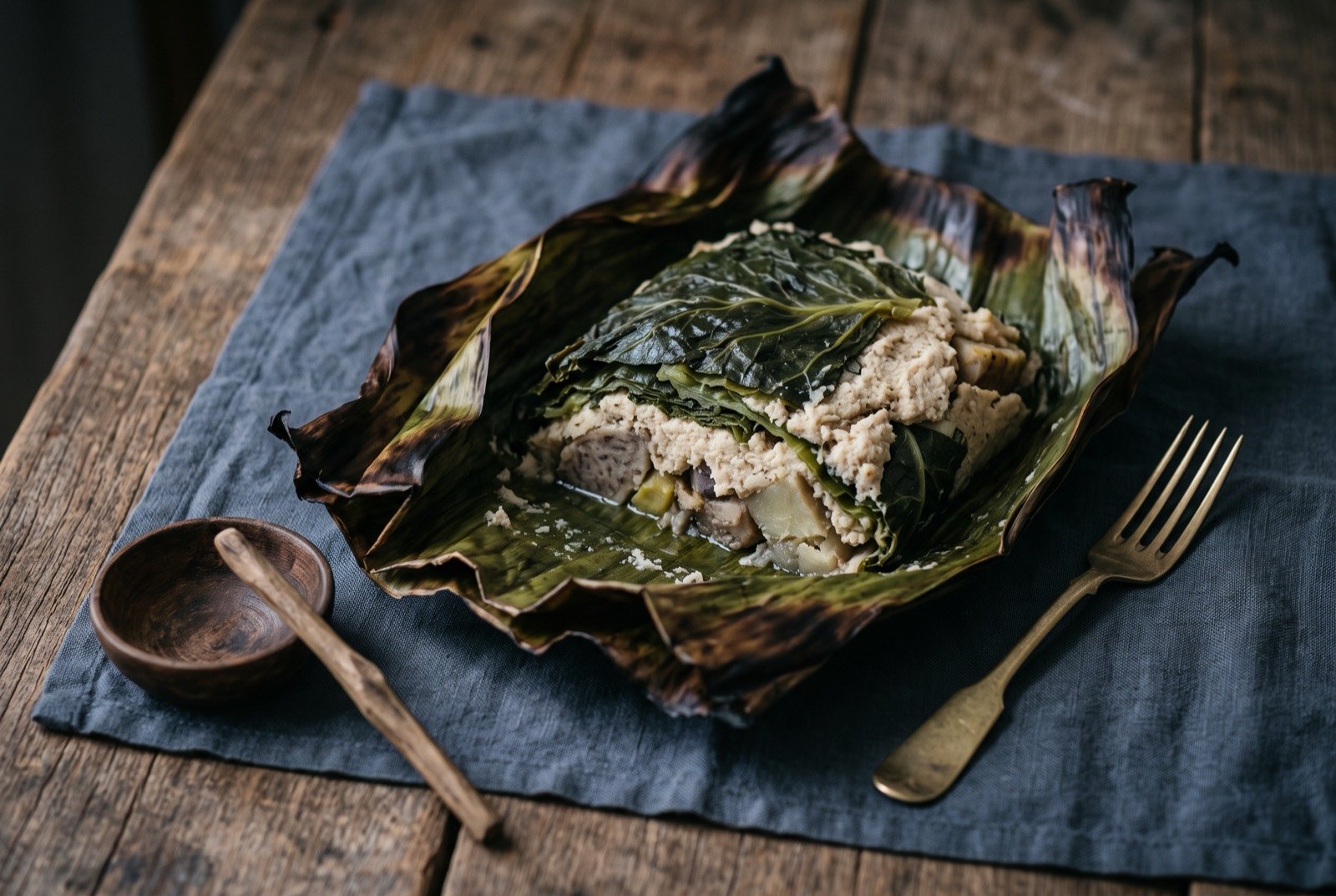
An illustration of the dish, not a photograph of it cooked.
- Time
- About 35 minutes to 1 hour 15No source states a time. Comparable dishes in this atlas take this long.
- Researched
- 16 sources cited
- Reviewed
- Not yet reviewed from inside the tradition
- Cooked
- Not yet cooked and reported
This chapter confirms and corrects the planning checklist here: masimasi is a documented Solomon Islands dish, built on ngali nut, slippery cabbage and root vegetable, not a Vanuatu dish as the checklist's grouping had implied; no Vanuatu source for a dish by this name was found anywhere in this research. Roasted ngali nut is crushed in a wooden bowl with a stick, mixed with salted water until fluffy, then layered on banana leaves with slippery cabbage, or edible taro leaf, and, in one variant, sliced sweet potato or taro, wrapped and baked in the motu for about two hours depending on heat. A version without the sweet potato is called chenicheni. [Solomon Islands Ministry of Health and Ministry of Agriculture and Livestock, with the World Health Organization, Kastom Gaden Association and other named local organisations, Local Vegetable Food "Kaikai" Recipes in Solomon Islands, 2009, contributors Annie Lute, Nancy Malu, Mary Timothy, Kastom Gaden Association, Honiara, and Olga Tutua Koito, Zai Na Tina Organic Research and Demonstration Farm]
As tradition built it
Bake in a stone oven or motu about 2 hours, timing dependent on the heat.
Ingredients
- 2 cups, mashed ngali nuts, roasted
- to taste salted water
- 3 bundles, stems removed slippery cabbage, or edible taro leaf
- 4 large sweet potatoes sweet potato or taro, sliced, if using
- 4 banana leaves, for layering and wrapping
Method
- Roast ngali nuts, then crush in a wooden bowl with a stick until broken down.
- Mix the crushed nut with salted water until it turns fluffy and aerated.
- Layer slippery cabbage, or edible taro leaf, onto banana leaves, with sliced sweet potato or taro if using.
- Spread the fluffed ngali nut mixture over the layered vegetables.
- Wrap in banana leaf and bake in the motu for around two hours, timing dependent on the oven's heat.
Notes
A version without the sweet potato is called chenicheni.
What a modern chef changes
Ngali nut fat emulsified rather than hand-fluffed, and the motu reproduced on a Big Green Egg
Rungs 1 and 5
Method
- Emulsify candlenut, this dish's honest UK substitute for ngali nut, with warmed coconut oil in a high power blender rather than crushing by hand with salted water, producing a genuinely smooth, fully saturating paste that soaks the layered vegetables more evenly than the traditional hand method achieves. Rung 5.
- Bake in a Big Green Egg run indirect and pre-stabilised, reproducing the motu's even, stored heat over the same roughly two hour window. Rung 1.
- Dry a portion of the finished nut paste in a dehydrator for a firmer, more concentrated garnish crumb, offering textural contrast against the soft, saturated main body of the dish.