Mainland Southeast Asia · Volume 41, The Coconut and the Court
Lok lak
Cambodia
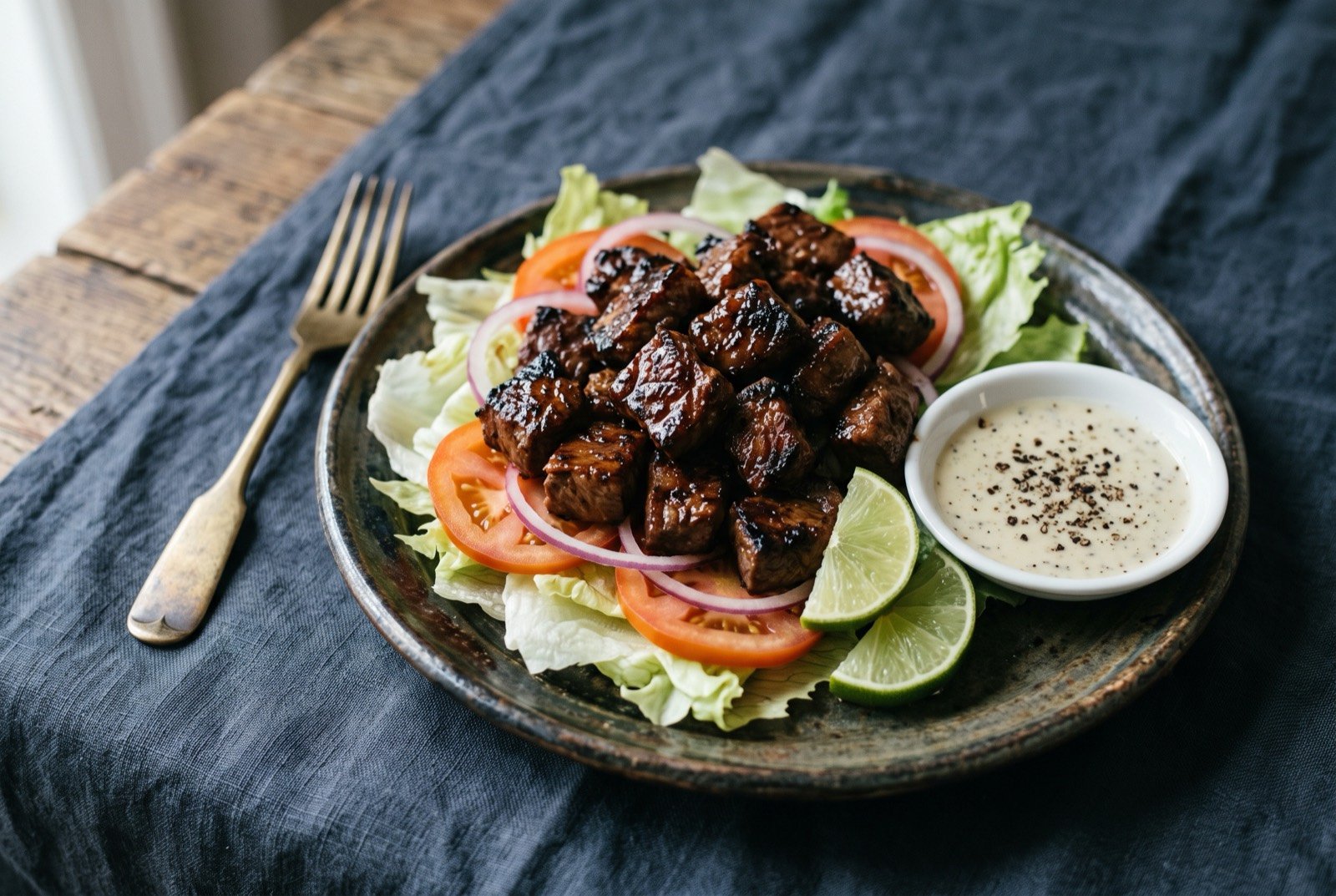
An illustration of the dish, not a photograph of it cooked.
- Time
- 30 minutes
- Researched
- 8 sources cited
- Reviewed
- Not yet reviewed from inside the tradition
- Cooked
- Not yet cooked and reported
Khmer Wikipedia's own article states plainly that this is a Vietnamese dish inspired by French cuisine, entering Khmer cooking either during the period of Vietnamese administration of Cambodia, 1834 to 1867, or the subsequent French Indochina period, and notes that before French colonialism cattle in Cambodia were kept solely for manual labour, not as a table meat, a detail that explains why a beef forward dish reads as a later import layer rather than an old indigenous one. Despite this, the same source states the dish is sometimes regarded as a national dish within Cambodia today. This chapter does not adjudicate that; it reports it exactly as the source itself does, an adopted, thoroughly domesticated colonial era dish, genuinely Cambodian in practice regardless of where it began, in the way this volume's own reading of French contact era dishes would predict.
As tradition built it
Serves 4. 20 minutes marinating, then 10 minutes to cook.
Ingredients
- 680g beef, cut into 2cm cubes
- 2 tbsp soy sauce
- 3 tbsp oyster sauce
- to taste sugar, fish sauce, minced garlic, black pepper
- as available lettuce, sliced tomato, onion, to serve
- to taste Kampot black pepper, freshly ground, and lime juice, for the dip
Method
- Combine the beef with soy sauce, oyster sauce, sugar, fish sauce, garlic and black pepper. Marinate at least 20 minutes, up to an hour.
- Sear hot and fast in a very hot pan, until glossy and just cooked, finishing in the reduced marinade.
- Serve over lettuce, sliced tomato and onion.
- For the dip, mix freshly ground Kampot pepper with fresh lime juice and a little salt or fish sauce. This dip is the dish's real signature.
What a modern chef changes
The dip given the same attention as the meat.
Rung 1
Method
- Grind the Kampot pepper fresh, in the dedicated spice grinder, immediately before serving, never pre-ground, for the fruity, bright heat that is the actual point of using Kampot pepper rather than any other black pepper.
- Sear in two batches rather than crowding the pan, so the beef sears rather than steaming in its own marinade, a common and easily avoidable failure in this dish.
- Rest the beef briefly off the heat before finishing in the reduced marinade, so the glaze coats rather than boils the meat.