The Horn · Volume 11, The Indian Ocean Kitchen
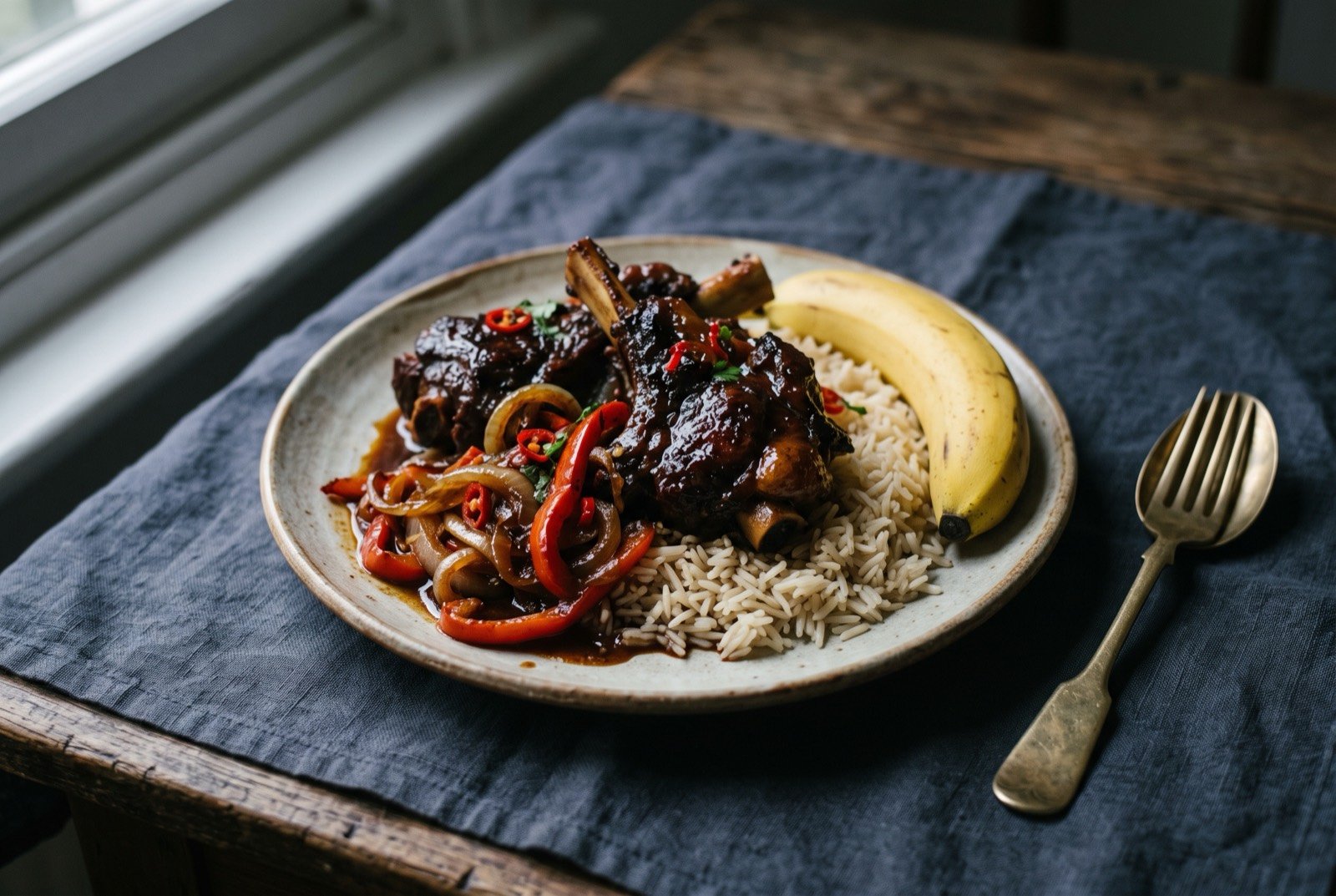
Hilib ari
Somalia
Illustration
- Time
- 3 hours
- Researched
- Researched from 103 sources in the brief
- Reviewed
- Awaiting a reader from inside the tradition
- Cooked
- Awaiting a cook report
The characteristic Somali treatment of goat is not a single long braise. It is a stock first, then a second aggressive cook of the meat in the reduced stock. That structure is the traditional part, and it is why the meat comes to the table dark and coated rather than swimming. The second stage as it is actually cooked in London and Toronto in 2026 involves mustard, soy sauce, oyster sauce and brown sugar. That is a contemporary diaspora register and this chapter is not going to pretend otherwise. It is the real state of the dish in the cities where most people now eat it.
As tradition built it
Serves 4. About 3 hours.
Ingredients
- 1 kg bone-in goat, shoulder, neck or shank
- 1.4 L water
- as listed 1 onion, 1 bell pepper, 5 garlic cloves
- 1 tbsp each salt, black pepper, xawaash
- as listed 2 bay leaves, 5 cardamom pods, 1 cinnamon stick, 5 peppercorns
- as listed 1 onion and 2 peppers, sliced
- 1 tbsp ginger and garlic paste
- 3 tbsp xawaash
- 1 tbsp chilli flakes
- 240 ml of the reserved stock
Method
- Sweat the bay leaves and whole spices in oil until fragrant. Add the bone-in goat, season with the salt, black pepper and xawaash, and cover with the water.
- Boil, then drop to a bare simmer for 1.5 to 2 hours, skimming as it goes.
- Strain and reserve the stock. Keep the meat.
- Sweat the onion and 2 peppers, add the ginger and garlic paste, the drained meat, the xawaash and the chilli flakes.
- Add all of the reserved stock and cook it down hard until the meat is coated and glossy. Pressure cooker at 25 to 30 minutes if you want it fast.
- Serve over rice with banana and basbaas.
Notes
The two-stage structure, after a Somali cook's demonstrated method.
Stage one, the stock
Stage two, the finish
What a modern chef changes
Temperature-controlled collagen, the stock used twice, and the sear last
Rungs 5 and 4
Method
- Hold stage one at 71 to 82°C and never let it roll. Rung 5. Collagen converts as a function of time as much as temperature, and a rolling boil contracts and wrings the fibre at the same moment it is trying to soften. The camel study is unambiguous and goat behaves the same way.
- Do not throw away the rest of the stock. You use about a cup in stage two; defat and reduce the remainder and cook the rice in it. Rung 4. One animal, one liquid, two dishes, and the plate becomes a single argument instead of two things sharing a plate.
- Buy bone-in and fresh. Frozen and thawed goat leaks on cooking and drives cooks to add liquid and time, which dilutes rather than concentrates, and diners then blame the animal.
- Sear at the very end, briefly, for surface only: ninety seconds in a smoking pan after the braise, not before it, because dry high heat on lean, unsaturated goat fat is what produces the cardboard note people wrongly attribute to goat itself. And if you keep the soy and oyster sauce, keep them knowingly: a properly reduced, gelatin-rich stock supplies the same glutamate and gloss without tasting of anything but the animal.