The Horn · Volume 11, The Indian Ocean Kitchen
Muufo
The Somali grain belt, between the Shabelle and the Jubba
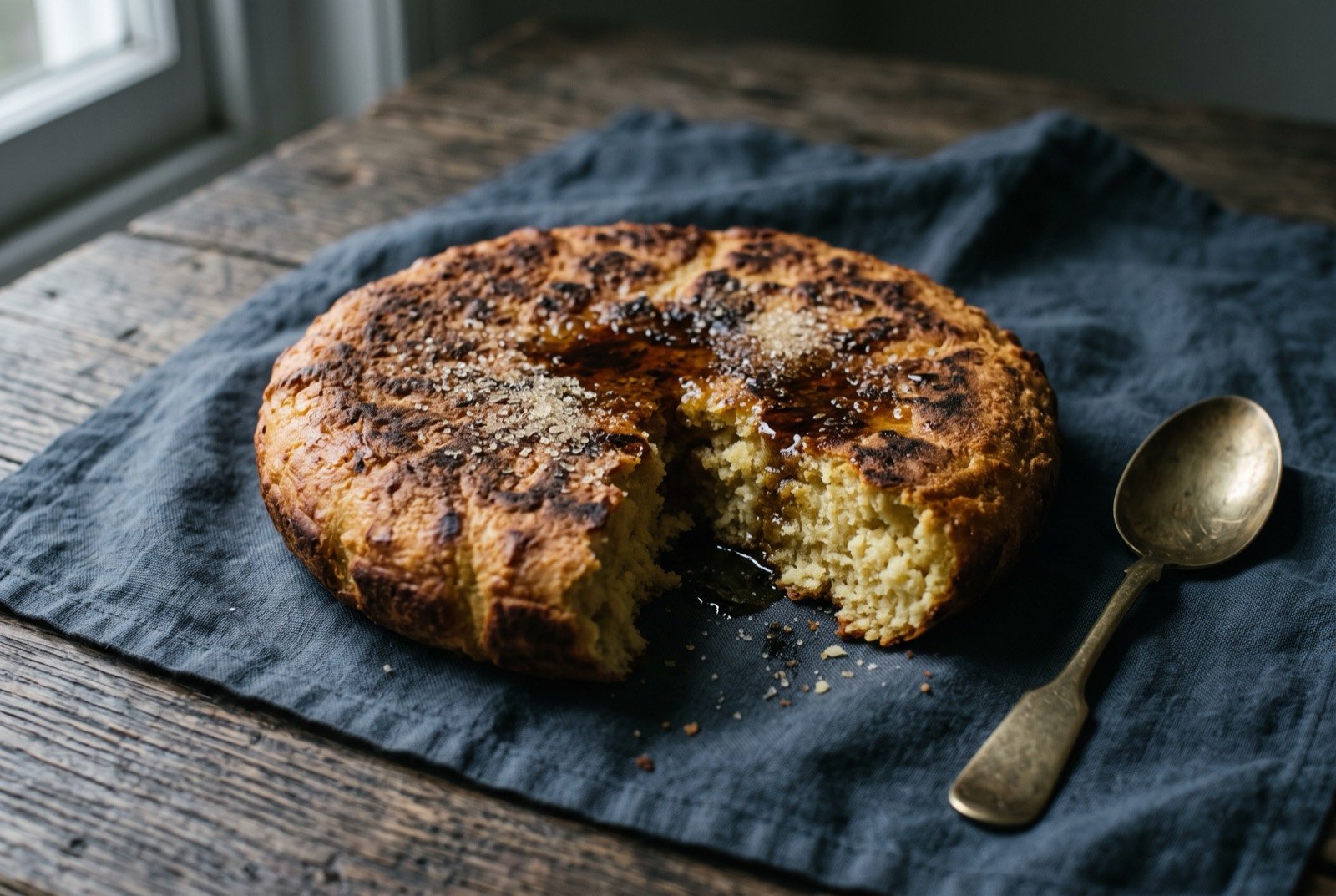
Illustration
- Time
- 30 minutes
- Researched
- Researched from 103 sources in the brief
- Reviewed
- Awaiting a reader from inside the tradition
- Cooked
- Awaiting a cook report
Thick, puffy maize or sorghum bread, baked against the wall of a tinaar clay oven, eaten with honey, sugar, sesame oil and black tea, or torn into maraq. Muufo Baraawe is the named Barawa variant. This is the only dish here documented mid-change: a Kenyan-Somali newspaper piece records urban Nairobi kitchens rewriting muufo for a frying pan and lifting it with baking powder, because they have no tinaar. Whether traditional muufo is fermented is unresolved and this chapter does not assert it either way.
As tradition built it
Makes 4. 30 minutes.
Ingredients
- 2 cups maize flour
- 1 cup plain flour, optional
- 1 tsp salt
- 1.5 cups warm water
- 1 tsp baking powder
Method
- Mix the maize flour, plain flour, salt and baking powder, then work in the warm water to a thick scoopable batter, softer than a dough.
- Stovetop: oil a heavy pan over medium-high, spread the batter about 2 cm thick, cook 5 to 7 minutes until the base is golden, then flip if you want colour on both faces.
- Oven: 200°C for 10 to 15 minutes, then flip and give it 5 more.
- Serve with suqaar or maraq, or with sesame oil poured over and a sprinkle of sugar.
Notes
The oven-adapted urban formula, given honestly as an adaptation.
What a modern chef changes
A scald for structure, real fermentation for flavour, and the oven's heat pattern rebuilt
Rungs 2, 1 and 6
Method
- Scald a third of the maize flour. Cook 100 g of it with 300 ml of boiling water to a stiff paste, cool, and beat it back in. Rung 2 applied to a different grain: maize has no gluten to hold gas, so gelatinised starch does the structural work a wheat network would otherwise do, and the crumb goes from crumbly to soft.
- Ferment overnight rather than lifting it with baking powder. A tablespoon of dhanaanis, or the batter left warm and covered for 12 hours, gives lactic acid, which makes the bread taste of something and counterweights the sesame oil and sugar it is served with. Given the unresolved question above, this is a modern choice made on flavour grounds and I am labelling it as one.
- Rebuild the tinaar's heat pattern, which is fierce radiant heat on one face and conducted heat through the wall on the other. A preheated cast iron pan or baking steel at 220°C with the grill element running above gives hard heat from both directions: ten minutes, no flipping. A Big Green Egg at 220°C with a stone is closer still.
- Pour the sesame oil at the table, not in the kitchen: macsaro's aromatics are volatile, so on hot bread it reads nutty and green and cooked into the bread it reads of nothing. Rung 6, applied to a fat.