The Horn · Volume 11, The Indian Ocean Kitchen
Muqmad
The Somali pastoral interior, where it is also oodkac
Illustration
- Researched
- Researched from 103 sources in the brief
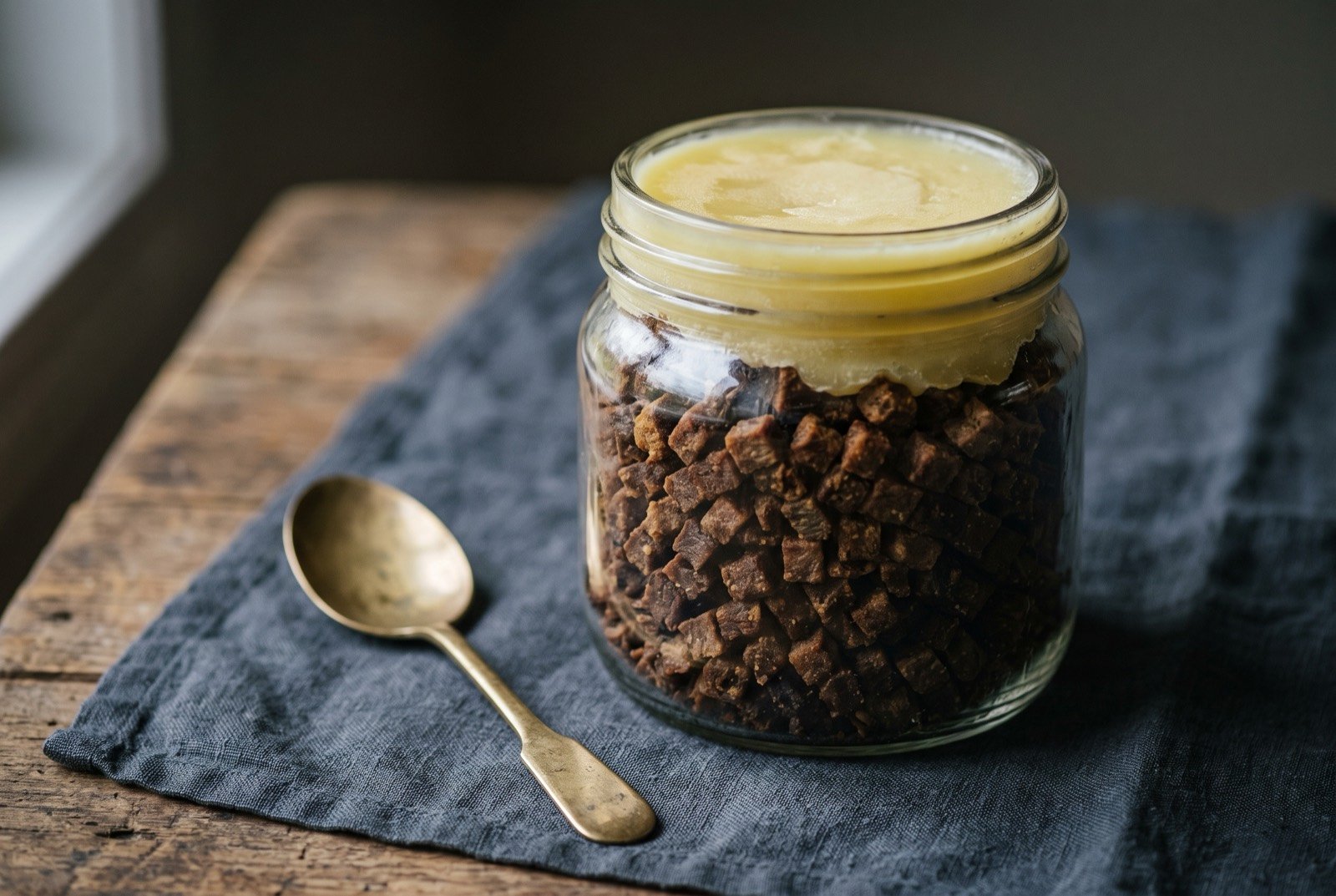
Meat, classically camel, sometimes beef or goat, sun-dried in strips for several days, cut into tiny cubes, then fried and packed under ghee. It keeps for more than a year, and in jilaal that is not a nice idea about preservation but the reason there is anything to eat. Three barriers stack, and the order is the clever part. Drying drops water activity below the threshold for bacterial growth, and cutting to cubes after drying keeps the surface-to-volume ratio low so the outside does not case-harden and trap moisture inside. Frying in fat rather than water drives off residual moisture and pasteurises, and because the fat cannot exceed its own smoke point or hydrate the meat, it is functionally a confit. Ghee set around the cubes then excludes oxygen, and will not itself spoil. And then it becomes a wedding. In northern Somalia the muqmad is packed into a xeedho, a wood and leather vessel decorated by the bride's family and bound with intricately knotted rope. On the seventh evening after the wedding, the groom's relatives must untie the knots, and failure is a genuine humiliation; the account holds that the bride's family may claim her back. Preserved meat as the object of a marriage contest. There is no clearer statement anywhere in this atlas about what food meant in a pastoral economy.
As tradition built it
Makes about 400 g. Several days.
Ingredients
- 1 kg lean beef or goat, in strips about 1 cm thick
- 2 tsp salt
- 400 g ghee
- to taste optionally, cardamom and black pepper
Method
- Salt the lean beef or goat strips, optionally with a little crushed cardamom and black pepper, and dry them in full sun for several days, turning, until hard and leathery through.
- Cut the dried strips into cubes of about 5 mm. Not before drying. After.
- Fry the cubes in a little of the ghee until they darken and crisp.
- Pack into a jar and cover completely with melted ghee. Let it set. Keep cool and dark.
Notes
Eaten by hand, with canjeero, with dates, or crumbled over anything that needs waking up.
What a modern chef changes
A dehydrator instead of a sky, a temperature-held confit, and the crisp used as a component
Rungs 5 and 6
Method
- Dry at 50 to 60°C in a dehydrator, not in a British sun that does not exist. Sixteen to twenty hours for 1 cm strips, until they crack rather than bend.
- Confit rather than deep fry. Hold the cubes submerged in ghee at 85 to 90°C for 45 minutes. Rung 5's principle carried into a preserve: you want dehydration and pasteurisation without driving lipid oxidation in a fat you will then store the meat in for a year. Raise to 160°C for the last two minutes if you want the crust.
- Store under a full ghee seal and use a clean spoon every time. The seal is the preservation; break it with a wet spoon and you have introduced water into the one place the technique exists to keep it out.
- Deploy it as texture, not as a snack. Rung 6. This is the crisp, salty component a plate of soft warm spiced things is missing, and the proof of concept is already on a London menu. Scatter it over rice, soup, cambuulo or hummus.