The Gulf and Arabia · Volume 06, The Khaleeji Pearling and Bedouin Coast
Haniny
Najd (Qassim)
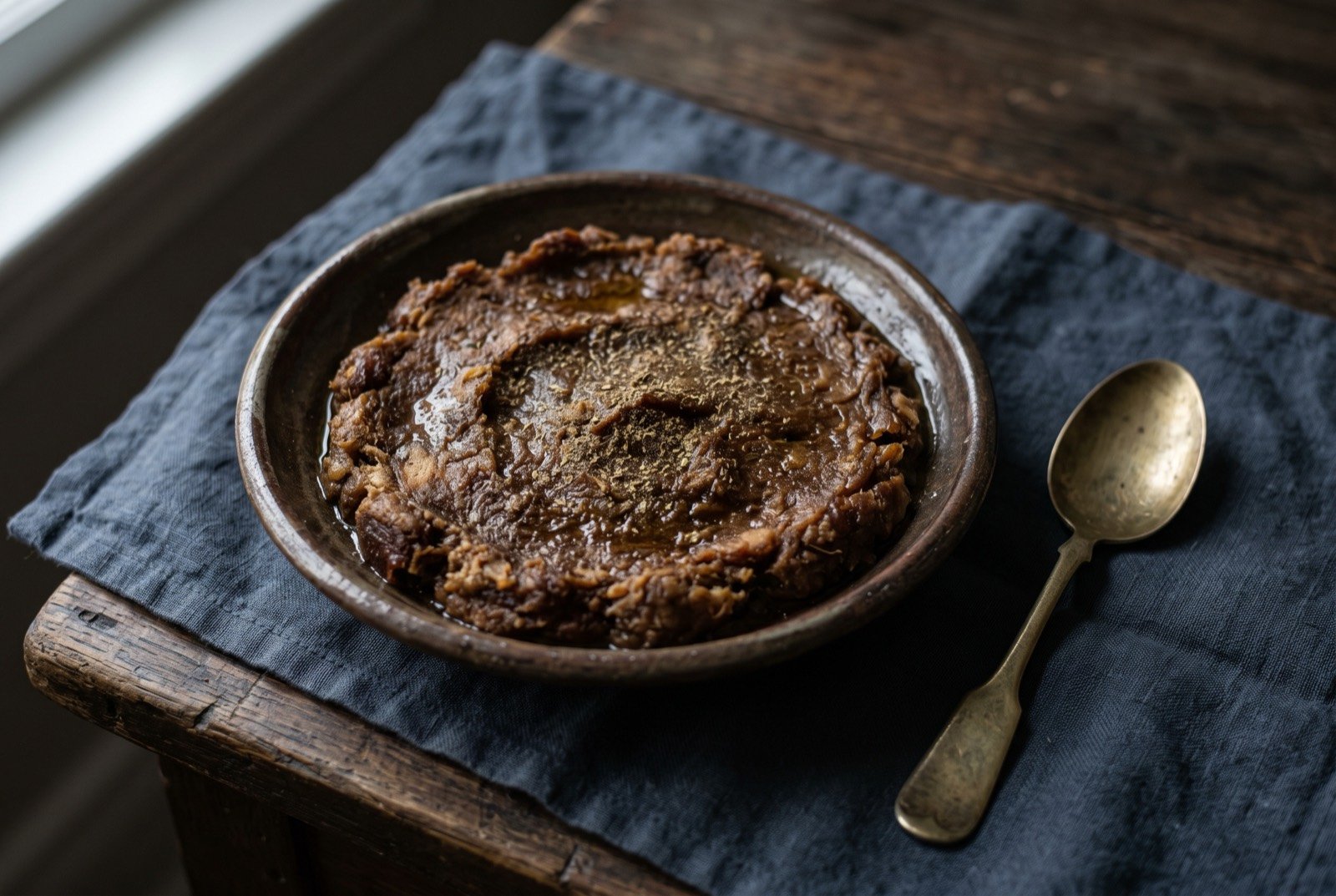
An illustration of the dish, not a photograph of it cooked.
- Time
- 10 minutes
- Researched
- 3 sources cited
- Reviewed
- Not yet reviewed from inside the tradition
- Cooked
- Not yet cooked and reported
Pounded dates and bread, an old Bedouin winter survival ration that became an elite table sweet through the same pounding technique, scaled up.
As tradition built it
Serves 4. Around 10 minutes.
Ingredients
- 20 pitted dates, chopped
- ½ loaf whole-grain bread, thinly sliced
- a generous knob butter
- a pinch, to taste cardamom, and saffron in some versions
Method
- Melt butter in a large pan over medium heat.
- Fold in the bread and dates together and mix for around 5 minutes, until the bread has absorbed the butter and the dates have softened into it.
- Serve immediately, spiced with cardamom and, in some versions, saffron.
Notes
The history behind this dish is genuinely well sourced. Al Jazeera Arabic's own account describes haniny as an ancient Bedouin survival technique, date paste, named specifically as khalas or sukkari varieties, pounded together with baked flatbread to give concentrated energy through the harsh winter cold spell known as al-Marba'aniyah, progressing from a portable Bedouin ration to an elite table sweet through the technique of crushing and pounding in a large wooden mortar, the najr. Najdi haniny is distinguished in the same source from similar-looking Gulf dishes, al-mamrous and al-'afousa, by keeping some wheat structure rather than becoming fully soft, rooted specifically in Qassim wheat and local dates. Sources genuinely conflict on whether haniny or a different sweet, maqshoush, is the Culinary Arts Commission's officially designated national sweet; this chapter does not resolve that conflict.
What a modern chef changes
The same pounding, done to a puree, then rebuilt with texture
Method
- Blend half the dates to a smooth paste in a high-power blender, leaving the other half roughly chopped, so the finished dish carries both a silky base and real fruit texture rather than one uniform mash.
- Toast the bread pieces separately until deeply golden before folding them in, for a more pronounced roasted-wheat note than simply softening raw bread in butter gives.
- Finish with a few flakes of good sea salt, cutting the dish's considerable sweetness the way a professional pastry kitchen would, rather than leaving it unrelieved.