The Horn · Volume 11, The Indian Ocean Kitchen
Poisson yéménite
Djibouti City
Illustration
- Time
- 30 minutes
- Researched
- Researched from 103 sources in the brief
- Reviewed
- Awaiting a reader from inside the tradition
- Cooked
- Awaiting a cook report
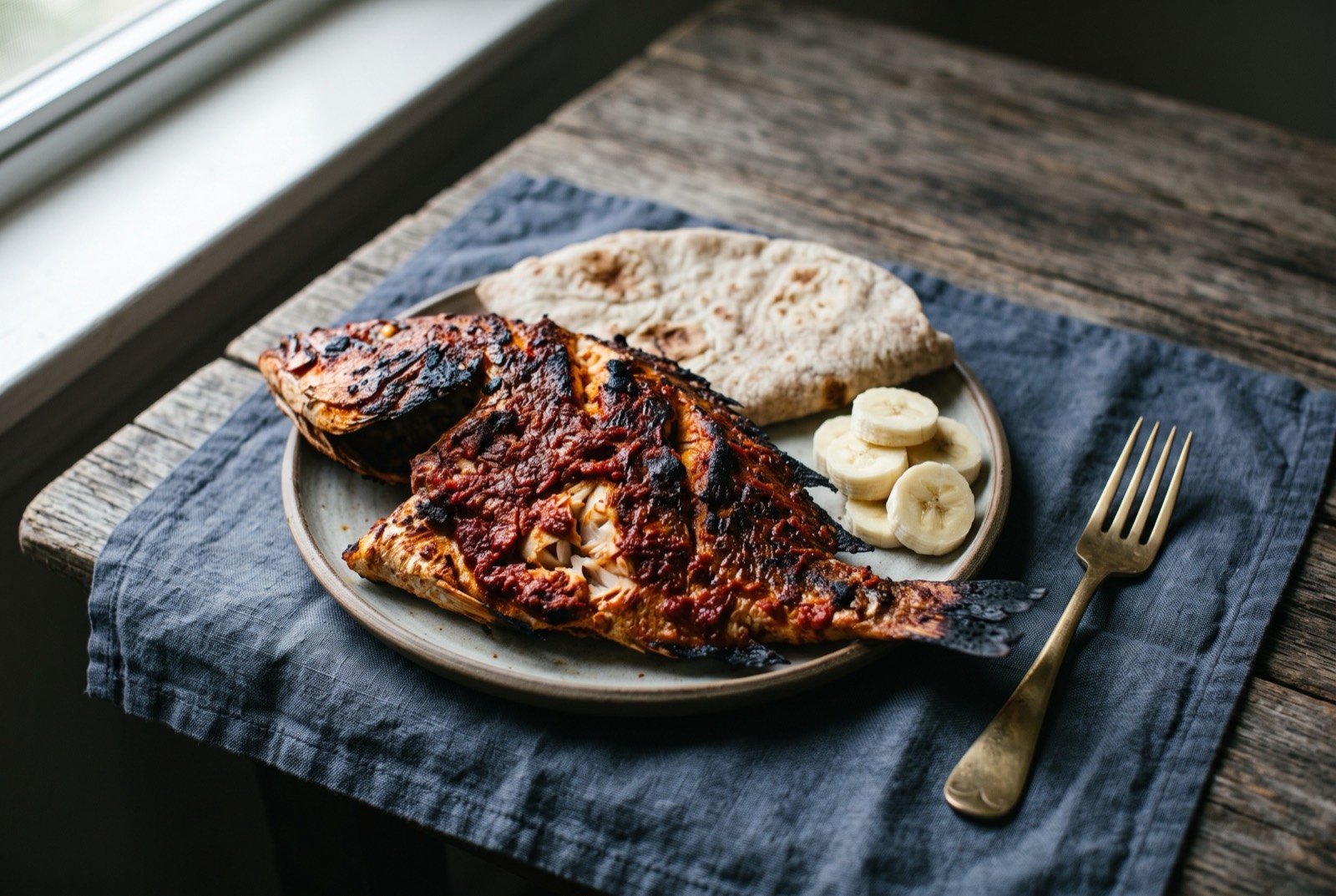
The best dish and the best story in the Djibouti half of this volume. Dorade, mullet or red mullet, split lengthwise, salted, painted with a paste of sweet chilli imported from Ethiopia using a construction brush, skewered on a metal rod and plunged for about fifteen minutes into the fire of a traditional earth oven very like a tandoor. About 1,000 Djiboutian francs, roughly five euros, served with flatbread and with fata, a preparation based on bananas or dates. Take it apart and the whole Gulf of Aden corridor is in it: the oven is the tinaar, which also bakes muufo on the other side of the Somali map, the chilli paste crosses the border from Ethiopia, the fish is Red Sea, and the bread is laxoox. A note on honesty: what follows is built from a press account of how this fish is cooked in Djibouti City, adapted to British equipment, not from a Djiboutian cook's own written recipe, because I could not find one.
As tradition built it
Serves 2. 30 minutes.
Ingredients
- 1 whole dorade or grey mullet, about 800 g, gutted
- 2 tsp coarse salt
- 3 tbsp mild red chilli paste, Ethiopian if you can get it
- 1 tbsp oil
- as available laxoox or flatbread, and sliced banana or chopped dates to serve
Method
- Split the whole dorade or grey mullet lengthwise through the back so it opens flat, still joined along one side. Salt both faces with the coarse salt.
- Loosen the mild red chilli paste with the oil and paint it thickly over the flesh side. In Djibouti this is done with a wide flat brush, which is not a quaint detail: a thick, even coat is what protects the flesh from the fire.
- Skewer flat on a metal rod or between two grill racks and set it into a very hot fire, close to the coals, for about 15 minutes, turning once.
- The paste should blacken at the edges and the flesh should be just set. Serve on laxoox or flatbread with banana or dates alongside.
What a modern chef changes
The oven understood, the paste rebuilt, and the sweetness treated as a component
Rungs 3 and 6
Method
- Use the Egg and use it properly. A tinaar cooks with fierce radiant heat off the walls and a convecting column of hot air. Big Green Egg, no deflector, coals raked flat, dome at 280 to 300°C, fish on a raised rack about 20 cm above, twelve to fifteen minutes, turned once: radiant heat from below and reflected heat from the dome at once, which a grill pan cannot do.
- Build the paste rather than buying it. Mild dried red chilli soaked and blended with garlic, a little tomato paste, salt, and the cumin and coriander fraction of your xawaash bloomed in oil first. Rung 3. A paste on bloomed spice sticks and tastes of something after fifteen minutes over coals; one on raw ground spice tastes dusty and slides off.
- Salt it 30 minutes ahead and pat it dry, because a short dry brine firms the flesh and pulls surface water, so the paste adheres and the skin crisps instead of steaming.
- Take the fata seriously. Rung 6. Banana or date beside a fiercely chilli-painted fish does the same suppression job the banana does beside bariis. Grill the banana halves cut side down for two minutes so the sugars caramelise, and put them on the plate as a component rather than a garnish.