The Indian subcontinent · Volume 17, The Sealed Pot, the Ember and the Roasted Flour
Litti chokha
Bihar
Illustration
- Time
- 1 hour 30
- Researched
- Researched from 106 sources in the brief
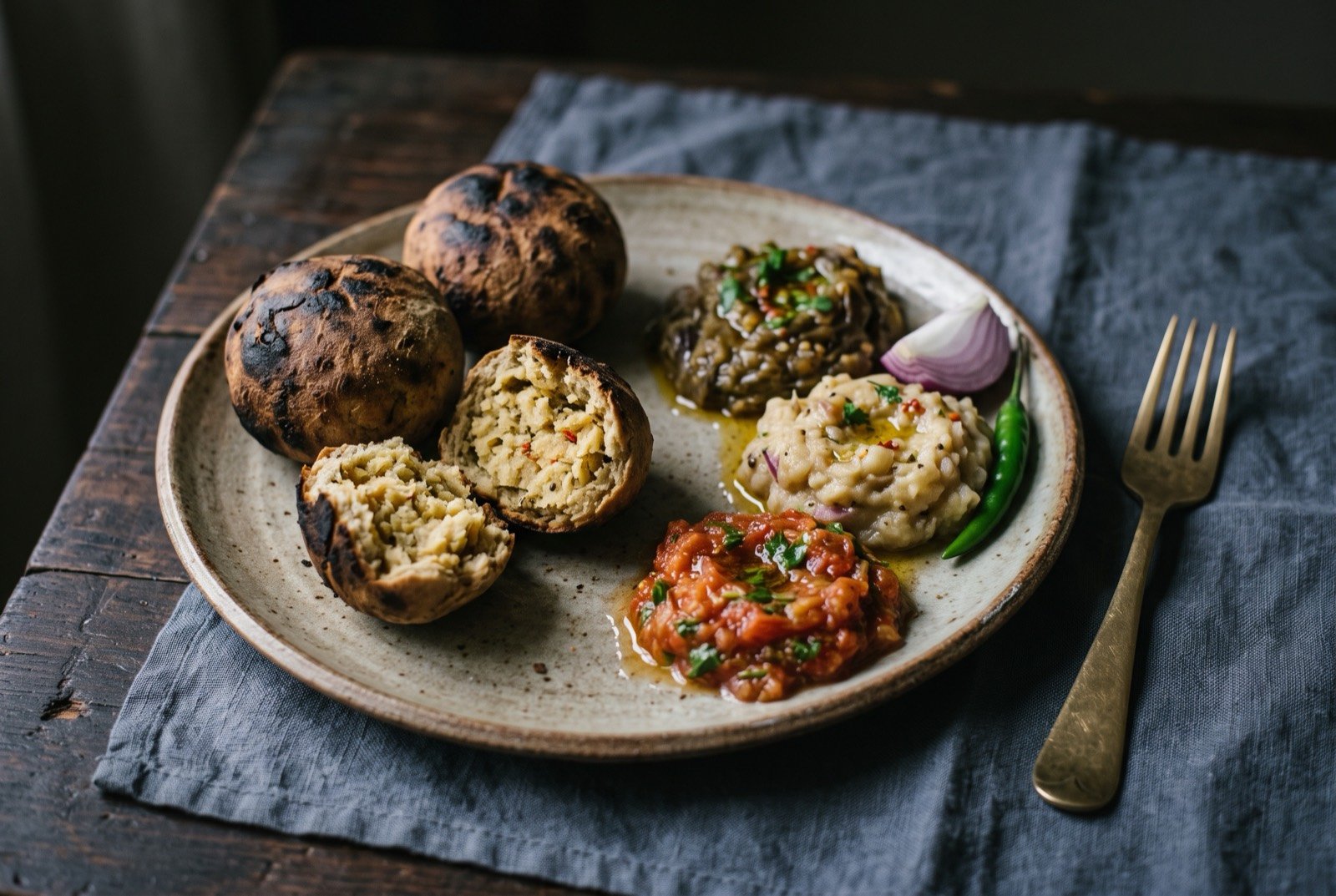
A stiff wheat dough is hollowed, packed tight with a filling of roasted gram flour, green chilli, garlic, ginger, coriander and mustard oil, sealed, and traditionally roasted directly on the embers of a wood or cow-dung fire, turned repeatedly for seven to ten minutes until the crust is evenly browned and smoky. It is served alongside chokha, fire-roasted aubergine, boiled potato and fire-roasted tomato, each mashed by hand and dressed raw with onion, garlic, chilli, coriander and a generous, deliberately raw-tasting pour of mustard oil.
Two popular origin legends tie the dish to Lord Rama; neither is supported by anything beyond festival tradition, and a widely repeated claim that it dates to the "ancient Magadh Empire" and travelled as soldiers' three-day rations traces to a single commercial food blog and should not be repeated as fact. What is not in doubt is the dish's status today: called an "emotion" and a "cultural emblem" of Bihar, and carried into Delhi's own street-food economy directly by Bihari labour migration, one documented vendor selling hundreds of servings a day from a cart at a north Delhi metro station while his own family remains in Madhubani.
As tradition built it
Serves 4. About 1.5 hours.
Ingredients
For the litti
- 300g whole wheat flour (atta)
- 2 tbsp ghee or oil
- 0.5 tsp ajwain
- to taste salt
- 150g sattu (roasted chana flour)
- 1 small onion, finely chopped
- 2 green chillies, chopped
- 2 tsp garlic, minced
- 3 tbsp coriander, chopped
- 0.25 tsp ajwain
- 0.25 tsp kalonji
- 2 tsp lemon juice
- 1 tbsp pickle masala
- 1 tbsp mustard oil
- enough for dunking melted ghee, for dunking
For the chokha
- 1 large aubergine
- 2 potatoes, boiled
- 2 tomatoes
- 1 onion, finely chopped
- 2 cloves garlic, minced
- 2 green chillies, chopped
- a small handful, chopped coriander, chopped
- a squeeze of lemon juice, salt to taste, a generous pour of mustard oil lemon juice, salt, mustard oil
Method
- For the litti dough, combine the flour, ghee, ajwain and salt, and bring together with water into a stiff dough. Rest, covered with a damp cloth, 20 minutes.
- For the filling, combine the sattu with the onion, chillies, garlic, coriander, ajwain, kalonji, lemon juice, pickle masala and mustard oil, adding a little water so the mixture is moist but holds its shape when pressed.
- Divide the dough into balls, hollow each, pack tightly with filling, and reseal.
- Roast directly on glowing, ash-covered embers, turning repeatedly, 7 to 10 minutes, until evenly browned and cooked through. Dunk each hot litti briefly in melted ghee before serving.
- For the chokha, roast the aubergine and tomatoes whole directly over a flame or on embers until collapsed and blackened in patches. Peel, and mash separately from the boiled potato.
- Dress each mash, raw and unsautéed, with onion, garlic, green chilli, coriander, lemon juice, salt and a generous pour of mustard oil.
What a modern chef changes
The ember trusted, the crust judged by eye
Rung 4
Method
- Run a Big Green Egg at high, direct heat with genuine lump charcoal, and set the littis directly on the grate close to the coals, turning as the tradition itself specifies; this is one of the few adaptations in this chapter that is closer to the original technique than a domestic oven, not a substitute for it.
- Dunk in browned, not merely melted, ghee, cooked gently until it smells nutty, for a deeper finish than the plain melted version.
- Char the chokha vegetables directly on the same coal bed as the litti, so both dishes pick up real smoke from the same fire rather than the vegetables being roasted separately under a grill.