The Indian subcontinent · Volume 17, The Sealed Pot, the Ember and the Roasted Flour
Rugra curry
Jharkhand's sal forests, foraged at the start of the monsoon
Illustration
- Time
- 30 minutes
- Researched
- Researched from 106 sources in the brief
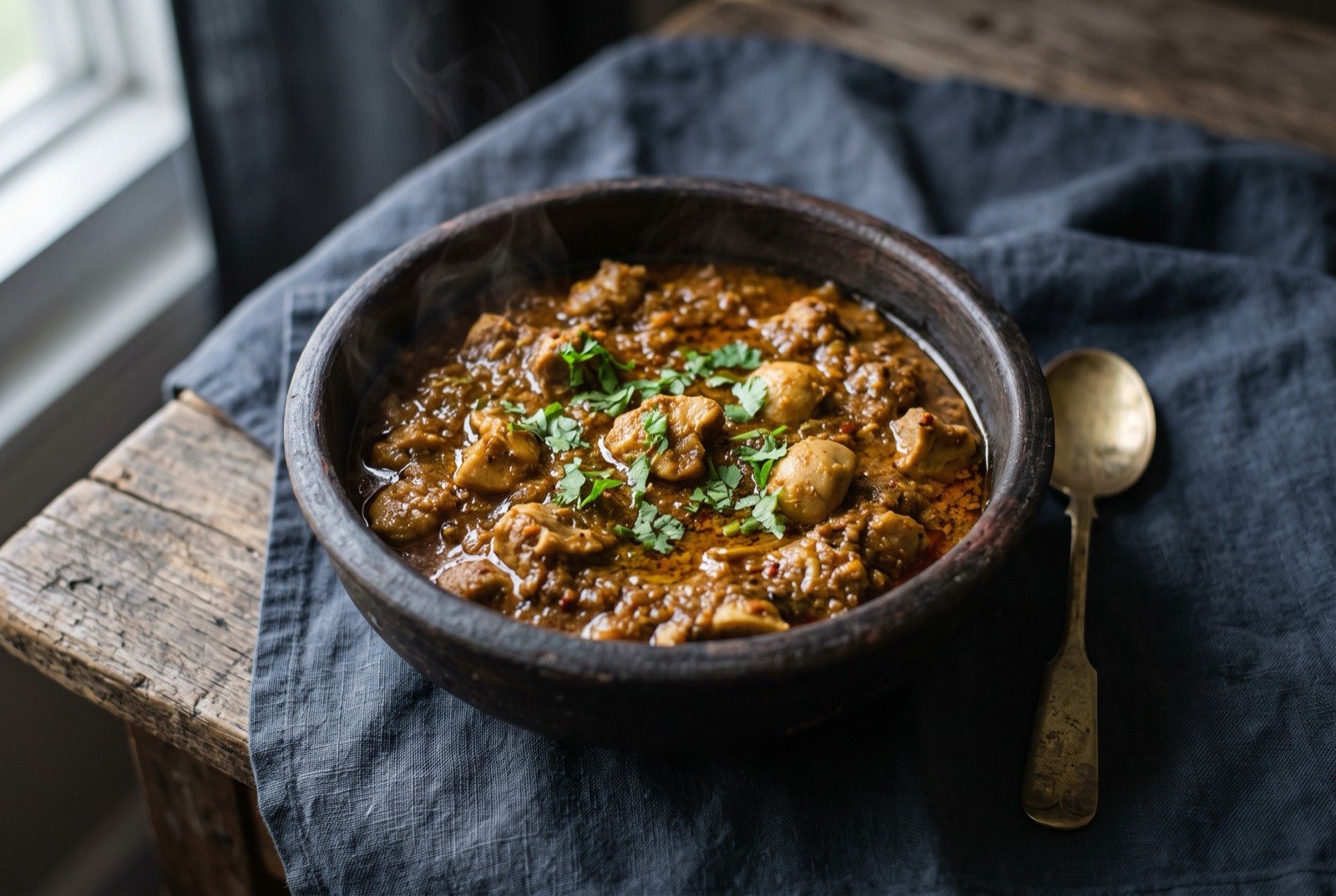
Rugra, also called rutka or puttu regionally, is not a generic "wild mushroom": it is genuinely identified in the mycological literature as Astraeus hygrometricus, the false earthstar, a hard-skinned puffball relative that grows in symbiotic association with sal trees, fruiting just under the soil at their roots for a brief window at the start of the monsoon, roughly June to August. It is foraged at dawn across Jharkhand's sal-forest districts, Simdega, Khunti, Dumka, Ranchi among them, and fetches real money, from around 150 to 400 rupees a quarter-kilo for common grades up to 2,000 rupees a kilo for the rarer Simdega forest grade, moving in recent years from a strictly tribal-household ingredient onto restaurant menus in Jharkhand's own cities while remaining entirely foraged rather than cultivated. Local nicknames compare its flavour, only half-jokingly, to mutton. It is cooked simply, in a mustard-oil or tomato-based gravy, or with nothing more than rice and salt.
As tradition built it
Serves 4. About 30 minutes.
Ingredients
- 300g rugra, cleaned and halved
- 2 tbsp mustard oil
- 1 onion, finely chopped
- 2 cloves garlic, minced
- 1 tbsp ginger, grated
- 2 tomatoes, chopped
- 0.5 tsp turmeric
- 1 tsp red chilli powder
- to taste salt
- a small handful, chopped coriander, to finish
Method
- Heat the mustard oil until it smokes lightly, then let it cool slightly, a step used throughout this region to soften the oil's raw pungency before onions go in.
- Fry the onion until golden, then add the garlic and ginger, cooking a further minute.
- Add the tomatoes, turmeric and chilli powder, and cook down until the oil separates at the edges.
- Add the rugra and salt, and cook, stirring occasionally, 12 to 15 minutes, until tender.
- Finish with chopped coriander.
Notes
A note on availability, stated honestly rather than smoothed over. Rugra is a wild, seasonally foraged fungus with no commercial cultivation and no UK import trade this chapter's research could find; a British cook cannot buy the genuine article. A firm-textured, meaty UK-foraged puffball of similar structure, prepared exactly the same way, is offered below as a substitution made in the same spirit as this atlas's honest handling of Yemeni Sidr honey and Jharkhand's own handia elsewhere: named plainly as a substitute, not disguised as the real thing.
What a modern chef changes
The same gravy, an honestly substituted mushroom
Rung 5, adapted
Method
- Substitute a large, firm UK common puffball (Calvatia utriformis or similar), or failing that a meaty king oyster mushroom, sliced thick, in place of rugra, since the genuine article cannot currently be sourced in Britain; state this substitution to any guest rather than presenting it as the dish itself.
- Dry the mushroom briefly in a dehydrator, at a low setting, before cooking, to concentrate its own flavour and firm its texture, compensating in part for what a cultivated or common UK mushroom lacks against a genuinely wild, forest-foraged one.
- Finish with the same raw pour of mustard oil this chapter has already established for chokha (Rung 5), off the heat, rather than cooking all of it in, for the same sharp, pungent contrast against the reduced tomato base.