The Indian subcontinent · Volume 17, The Sealed Pot, the Ember and the Roasted Flour
Tamatar chaat
Varanasi, Luxa Bazaar and Chowk
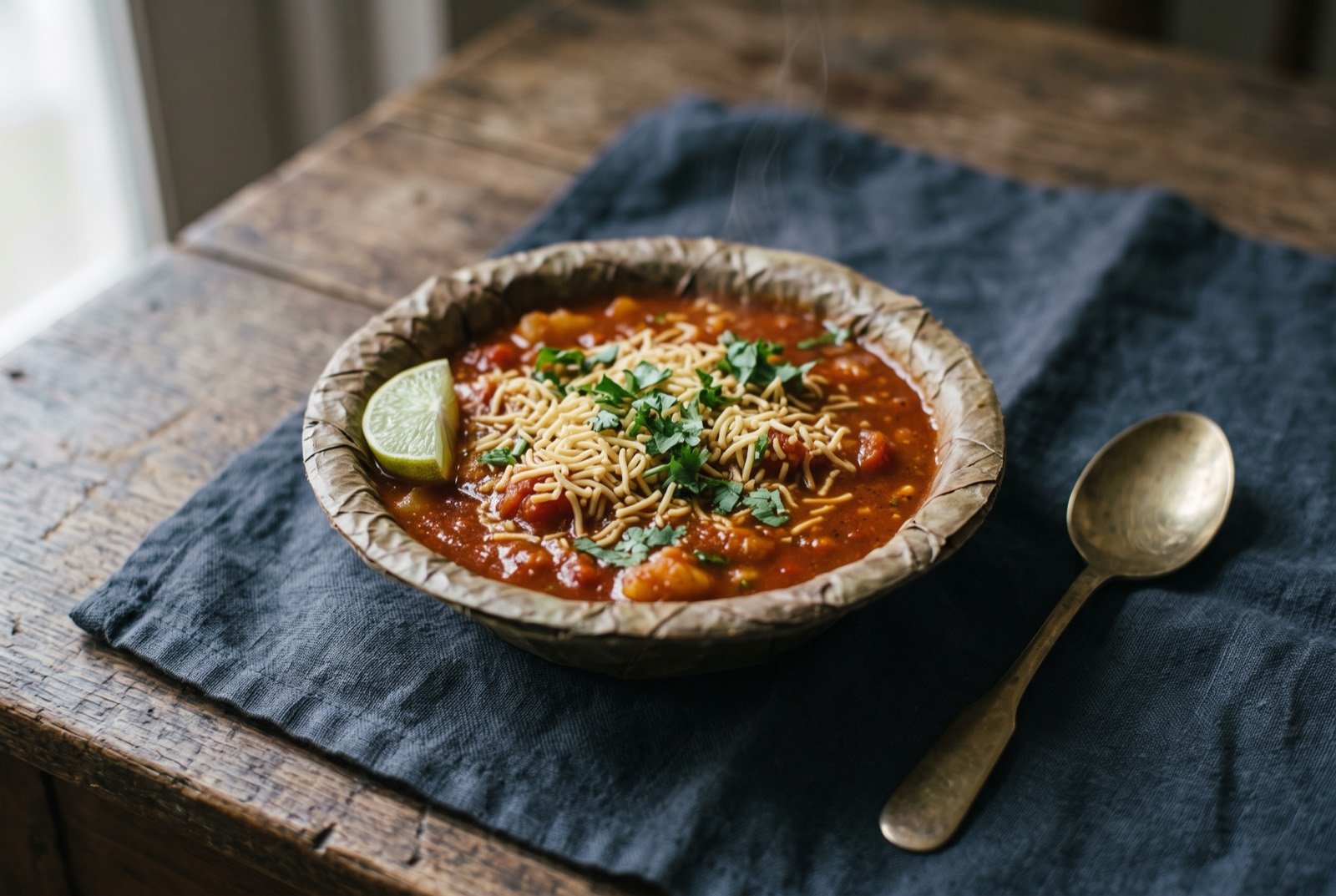
An illustration of the dish, not a photograph of it cooked.
- Time
- 1 hour 30
- Reviewed
- Not yet reviewed from inside the tradition
- Cooked
- Not yet cooked and reported
Peeled ripe tomatoes and boiled potato are cooked down slowly, over several hours, with ginger, green chilli, garam masala, red chilli powder, cumin and tamarind, into a thick, intensely reduced gravy finished with ghee and mustard oil, traditionally served in a dona, a bowl stitched from palash leaves, topped with crisp sev and coriander.
The strongest origin account this chapter's research found names Deena Nath Kesari, who began hawking it from a mobile cart in Luxa Bazaar roughly in the 1940s to 1950s; his descendants still run the business as two family branches today, one quoted directly: "Right from the recipe to the preparation, we religiously follow our Dadaji's way."
As tradition built it
Serves 4. About 1.5 hours.
Ingredients
- 1kg ripe tomatoes, peeled and chopped
- 2 potatoes, boiled and mashed
- 1 tbsp ginger, grated
- 2 green chillies, chopped
- 1 tsp garam masala
- 1 tsp red chilli powder
- 1 tsp ground cumin
- to taste black salt
- 1 tbsp tamarind pulp
- 2 tbsp desi ghee
- 1 tbsp mustard oil
- a handful of sev, a scatter of coriander, a lemon wedge sev, coriander and lemon, to serve
Method
- Cook the tomatoes down over low heat, stirring often, until they collapse and reduce to a thick pulp, 45 minutes to 1 hour.
- Add the mashed potato, ginger, chilli, spices and tamarind, and continue cooking, stirring regularly to prevent catching, 20 to 30 minutes further, until the whole mixture is thick, glossy and intensely reduced.
- Finish with the ghee and mustard oil stirred through off the heat.
- Serve hot, topped with sev, coriander and a squeeze of lemon.
What a modern chef changes
The reduction controlled, not rushed
Rung 5, adapted
Method
- Reduce the tomato in a low, covered oven at 140°C rather than on the hob, stirring only occasionally, for a more even, hands-off concentration over the same total time without the risk of catching.
- Blend a portion through a chinois for a silkier base, then fold the strained purée back through the rest of the unstrained gravy, for a texture with real body but without any raw tomato skin fragments.
- Finish the mustard oil raw, off the heat, at the very last moment, exactly as chokha's own raw-dressing logic demands (Rung 5), rather than cooking it into the gravy, to keep its sharp pungency distinct against the long-reduced sweetness underneath.