Maritime Southeast Asia · Volume 48, The Phinisi Route, the Kluwak Pot and the Buffalo’s Horn
Sop Konro
Lapangan Karebosi, Makassar
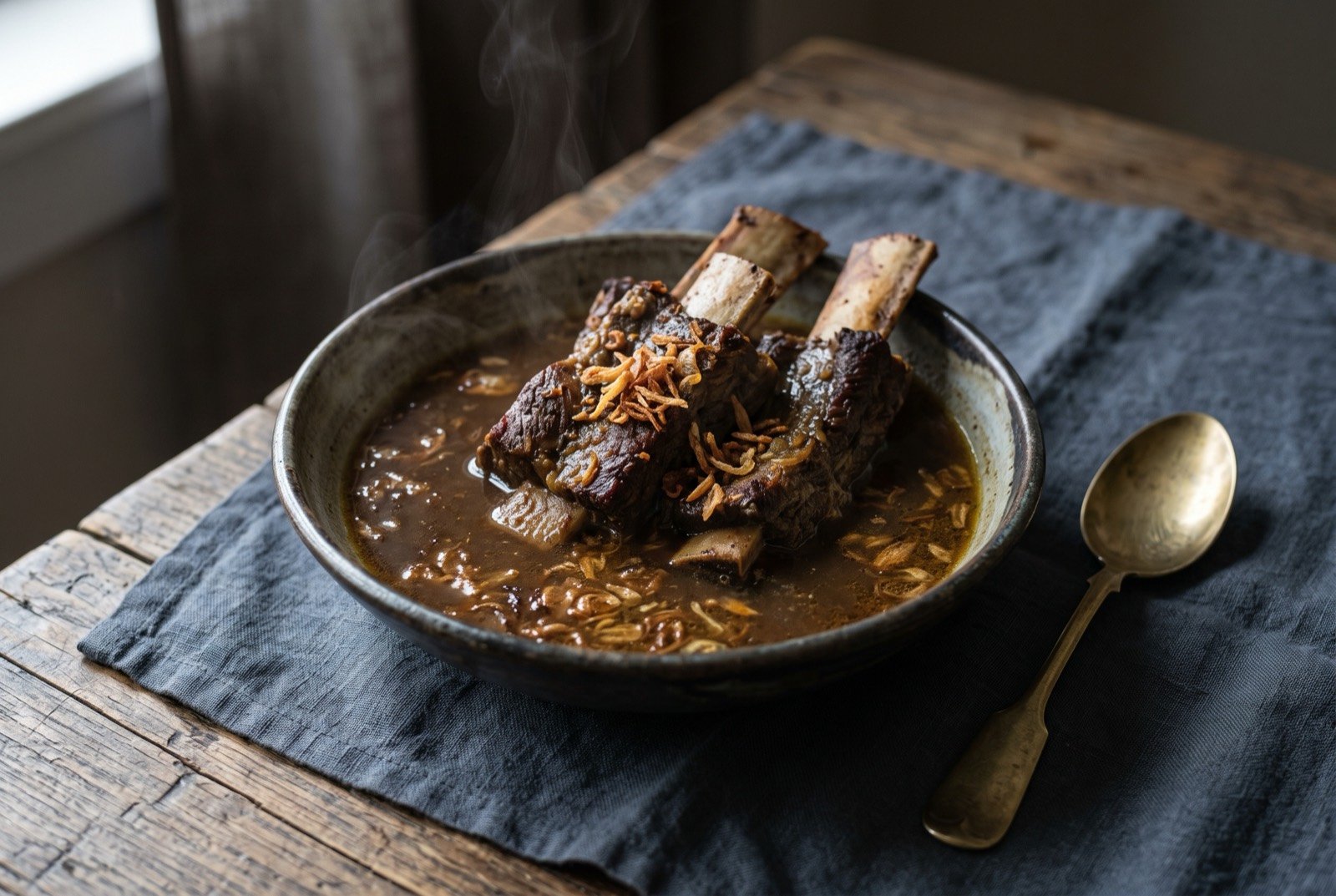
Illustration
- Time
- 2 hours 30
- Researched
- Researched from 119 sources in the brief
Sop konro is credited to Pak Hanafing, a schoolteacher who also ran a food stall at Karebosi field in central Makassar, with sources disagreeing on whether the recipe dates to the 1960s or specifically to 1972; neither figure traces back to a dated primary record, and this chapter states the disagreement rather than resolving it arbitrarily. What is better documented is the protein switch: buffalo rib was the original cut, and beef rib displaced it specifically as buffalo populations fell and prices rose, a change dated to roughly the 1990s. This chapter's own research could not confirm kluwak in sop konro's sourced spice list, coriander, nutmeg, turmeric, kencur, cinnamon, lemongrass, clove and bay leaf, so the recipe below leaves it out rather than asserting a colour source it cannot confirm.
As tradition built it
Serves 6. About 2.5 hours.
Ingredients
- 1.2 kg beef short ribs, cut into pieces
- 8 shallots
- 6 garlic cloves
- 1 tsp coriander seed
- 0.5 tsp ground nutmeg
- 2 tsp ground turmeric
- 4 cm kencur (aromatic ginger)
- 1 cinnamon stick
- 2 lemongrass stalks, bruised
- 4 cloves
- 2 bay leaves
- a scatter fried shallots, to finish
Method
- Simmer the ribs in plenty of water for around 2 hours, until the meat is tender but not falling from the bone, skimming regularly.
- Grind shallot, garlic, coriander, nutmeg, turmeric and kencur to a paste and fry until fragrant.
- Add the paste to the pot with the cinnamon, lemongrass, cloves and bay leaves, and simmer a further 30 minutes.
- Serve hot, scattered with fried shallots.
What a modern chef changes
Konro bakar, run as a named, documented restaurant variant, not an invention
Rung 3's fire logic applied to a rib rather than a bamboo tube
Method
- Marinate and grill the ribs over live wood coals on a Big Green Egg, following the same construction confirmed at Nusantara by Locavore's Bali kitchen: a marinade of shallot, garlic, clove, cumin, star anise, nutmeg, cinnamon, burnt coconut and palm sugar, then cooked over open wood fire rather than simmered, a real, named, currently operating restaurant's own treatment of this exact dish, not this chapter's own extrapolation.
- Serve with a peanut sauce rather than the soup's broth, matching that same documented service, a genuine second life for the dish's core spicing outside the soup format.
- Build the spice paste to a fine, oil-emulsified consistency in a high-power blender before it goes on the ribs, so it clings through a live-fire cook rather than falling away the way a coarser hand-ground paste would over direct heat.