Maritime Southeast Asia · Volume 48, The Phinisi Route, the Kluwak Pot and the Buffalo’s Horn
Pantollo Pamarrasan
Tana Toraja
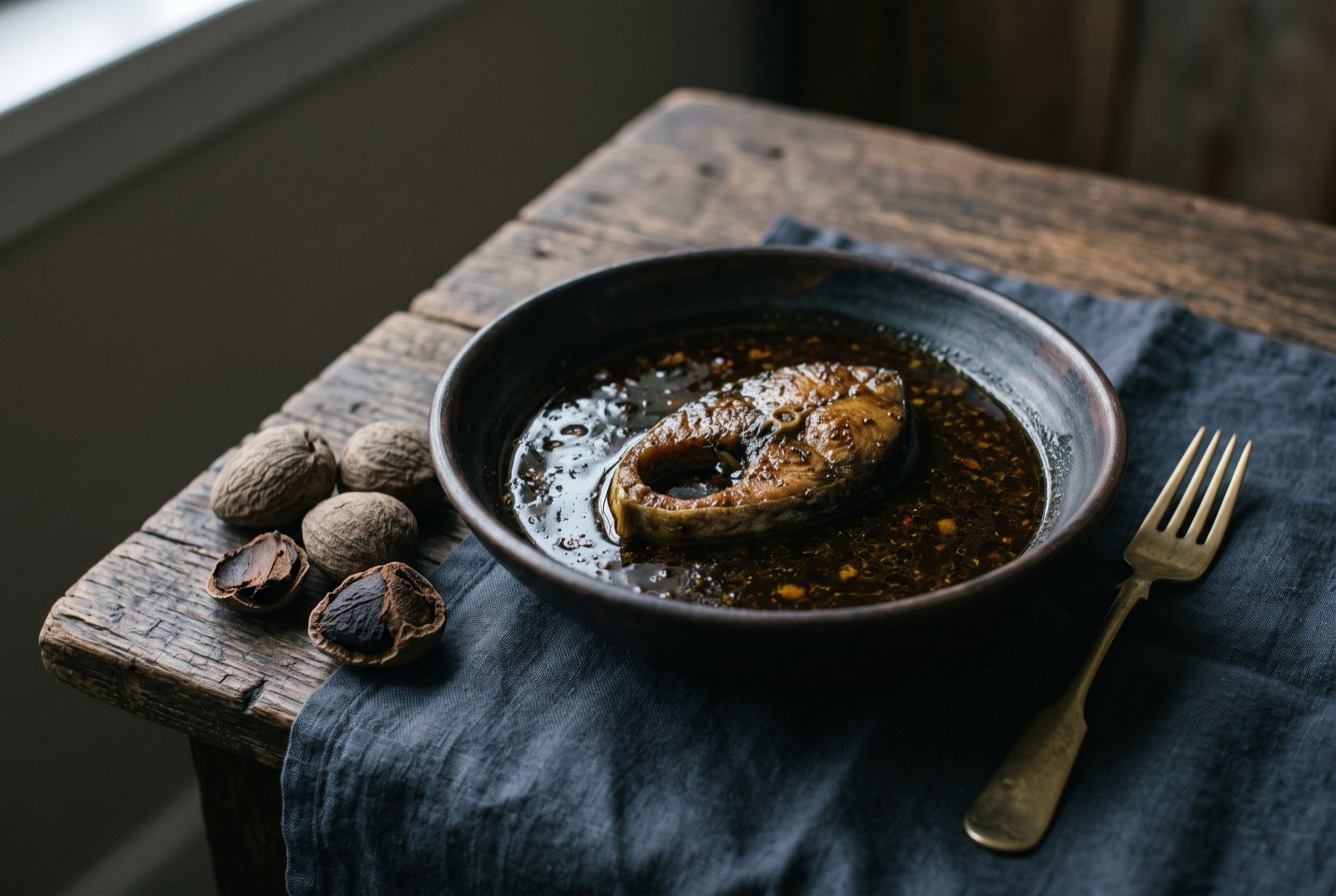
An illustration of the dish, not a photograph of it cooked.
- Time
- 1 hour 30
- Reviewed
- Not yet reviewed from inside the tradition
- Cooked
- Not yet cooked and reported
Pantollo pamarrasan takes its name from pamarrasan, the Toraja term for the fermented black spice paste built from pangi, kluwak, ground with shallot, garlic, chilli, ginger and galangal, then cooked through with freshwater carp or snakehead fish, the two most commonly named proteins, and thinned into a broth of lighter body than some coastal kluwak dishes carry. Indonesian sourcing explicitly compares it to rawon, East Java's own black kluwak beef soup, a useful anchor for a reader already familiar with that dish, while making clear this is the highland, freshwater-led version rather than a coastal beef one. Preparation is frequently communal, tied to customary ceremonies, and the dish functions doubly as ceremonial food and as an expression of cooperative, collective work.
As tradition built it
Serves 4. About 1.5 hours.
Ingredients
- 4 kluwak (Pangium edule), cured and ready to use
- 600 g carp or snakehead fish, cleaned and cut into steaks
- 6 shallots
- 4 garlic cloves
- 2 red chillies
- 4 cm ginger
- 4 cm galangal
- 700 ml water
- to taste salt, to taste
Method
- Scoop the cured kluwak flesh from its shell.
- Grind the kluwak with shallot, garlic, chilli, ginger and galangal to a smooth, dark paste.
- Fry the paste briefly until fragrant, per rung 2.
- Add the water and bring to a simmer.
- Add the fish and simmer gently until just cooked through, around 15 minutes; do not boil hard, or the fish will break apart before the broth has taken on the paste's own depth.
- Season with salt and serve.
What a modern chef changes
A precision fish cook and a properly emulsified pamarrasan paste
Rungs 2 and 1 together
Method
- Grind the kluwak paste in a spice grinder followed by a high-power blender, working it to a genuinely smooth, oil-emulsified consistency rather than the coarser hand-pounded paste a traditional kitchen produces, so the paste's own depth carries evenly through the thinner broth this dish uses.
- Cook the fish sous vide at 52°C for 20 minutes, finishing it briefly in the hot broth only at the very end, a precise route to a just-set, moist fillet that a direct simmer easily overshoots.
- Reduce a portion of the broth separately through a chinois to build a slightly thicker plating sauce, spooned over the fish rather than serving it fully loose, a deliberate elevation this chapter names as its own rather than a documented Toraja restaurant practice.