Maritime Southeast Asia · Volume 48, The Phinisi Route, the Kluwak Pot and the Buffalo’s Horn
Pallubasa
Makassar
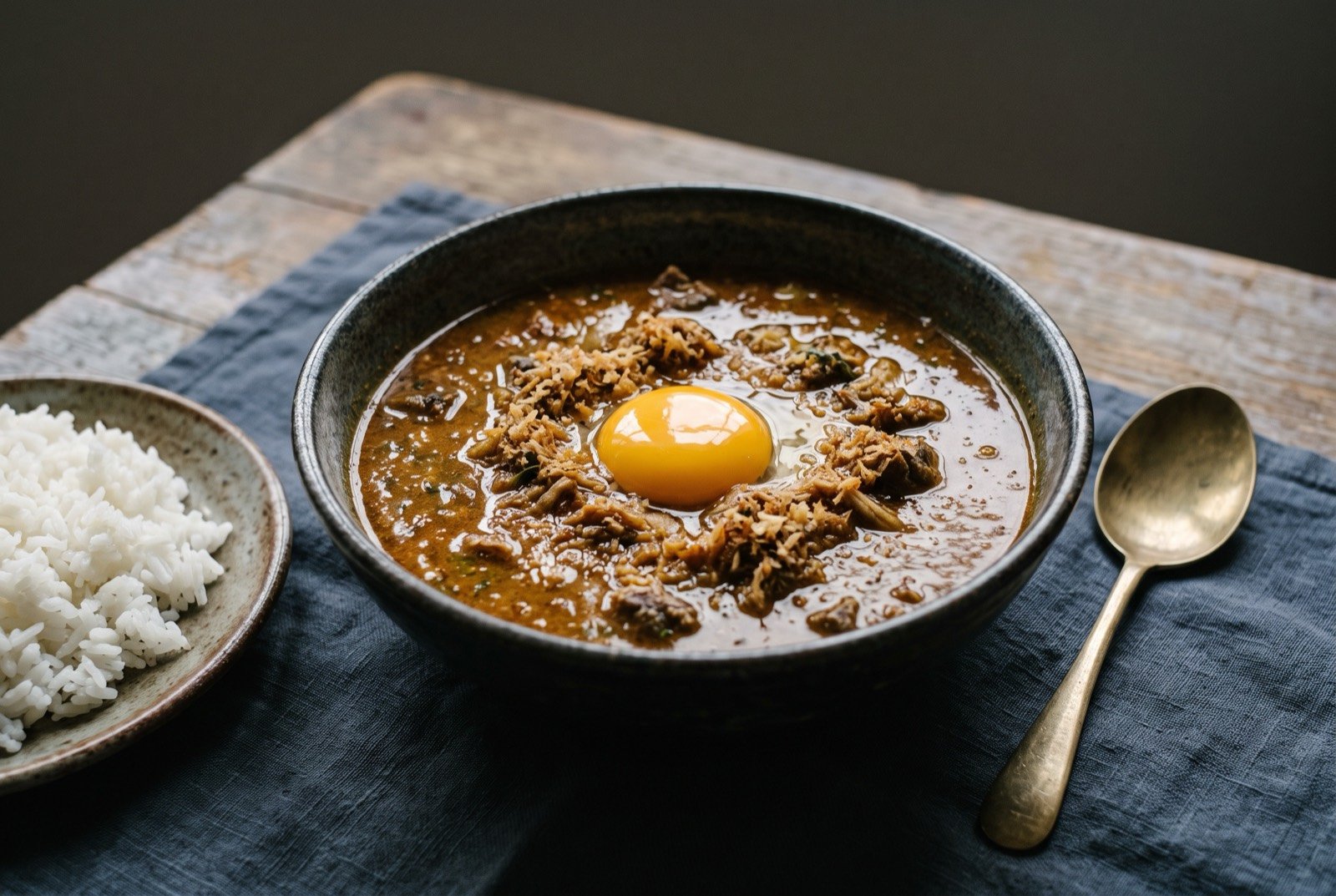
An illustration of the dish, not a photograph of it cooked.
- Time
- 3 hours
- Reviewed
- Not yet reviewed from inside the tradition
- Cooked
- Not yet cooked and reported
Pallubasa shares coto's broad Gowa-Tallo era origin story, but its etymology is more settled: Bugis-Makassar "palla" (bone) and "basa" (broth), though the modern dish is a full beef and offal soup rather than a plain bone broth. Where coto is sourced consistently as a court dish, pallubasa is described as the cheaper dish of the common people, distinguished by two things coto does not use: roasted grated coconut, and a raw egg yolk finished into the hot broth at the table.
As tradition built it
Serves 6. About 3 hours.
Ingredients
- 1 kg beef, mixed with offal (heart, liver, intestine, spleen)
- 150 g grated coconut, roasted dark
- 8 shallots
- 6 garlic cloves
- 2 tsp coriander seed
- 1 tsp cumin seed
- 2 tsp ground turmeric
- 4 candlenuts
- 4 cm galangal
- 4 cm ginger
- 2 lemongrass stalks, bruised
- 6 free-range (kampung) egg yolks
- to serve steamed rice, to serve
Method
- Simmer the beef and offal in plenty of water for around 2 hours until tender; reserve the stock.
- Grind shallot, garlic, coriander, cumin, turmeric, candlenut, galangal and ginger to a paste and fry until fragrant.
- Return the paste to the stock with the lemongrass, and simmer a further 30 minutes.
- Divide the roasted coconut: blend half fully into the broth for colour and body, and reserve the other half coarse.
- Slice the beef and offal and return to the pot; simmer 15 minutes more, longer than coto, until the broth is thick and dark.
- Ladle into bowls, crack a raw egg yolk into each one at the table, and finish with the reserved coarse coconut sprinkled over.
- Serve with plain steamed rice.
What a modern chef changes
A dehydrator-concentrated coconut, and a safely tempered yolk
Rungs 4 and 6
Method
- Roast and dehydrate the coconut in two separate batches, one taken further, near-black, and dried a further hour in a low dehydrator before blending, for a more concentrated, less watery body than a single roasting pass gives; keep the second, coarse batch lighter roasted so its texture reads distinctly against the smooth base once sprinkled.
- Pasteurise the yolk in a sous vide water bath, held at 57°C for 20 minutes, before finishing it into the hot broth, a direct, practical answer to raw egg safety in a British kitchen, following rung 6's timing exactly: the yolk still visibly sets at its edge in the broth's own heat, but the bath has already removed the raw egg risk.
- Strain the finished broth through a chinois before serving, since the coconut blend, done at the dehydrator-concentrated strength above, can leave a fine sediment a traditional bowl tolerates but a refined service should not.