Maritime Southeast Asia · Volume 48, The Phinisi Route, the Kluwak Pot and the Buffalo’s Horn
Jalangkote
Makassar
Illustration
- Time
- 1 hour 30
- Researched
- Researched from 119 sources in the brief
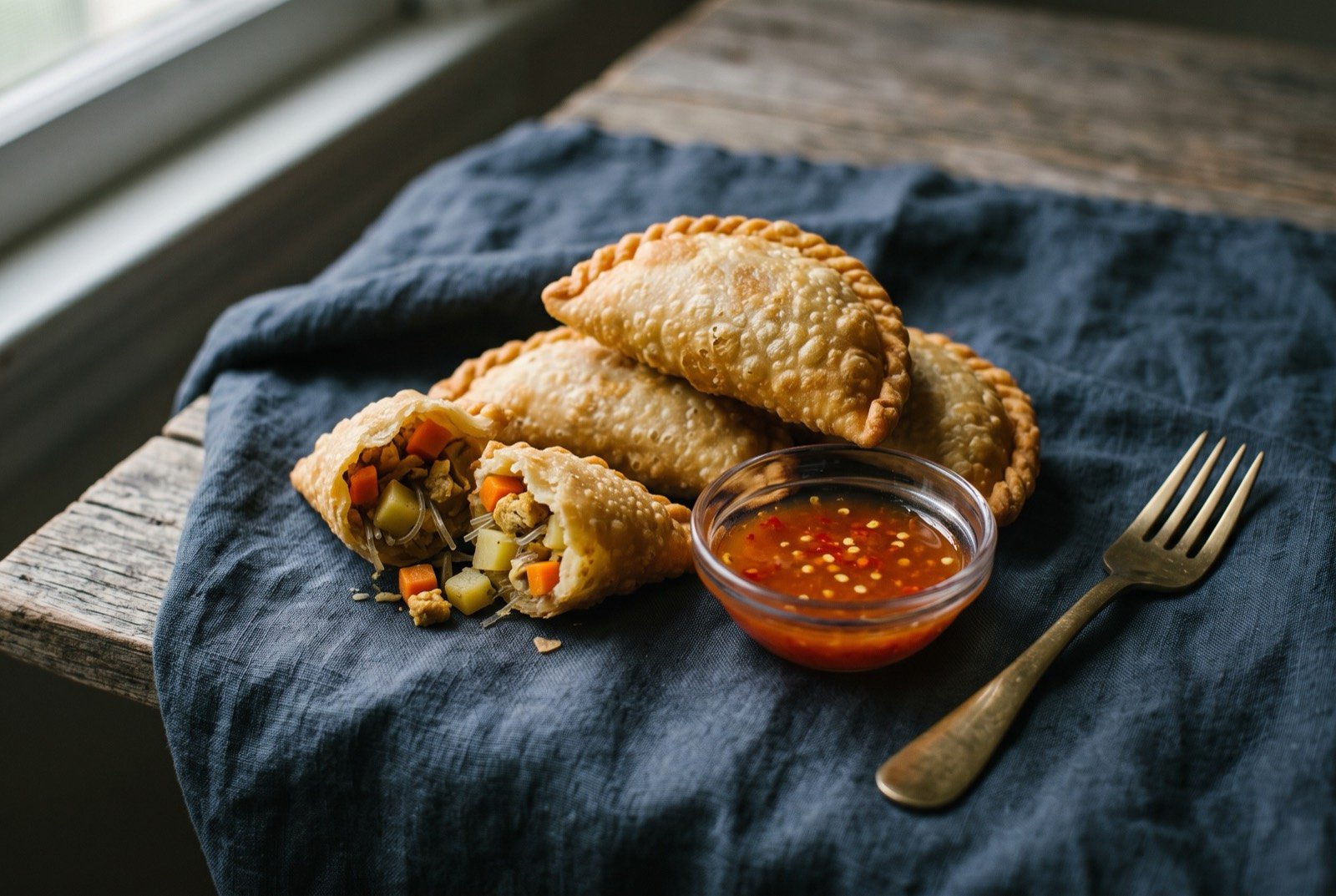
Jalangkote is explicitly described in Indonesian sourcing as a comparatively modern dish, its thin, crisp-shelled, fried pastry technique traced to Spanish and Portuguese contact carrying empanada method into the archipelago, the shared ancestor behind the Philippines' own pastel as well. The name is popularly explained, though not from a cited linguistic source, as combining Makassarese "jalang," to walk, and "kote," to call out, describing how the snack was historically sold door to door by children walking and calling as they went.
As tradition built it
Makes about 20. About 1.5 hours.
Ingredients
- 400 g plain flour
- 60 g butter
- 1 egg
- 120 ml water
- 200 g chicken, diced small
- 2 carrots, diced small
- 2 potatoes, diced small
- 50 g glass noodles, soaked and chopped
- 4 shallots, sliced
- 3 garlic cloves, sliced
- as needed oil, for deep frying
- as needed rice vinegar and bird's eye chilli, for the sambal cuka
Method
- Rub the butter into the flour, then bind with the egg and water into a smooth, firm dough. Rest 30 minutes.
- Sauté shallot and garlic, add the chicken, carrot and potato, and cook through; stir in the glass noodles and season.
- Roll the dough thin and cut into rounds.
- Fill each round, fold and crimp firmly into a half moon.
- Deep fry in hot oil at 170°C until deep golden and crisp, a few minutes each side.
- Serve with a liquid sambal of vinegar, sliced chilli and a little sugar and salt, not a paste.
What a modern chef changes
A dehydrator-crisped shell and a properly built sambal cuka
Rung 3's leaf-wrap discipline applied to the dough's own moisture control instead
Method
- Rest the rolled dough sheets in a dehydrator at a low setting for 20 minutes before filling, drawing a little surface moisture out for a shell that fries noticeably crisper and blisters less unevenly than a freshly rolled dough does.
- Build the sambal cuka as a properly balanced ratio, vinegar, sugar and salt measured rather than guessed, ground chilli worked through in a spice grinder for an even heat rather than uneven chunks.
- Fry in two stages, a lower temperature pass to cook the filling through fully, then a hotter, brief second pass to colour and crisp the shell, a genuine improvement on the single-temperature fry a street stall's volume does not allow time for.