Maritime Southeast Asia · Volume 48, The Phinisi Route, the Kluwak Pot and the Buffalo’s Horn
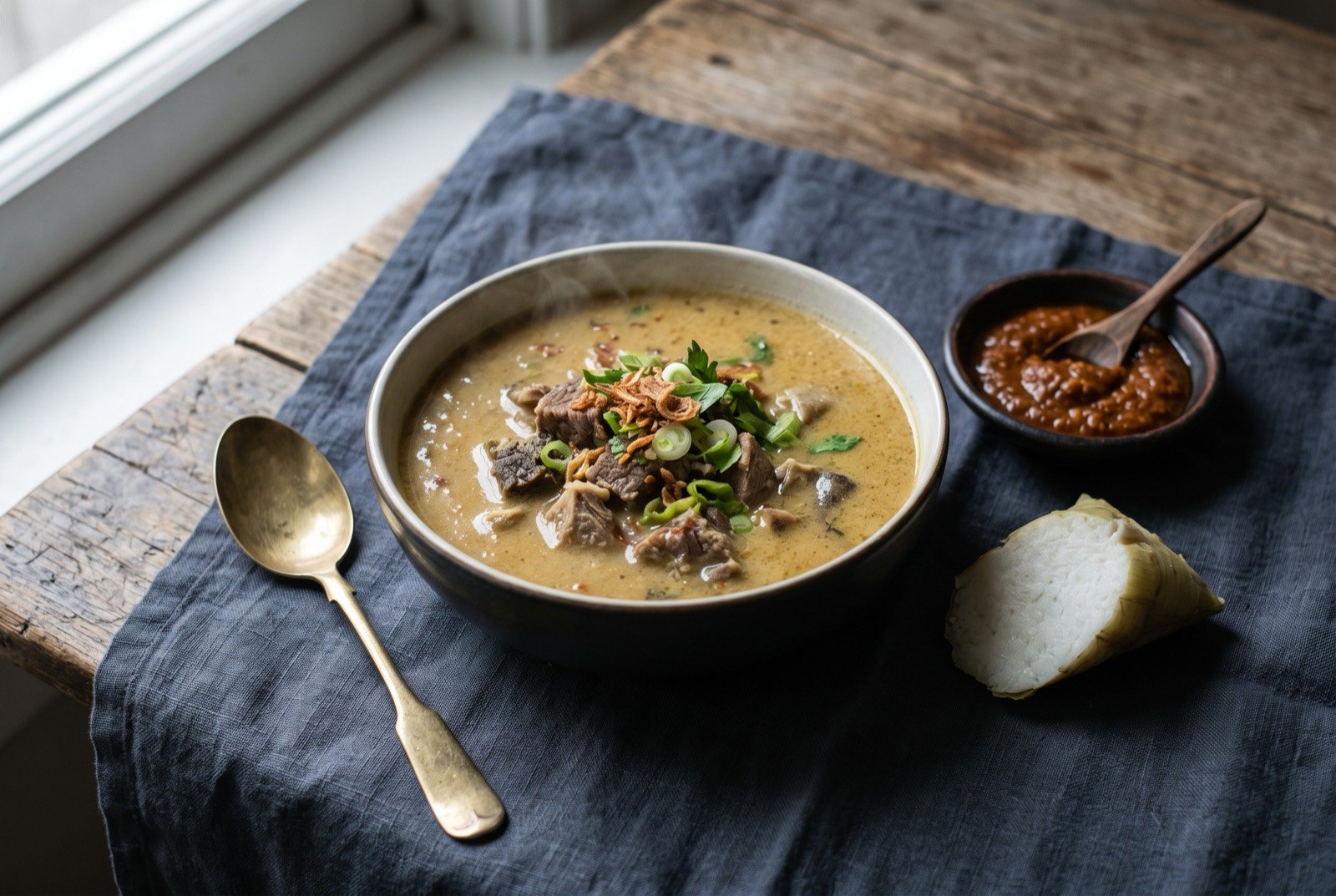
Coto Makassar
Gowa, Makassar
Illustration
- Time
- 3 hours
- Researched
- Researched from 119 sources in the brief
Coto Makassar's popular origin story places it in the sixteenth century Gowa kingdom, a royal cook named Toak credited with combining beef offal and traditional spices for the nobility; a second, more populist version says it was made by ordinary people and served to palace guards before their morning watch. Neither version is traceable to a named chronicle or archive, and the specific date sometimes given, 1538, should be read as repeated cultural memory rather than settled history. What is far better documented is the dish's own thickening mechanism, and the widely repeated claim that it carries "forty spices," rampa patang pulo, is explicitly named by mainstream Indonesian food writing as a metaphor for unity and diversity, not a literal ingredient count.
As tradition built it
Serves 6. About 3 hours, most of it unattended simmering.
Ingredients
- 1 kg beef shin or brisket, in one piece
- 500 g mixed beef offal (tripe, heart, liver), cleaned
- 200 g raw, unsalted peanuts, roasted and finely ground
- 300 ml air tajin (the starchy water from boiling rice, reserved separately from any rinse water)
- 8 shallots
- 6 garlic cloves
- 2 tsp coriander seed
- 1 tsp cumin seed
- 4 candlenuts
- 4 cm galangal
- 4 cm ginger
- 4 kaffir lime leaves
- 2 bay leaves (daun salam)
- 2 lemongrass stalks, bruised
- 2 tbsp tauco (fermented soybean paste), for the sambal
- 2 red chillies, for the sambal
- to serve ketupat or burasa, to serve
Method
- Simmer the beef and offal together in plenty of water for around 2 hours, until tender, skimming regularly; reserve the stock.
- Grind shallot, garlic, coriander, cumin, candlenut, galangal and ginger to a paste and fry until fragrant.
- Return the paste to the stock with the kaffir lime leaves, bay leaves and lemongrass, and simmer a further 30 minutes.
- Stir in the ground roasted peanut and the air tajin, and simmer gently until the broth thickens to a body that coats the back of a spoon, around 20 minutes.
- Slice the beef and offal and return to the pot.
- Blend the tauco with the chillies to a rough sambal, served alongside.
- Serve hot, with ketupat or burasa on the side rather than plain rice.
What a modern chef changes
A measured starch extraction and a precision-cooked offal
Rungs 1 and 2
Method
- Extract the air tajin as a measured reduction rather than reserved cooking water taken by chance: cook the rice separately in a fixed ratio of water, strain and reduce the liquid in a high-power blender emulsion with the roasted peanut to a target viscosity, the same starch-reduction discipline this chapter's rung 1 sets out, rather than eyeballing the broth's own thickness as it simmers.
- Cook the offal cuts sous vide at 82°C for 12 hours before finishing them in the finished broth, a genuinely more precise route to tender tripe and heart than a long stovetop simmer, which tends to overcook the leaner offal while the tripe is still working.
- Fry the spice paste in stages, aromatics first, then the ground candlenut folded in only once the shallot and garlic have properly softened, since candlenut scorches easily and a burnt note here is the single most common way a home version of this broth goes wrong.