Britain and Ireland · Volume 33, The Bakestone, the Broth and the Salt Marsh
Bara Brith
Wales
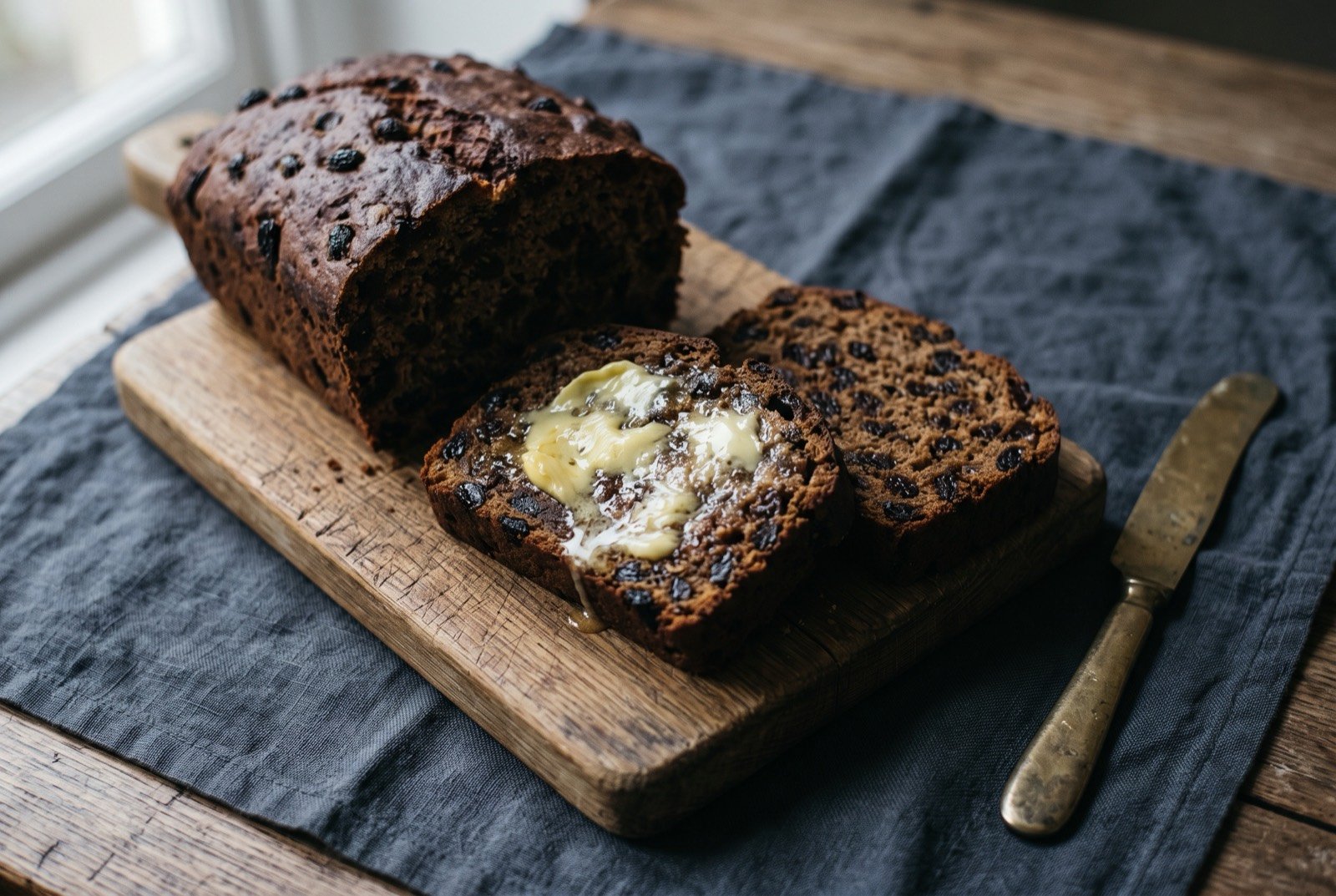
An illustration of the dish, not a photograph of it cooked.
- Time
- Not statedNo source states a time and the atlas has too few comparable dishes to estimate one.
- Researched
- No outside sources linked
- Reviewed
- Not yet reviewed from inside the tradition
- Cooked
- Not yet cooked and reported
Tea-soaked fruit loaf; the word itself dates only to an 1888 Welsh-language dictionary, and named a different, older dish, a loaf of mixed grains, in the eighteenth century.
As tradition built it
500g dried fruit, soaked overnight. Bakes in about 1 to 1½ hours.
Ingredients
- 500 g mixed dried fruit
- 350 ml hot, strong black tea
- 250 g soft brown sugar
- 350g flour
- 1 egg
- 3g mixed spice
- to taste butter, to serve
Method
- Soak the mixed dried fruit overnight in the hot, strong black tea and the soft brown sugar, until plump and dark.
- The next day, work the flour, egg and mixed spice into the soaked fruit and its liquid to a soft, dropping batter.
- Pour into a lined loaf tin and bake slowly until a skewer comes out clean, roughly an hour to an hour and a half depending on the oven.
- Serve sliced, thickly buttered, traditionally at te capel, chapel tea, on bone china after a Sunday service.
What a modern chef changes
Fruit concentrated and vacuum-compressed, baked in a humidified oven
Method
- Dehydrate a portion of the dried fruit further before soaking, concentrating its sugars so less needs to be added separately.
- Vacuum-compress the fruit in its tea and sugar for twenty minutes rather than soaking overnight, forcing the liquid into the fruit under pressure in a fraction of the time without losing the depth a long soak gives.
- Bake in a water bath-humidified oven, or with a tray of water alongside, for a moister, more evenly set crumb than a dry domestic oven produces.
- Serve with a cultured butter whipped with a little of the reduced soaking tea, rather than plain butter, a modern nod to the same tea-and-toast pairing rather than a departure from it.