Britain and Ireland · Volume 33, The Bakestone, the Broth and the Salt Marsh
Welsh Rarebit
Wales (English-coined name)
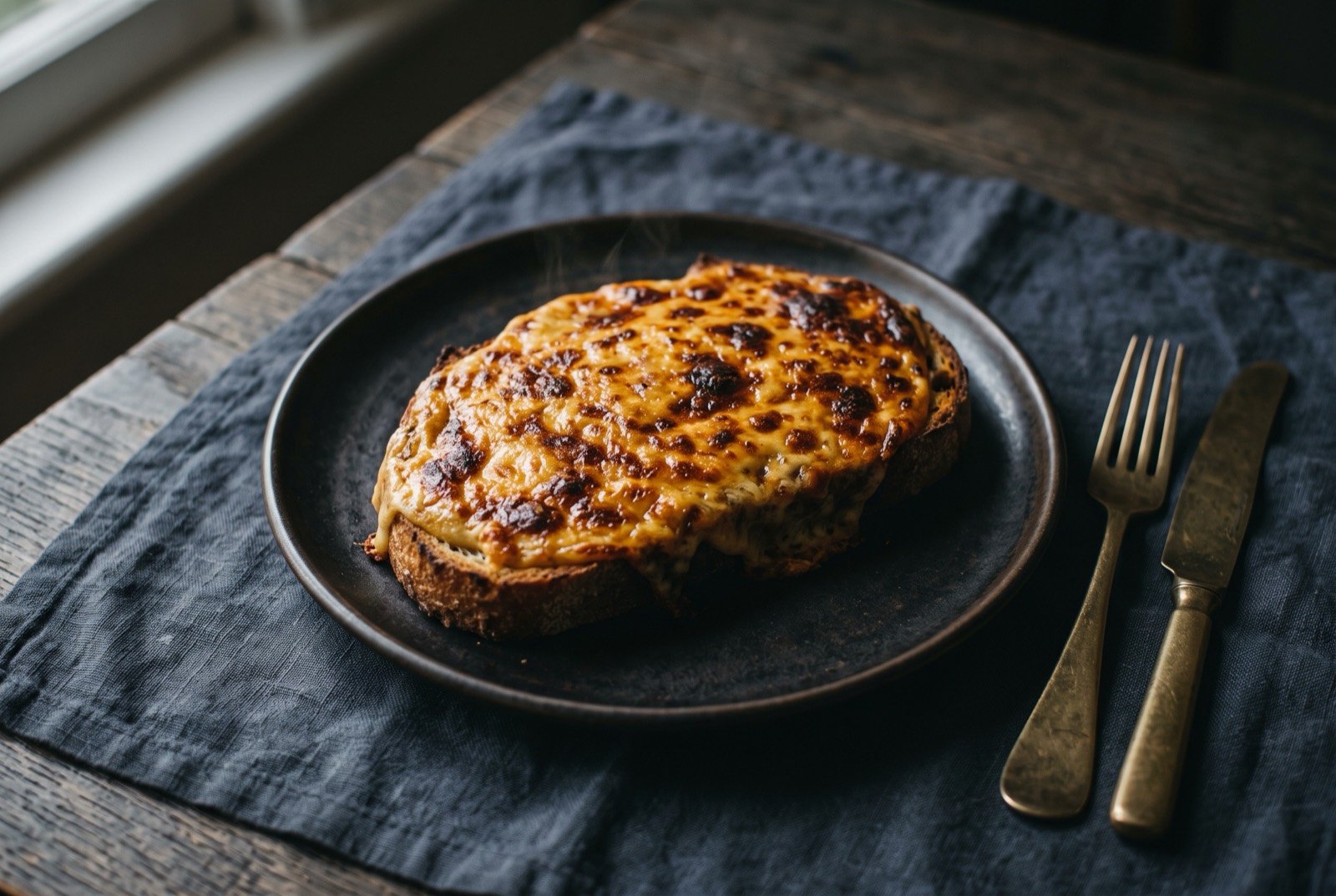
An illustration of the dish, not a photograph of it cooked.
- Time
- 20 minutes
- Researched
- No outside sources linked
- Reviewed
- Not yet reviewed from inside the tradition
- Cooked
- Not yet cooked and reported
Caws pobi, and this chapter's own clearest case of a dish that cannot honestly be claimed as straightforwardly Welsh in origin.
As tradition built it
First printed recipe 1747, Hannah Glasse. Wales.com (Welsh Government) serves four: about 20 minutes, plus time for the mixture to cool.
Ingredients
- 15g butter
- 2 tsp flour
- 150ml ale
- 1 tsp mustard powder
- a dash Worcestershire sauce
- 300g, in a 50:50 mix Caerphilly cheese and a mature cheddar, together
- 4 thick slices hot toast, to serve
Method
- Make a roux of butter and flour.
- Work in the ale off the heat, along with the mustard powder and a dash of Worcestershire sauce.
- Fold in the hard cheese, Caerphilly and a mature cheddar together, off the heat, in stages, until melted and smooth.
- Pour over hot toast and brown briefly under a grill.
Notes
The Welsh name for baked cheese, caws pobi, is genuinely old, attested from the 1500s, a 1542 quotation describes a Welshman's fondness for "cause boby, good roasted cheese." The English name is a different matter: "Welsh rabbit" is first recorded only in 1725, and the "rarebit" spelling, widely believed a later gentrification of "rabbit," follows by 1781, with "Welsh" most plausibly functioning as an English joke, the closest thing to rabbit a poor Welshman could supposedly afford, rather than as a genuine claim of Welsh invention.
Hannah Glasse's 1747 The Art of Cookery Made Plain and Easy gives the first printed recipe, alongside parallel "Scotch rabbit" and "English rabbit" versions in the same book.
What a modern chef changes
A rested sauce, torched rather than grilled, on toasted bara brith
Rung 5
Method
- Age the cheese sauce itself for a day in the fridge before use, letting its flavour deepen and its texture firm slightly.
- Torch the finished rarebit rather than grilling it, for an even, controlled char without the risk of the sauce splitting under a domestic grill's uneven heat.
- Make the toast from a slice of the bara brith recipe above, dried and re-toasted rather than fresh bread, for a faint sweetness and spice against the sharp, savoury sauce.
- Finish with a few drops of a reduced ale gastrique rather than a plain dash of Worcestershire, sharpening the traditional flavour without changing what it is.