The Slavic east and the Balkans · Volume 26, Rye, the Samovar and the Sturgeon’s Retreat
Moscow-style borscht
Moscow
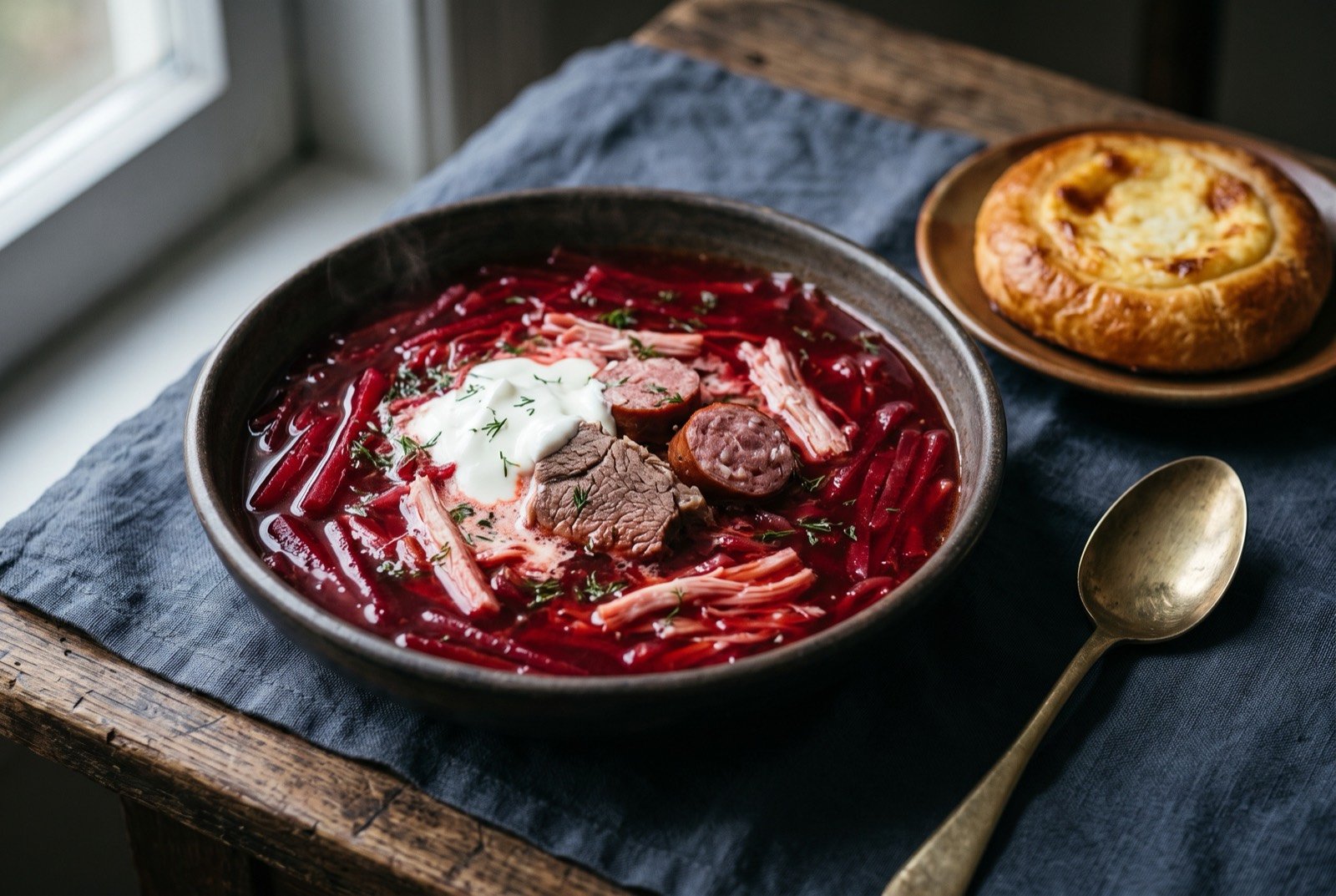
An illustration of the dish, not a photograph of it cooked.
- Time
- Not statedNo source states a time and the atlas has too few comparable dishes to estimate one.
- Reviewed
- Not yet reviewed from inside the tradition
- Cooked
- Not yet cooked and reported
Distinguished from other regional borshch by the late addition of smoked pork products and the omission of potato, with particular care given to how the beetroot and tomato are handled for colour and flavour.
As tradition built it
Ingredients
An outline, not yet a recipe: the tradition's method with its ingredients named but not weighed. Quantities are being added from sources inside the tradition, lead dishes first.
- beef brisket or marrow bone, for the stock
- beetroot, cut into thin julienne strips
- tomatoes
- a little sugar and oil, for frying the tomatoes
- smoked pork products
- boiled beef, ham and sliced sausage, to garnish
- a hot curd vatrushka, to serve alongside (Soviet-era Moscow restaurant style)
Method
- Build a rich stock from beef brisket or marrow bone.
- Cut the beetroot into thin julienne strips rather than grating it, since grating changes the texture and releases pigment differently; add it later in the cooking rather than at the start.
- Lightly fry the tomatoes with a little sugar and oil before adding them near the end, both moves aimed at colour and flavour control.
- Add the smoked pork products late, which is what distinguishes this from other regional borshch, and omit potato.
- Garnish with pieces of boiled beef, ham and sliced sausage.
- In Soviet-era Moscow restaurants it was, unusually, served with a hot curd vatrushka on the side.
What a modern chef changes
A long-built, gravity-clarified stock and a New Russian Cuisine smoked-fish garnish
Method
- Build the stock long and properly, using beef ribs rather than a quick base, per professional Russian kitchens' own preference.
- Clarify it using a slow gravity strain and gentle simmer-and-skim. This chapter states plainly that this is an honest, imperfect approximation of the rotary-evaporator clarification White Rabbit's own kitchen uses on its borscht, not a genuine substitute, since a rotavap has no real home analogue.
- Cut the beetroot julienne with real precision, by hand or on a mandoline, rather than the grated shortcut a rushed diaspora kitchen reaches for.
- Finish with a small piece of pan-seared smoked fish laid across the surface, honouring the fried-crucian-carp garnish New Russian Cuisine has put on this exact dish. Substitute a British-sourceable smoked fish, since crucian carp itself is not realistically available here.