The Slavic east and the Balkans · Volume 26, Rye, the Samovar and the Sturgeon’s Retreat
Buckwheat kasha
Russia
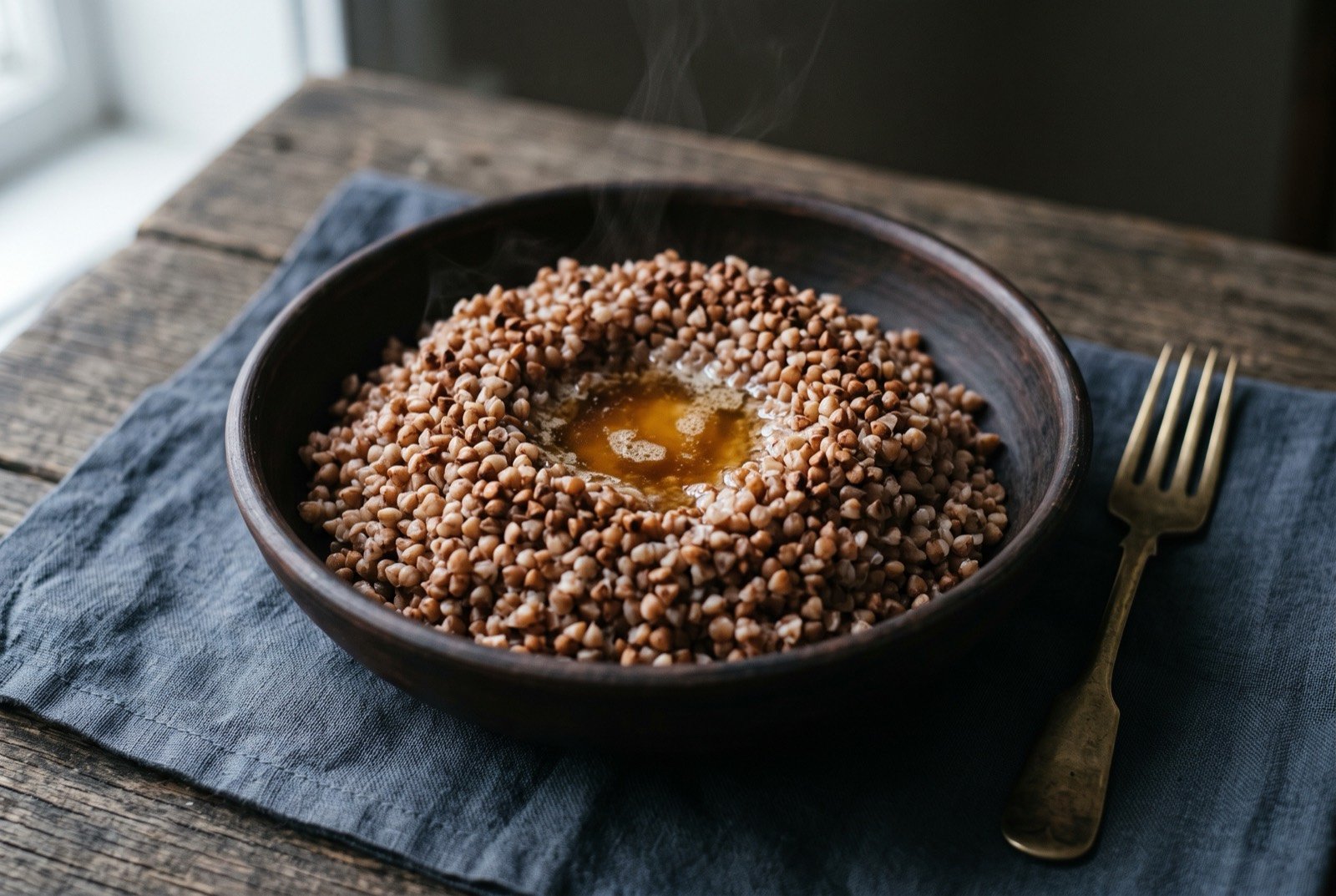
An illustration of the dish, not a photograph of it cooked.
- Time
- 40 minutes
- Reviewed
- Not yet reviewed from inside the tradition
- Cooked
- Not yet cooked and reported
The standard modern ratio is 1 part buckwheat groats to 2 parts water by volume, but the historically correct method is not a stovetop simmer at all.
As tradition built it
About 35 to 40 minutes.
Ingredients
- 1 part buckwheat groats
- 2 parts water
- to taste salt
- to taste butter
Method
Modern stovetop method
- Rinse and pick over the groats.
- Bring salted water to a fast boil, 1 part groats to 2 parts water, add the groats, return to the boil, and skim.
- Reduce to the lowest simmer, covered, undisturbed, for 20 to 25 minutes.
- Off the heat, add butter and rest covered a further 10 minutes.
The historically correct томление method
- Parboil the grain, then set it in a clay pot into the stove after its main fire had died down.
- Wrap the pot, historically in a fur hat or blanket, and leave it to finish for a further hour to ninety minutes off any heat source at all: a genuine, technologically specific ancestor of a modern low-and-slow finish.
What a modern chef changes
Toasted groats, a falling-heat Big Green Egg finish, and brown butter
Rung 1.
Method
- Toast the buckwheat groats individually with a little onion and mushroom before adding liquid, letting the grain absorb fat and flavour first, exactly as the traditional method does.
- Finish with rung one's own falling-heat logic: a Big Green Egg run hot and allowed to drift down over the cooking time, rather than a fixed-temperature domestic oven, for the closest mechanical echo of the stove's own curve available in a British kitchen.
- Finish with brown butter rather than plain butter, and a scatter of the same toasted whole groats, raw-toasted rather than cooked, for a textural contrast the traditional dish does not offer.