France and the Alps · Volume 11, Butter, Cider and the Buckwheat Line
Kig ha farz
Léon, north Finistère, Brittany
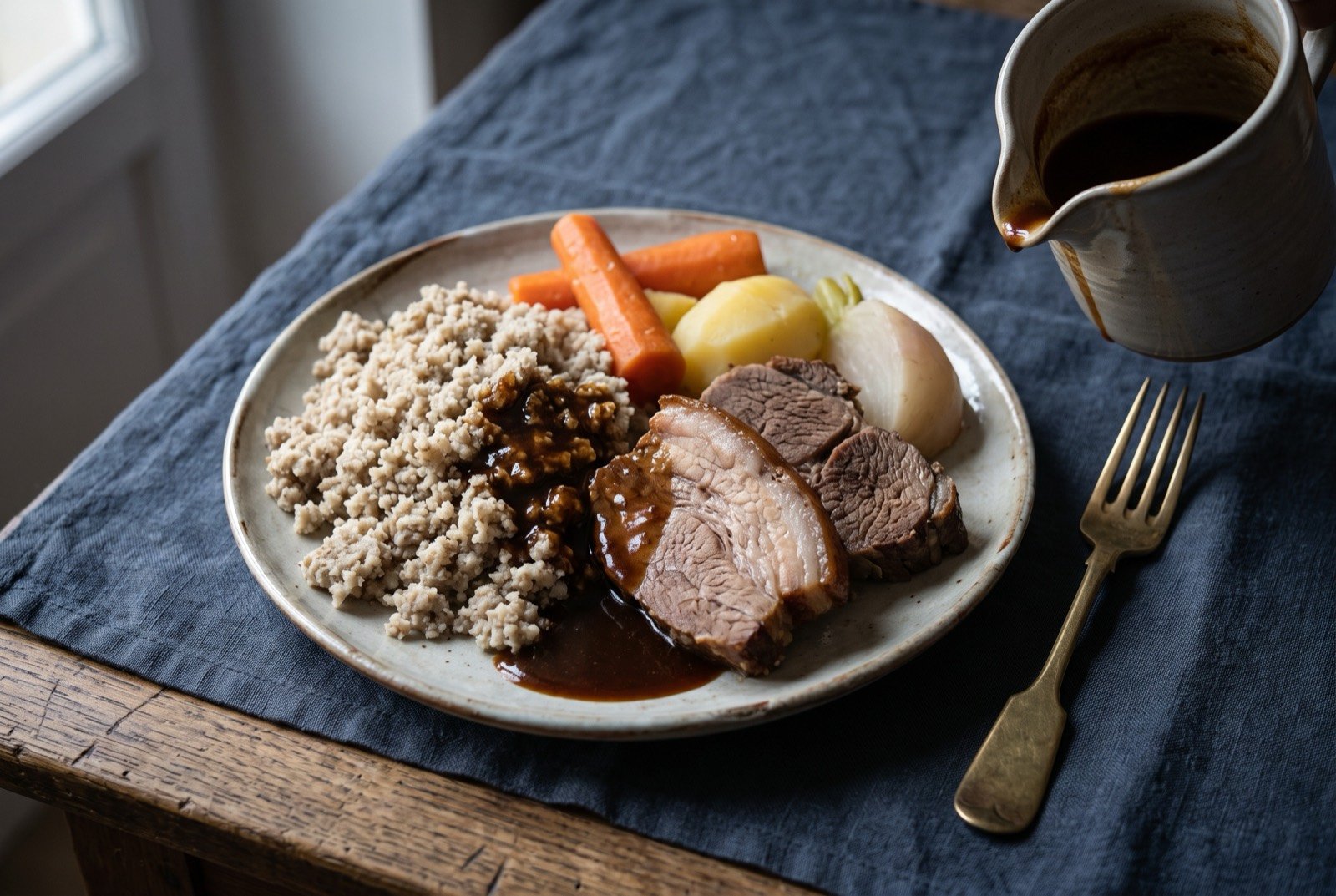
An illustration of the dish, not a photograph of it cooked.
- Time
- 2 hours
- Reviewed
- Not yet reviewed from inside the tradition
- Cooked
- Not yet cooked and reported
Born in the farms of the Léon, the pays of north Finistère between Brest, Morlaix and Lesneven, and a genuine answer to rural poverty: Sunday meats, garden vegetables and a buckwheat dumpling, the far, all cooked together in a single cauldron over a single fire.
As tradition built it
Far cooks about 2 hours in the broth; the whole dish needs a minimum of 3 hours.
Ingredients
An outline, not yet a recipe: the tradition's method with its ingredients named but not weighed. Quantities are being added from sources inside the tradition, lead dishes first.
- Sunday meats
- garden vegetables
- 1 kg flour, 4 eggs, 60 cl cream, 500 ml milk, 20 g salt, for 8 to 10 buckwheat batter, for the far noir
- 1 tightly woven cloth sack, roughly 30 by 20 cm, soaked and wrung out
- 150 g butter, for the lipig
- 200 g shallot, finely minced, for the lipig
- 2 ladles cooking broth, to loosen the lipig
Method
- Fill the soaked, wrung-out cloth sack with the buckwheat batter to make the far noir.
- Cook the meats, vegetables and the far together in a single cauldron over a single fire: the far cooks in the broth for around two hours, with the whole dish needing a minimum of three hours in total.
- Once cooked, rest the sack five to ten minutes, then turn out the dough and crumble it by hand; it should emerge with a distinctive sand-like texture rather than a smooth one.
- For the lipig, brown the butter and finely minced shallot together and loosen with two ladles of the cooking broth.
- Serve the meats, vegetables and crumbled far together with the lipig.
What a modern chef changes
Meats cooked separately sous vide, a dried-and-folded far, and a clarified lipig
Method
- Cook the meats sous vide, separately and at different temperatures suited to each cut, pork belly held long and low, beef shin longer still, rather than boiling everything together to one compromise doneness, then finish each piece briefly in the reserved broth just before serving to rebuild the single-pot flavour without the single-pot texture loss.
- Dry a portion of the crumbled far in a low oven or dehydrator after cooking, to concentrate and lightly toast its flavour, then fold the dried portion back through the fresh crumb for a genuine textural contrast the traditional single preparation does not have.
- Build the lipig with a properly clarified butter passed through a chinois, for a cleaner, less cloudy finish than whole butter gives.