Korea and Japan · Volume 55, The Jang, the Ferment and the Divided Table
Pyongyang Naengmyeon
Pyongyang and Pyongan
Illustration
- Time
- 15 minutes
- Researched
- 12 sources cited
North Korea's own state cookbook, the 2014 Joseon Ryori Jeonjip, specifies that the noodle's buckwheat content should exceed 80%. Korean commentary argues that South Korean restaurant versions, commonly an 80:20 buckwheat-to-starch ratio, plausibly preserve that ratio more faithfully today than noodles actually served inside North Korea, where potato-starch filler is reportedly common. This chapter treats that specific comparison as informed commentary, not measured fact, since no source found compared the two directly. North Korean preparation, as described in available sourcing, uses meat-based broths, sometimes darkened with starch and baking soda; South Korean restaurant preparation typically uses a clearer beef-and-bone broth with dongchimi, fermented radish water, blended in as a secondary element rather than the whole broth. Both traditions share an emphasis on soft, delicate noodles and clear broth, distinct from Hamhung's springy, spicy, potato-starch style below.
As tradition built it
The South Korean restaurant style
Serves 4. Broth needs several hours or overnight; noodles, 15 minutes.
Ingredients
The method as the tradition gives it, with the ingredients named. Quantities follow as we verify them, lead dishes first.
- beef bones and brisket, for a long-simmered clear stock
- to taste dongchimi (fermented radish water kimchi) juice, to taste
- to taste soy sauce, salt, to season
- 400g buckwheat noodles, at least 80% buckwheat if available
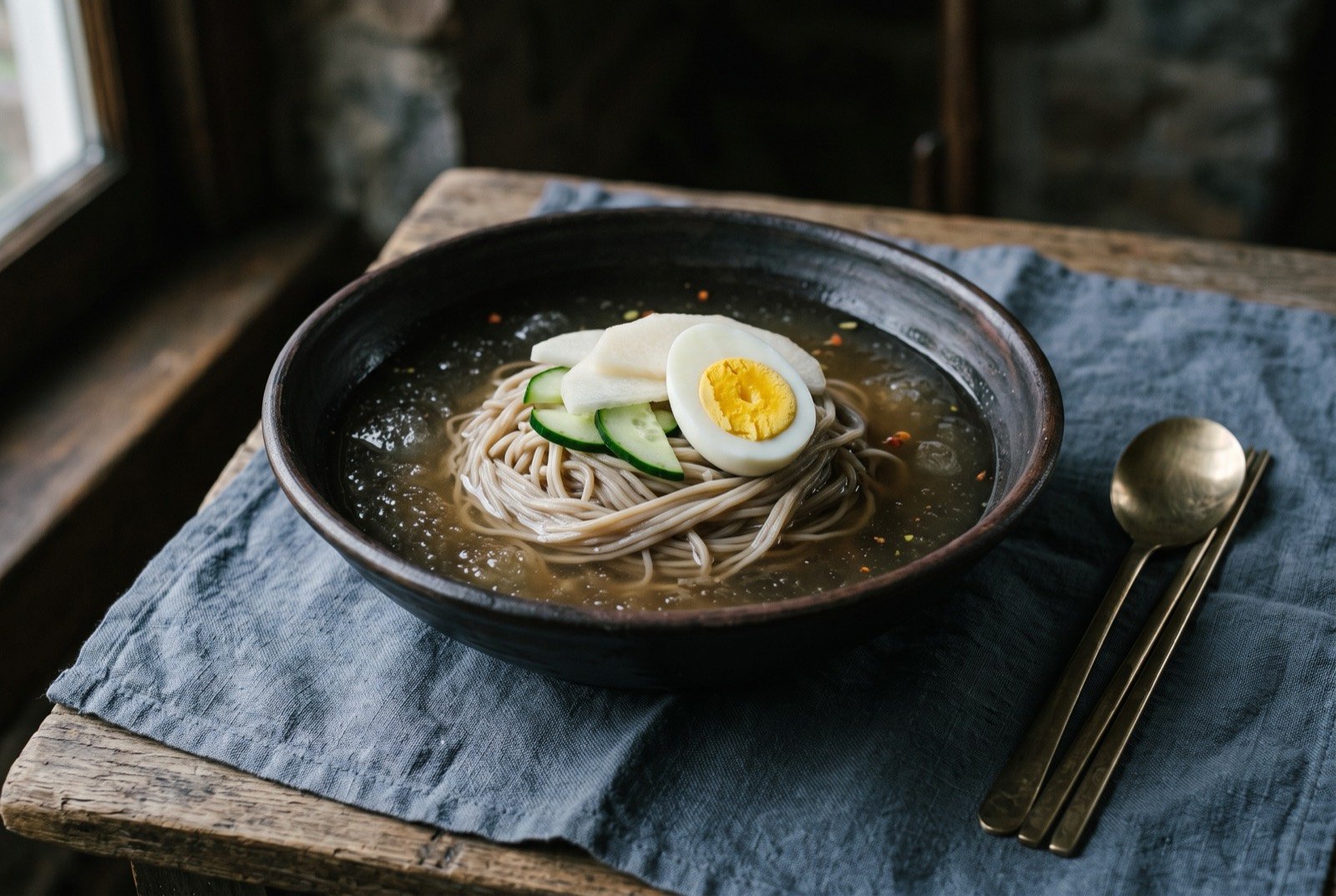
- for garnish cucumber, Korean pear, boiled egg, to garnish
Method
- Simmer beef bones and brisket for several hours or overnight to build a clear, deep stock; skim regularly.
- Chill the stock thoroughly, then blend it with dongchimi juice to taste, seasoning further with soy sauce and salt rather than sugar or chilli.
- Cook the buckwheat noodles briefly, rinse in cold water to firm them and remove starch.
- Serve noodles in the chilled broth, garnished with cucumber, pear and boiled egg.
What a modern chef changes
The broth's clarity treated as the actual technique.
No single numbered rung; a discipline of restraint that echoes Rung 4's respect for a slow, deliberate process
Method
- Chill the finished stock overnight before serving, never serving it warm-cooled, since the dish's whole identity depends on genuine, thorough cold, not a merely tepid broth.
- Balance the dongchimi juice by taste in stages, not all at once, since its sourness varies significantly by how the dongchimi itself was made, and this dish has no fixed ratio that survives that variation.
- Serve immediately once the noodles are rinsed cold. Buckwheat noodles lose their texture quickly once dressed in cold broth; this is not a dish that improves by sitting.