Korea and Japan · Volume 55, The Jang, the Ferment and the Divided Table
Jeonju Bibimbap
Jeolla-do
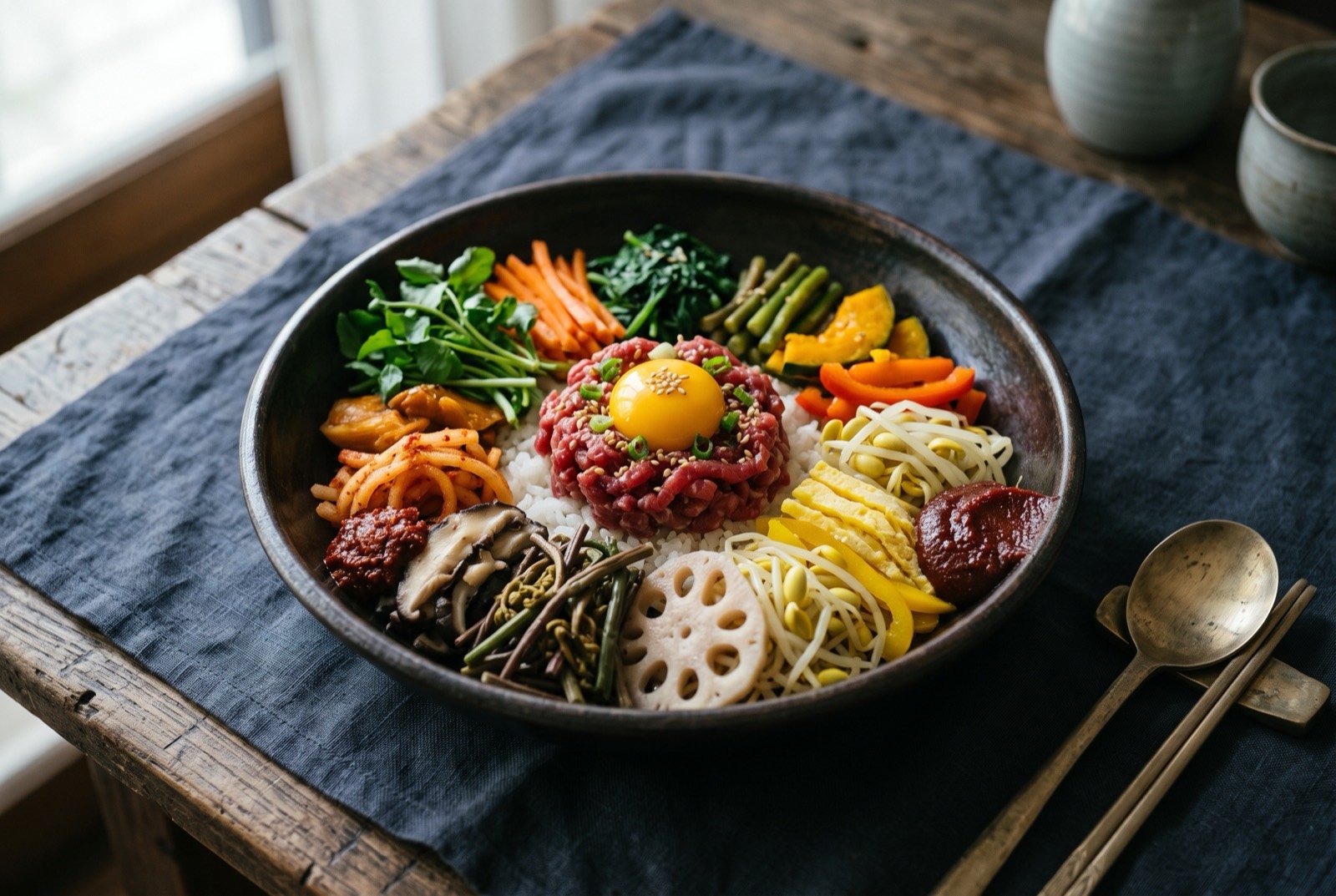
An illustration of the dish, not a photograph of it cooked.
- Time
- 45 minutes
- Researched
- 12 sources cited
- Reviewed
- Not yet reviewed from inside the tradition
- Cooked
- Not yet cooked and reported
Jeonju bibimbap is reported to use up to thirty different ingredients, built around bean sprouts, gochujang, a yellow mung-bean jelly, and raw beef yukhoe, deliberately following a five-colours, five-flavours principle drawn from yin-yang and five-phases philosophy. Yukhoe is described as originally, traditionally part of the dish, not a modern upscale addition. This chapter's research could not confirm Jeonju's specific rice-cooking method distinctly from Jinju's, a different regional bibimbap tradition with its own well-documented beef-stock rice method (see Tongyeong, below, for another regional bibimbap this chapter could source more specifically); do not assume the two methods are the same.
As tradition built it
Serves 4. About 45 minutes.
Ingredients
- about 700g rice (raw weight), cooked cooked short-grain rice
- about 130g bean sprouts, blanched
- about 100 to 150g each of watercress, bellflower root, bracken and courgette, 3 to 4 dried shiitake mushrooms, and 70 to 100g each of radish, cucumber and carrot assorted seasonal vegetables, prepared separately, each seasoned lightly
- 100 to 150g beef yukhoe, thinly sliced or finely chopped, dressed with sesame oil, garlic and a little sugar
- about 150 to 200g hwangpo-muk (yellow mung-bean jelly), if available
- 3 to 4 tbsp gochujang, to serve
- 1 egg yolk or fried egg, per portion
Method
- Prepare each vegetable and the bean sprouts separately, seasoning each individually rather than as one mixed pile, so each keeps a distinct flavour in the bowl.
- Dress the yukhoe with sesame oil, garlic and a little sugar just before serving.
- Arrange rice in a bowl, topped with the vegetables arranged by colour, the yukhoe, the mung-bean jelly if used, and an egg yolk or fried egg in the centre.
- Serve gochujang on the side, mixed in by the diner at the table, not pre-mixed in the kitchen.
What a modern chef changes
The gochujang treated as the dish's real hinge, not a garnish spooned on at the end.
Rung 5
Method
- Grind fresh gochugaru specifically for the gochujang used here, coarse enough to read as a distinct heat rather than dissolving into the rice, and use a genuinely long-fermented gochujang if it can be sourced (see Sourcing in Britain), since this dish puts the paste on full, undiluted display in a way a stew does not.
- Season each vegetable component individually and taste it on its own before assembly, the discipline a thirty-ingredient dish depends on; a bibimbap built from unseasoned or under-seasoned components cannot be rescued by mixing at the table.
- Let the diner do the final mixing, and resist the instinct to compose the bowl as a finished, static plate; the dish's whole mechanism is the mixing itself.