Korea and Japan · Volume 55, The Jang, the Ferment and the Divided Table
Kongip-kimchi
Gyeongsang-do
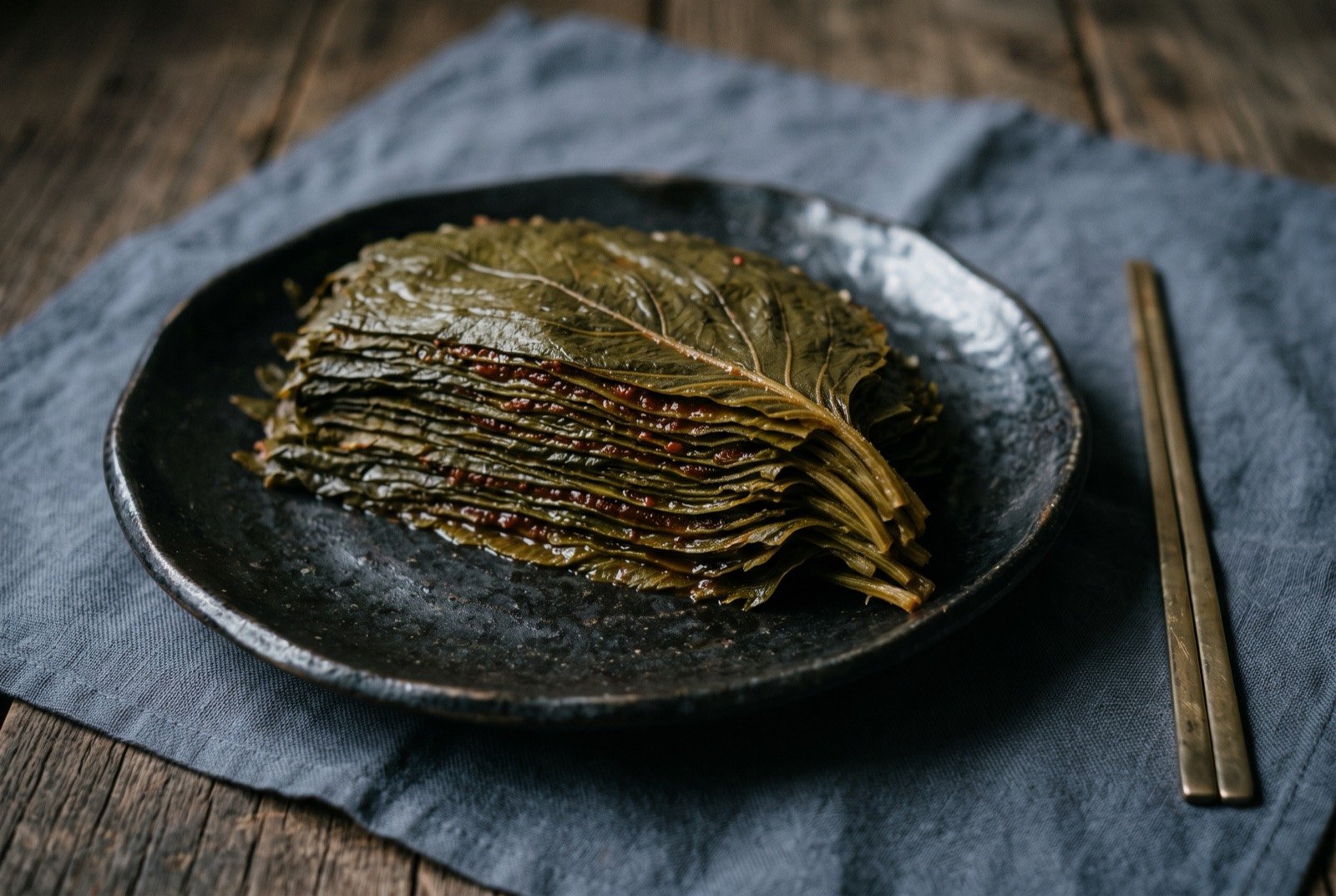
An illustration of the dish, not a photograph of it cooked.
- Time
- Not statedNo source states a time and the atlas has too few comparable dishes to estimate one.
- Researched
- 12 sources cited
- Reviewed
- Not yet reviewed from inside the tradition
- Cooked
- Not yet cooked and reported
As tradition built it
Serves 4 to 6 as banchan. About a month, mostly unattended.
Ingredients
- 100 leaves soybean leaves, picked late autumn once yellowed
- 1 cup salt, dissolved in enough water to cover brine, for curing
- 2 tbsp gochugaru, 1 tbsp garlic, 2 tbsp ganjang, plus anchovy sauce, sugar, ginger and sesame seeds to taste gochugaru, garlic, ganjang or a light seasoning paste
Method
- Pick soybean leaves in late autumn, once they have yellowed on the plant.
- Cure in brine for roughly a month, until softened and preserved.
- Layer the cured leaves with a seasoning paste of gochugaru, garlic and a soy-based seasoning between each leaf.
Notes
This chapter's research did not find institutional gram or millilitre quantities for this dish specifically, only the roughly month-long curing timeline; treat the seasoning paste above as a starting method to develop by taste, in keeping with this chapter's honesty about where its sourcing runs out.
What a modern chef changes
The same deliberate curing discipline as baechu kimchi, applied to a leaf rather than a head.
Rung 2's principle, applied to a leaf ferment
Method
- Cure the leaves at a controlled, cool temperature rather than an ambient autumn kitchen, for the same reasons given at Rung 2: a stable low temperature favours the fermentation bacteria that build flavour rather than the ones that spoil it.
- Layer the seasoning paste thinly and evenly between leaves rather than in one thick coating, since the leaves themselves are stiffer than perilla and need direct contact with the seasoning to take on flavour through their whole texture, not just the surface.
- Serve as a distinct banchan alongside, not instead of, a cabbage kimchi, precisely to make the point this dish exists to make: that Korean fermented vegetables are a whole family, not one dish under many names.