Korea and Japan · Volume 55, The Jang, the Ferment and the Divided Table
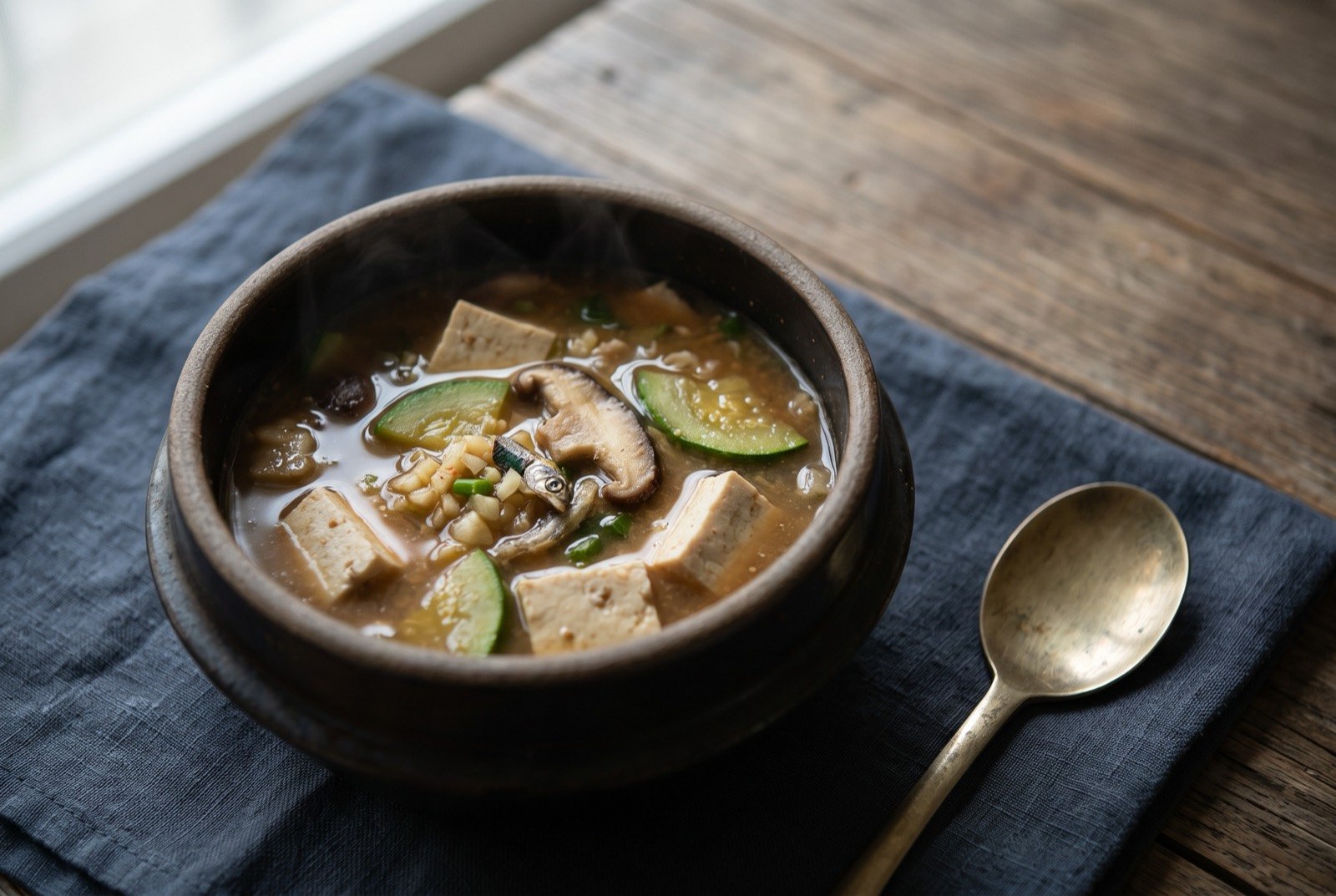
Doenjang-jjigae
Nationwide
Illustration
- Time
- 20 minutes
- Researched
- 12 sources cited
As tradition built it
Serves 2 to 4. About 20 minutes, once the doenjang itself exists.
Ingredients
- 2 to 3 tbsp doenjang, traditionally made (see The Ferment and Preserve Bench)
- 800ml (4 cups) anchovy or kelp stock
- 120g tofu, 80g courgette, 50g onion, 150g potato, 20g (2) shiitake mushrooms tofu, courgette, onion, potato, mushroom
- 1/2 tbsp gochugaru, or 1 fresh green chilli a little gochugaru or fresh chilli, to taste
- 1 tbsp minced garlic garlic
Method
- Bring an anchovy or kelp stock to a simmer.
- Dissolve the doenjang into the stock, breaking down any lumps.
- Add sliced vegetables, cooking each in roughly the order it needs, potato and onion first, softer vegetables and tofu last.
- Finish with garlic and, if wanted, a little extra chilli.
Notes
This chapter's research did not find institutionally sourced quantities for the finished stew itself, only for the doenjang paste that is its whole point; the method above is standard and reliable, and a reader's actual variable is the quality of the doenjang going in, not the stew's assembly.
What a modern chef changes
The point of the dish made explicit: the stew is a vehicle for the jang, not the other way round.
Rung 3's principle, tasted directly
Method
- Cook a side-by-side pair, one stew made with a genuinely long-aged, home-made or artisan-sourced doenjang, one with a mass-market flavour-enhancer-bulked version, and taste them next to each other before deciding this dish needs any further embellishment at all; the difference is the whole argument of this chapter's Rung 3, made edible.
- Do not overcook the tofu and courgette. A properly aged doenjang carries enough depth on its own that the vegetables' job is to stay distinct in texture, not to disappear into the broth.
- Finish, do not start, with the gochugaru, added at the very end so its ground heat stays bright rather than boiling into a flatter, muddier note.