Korea and Japan · Volume 55, The Jang, the Ferment and the Divided Table
Tongyeong Bibimbap
Coastal Gyeongsang (Tongyeong)
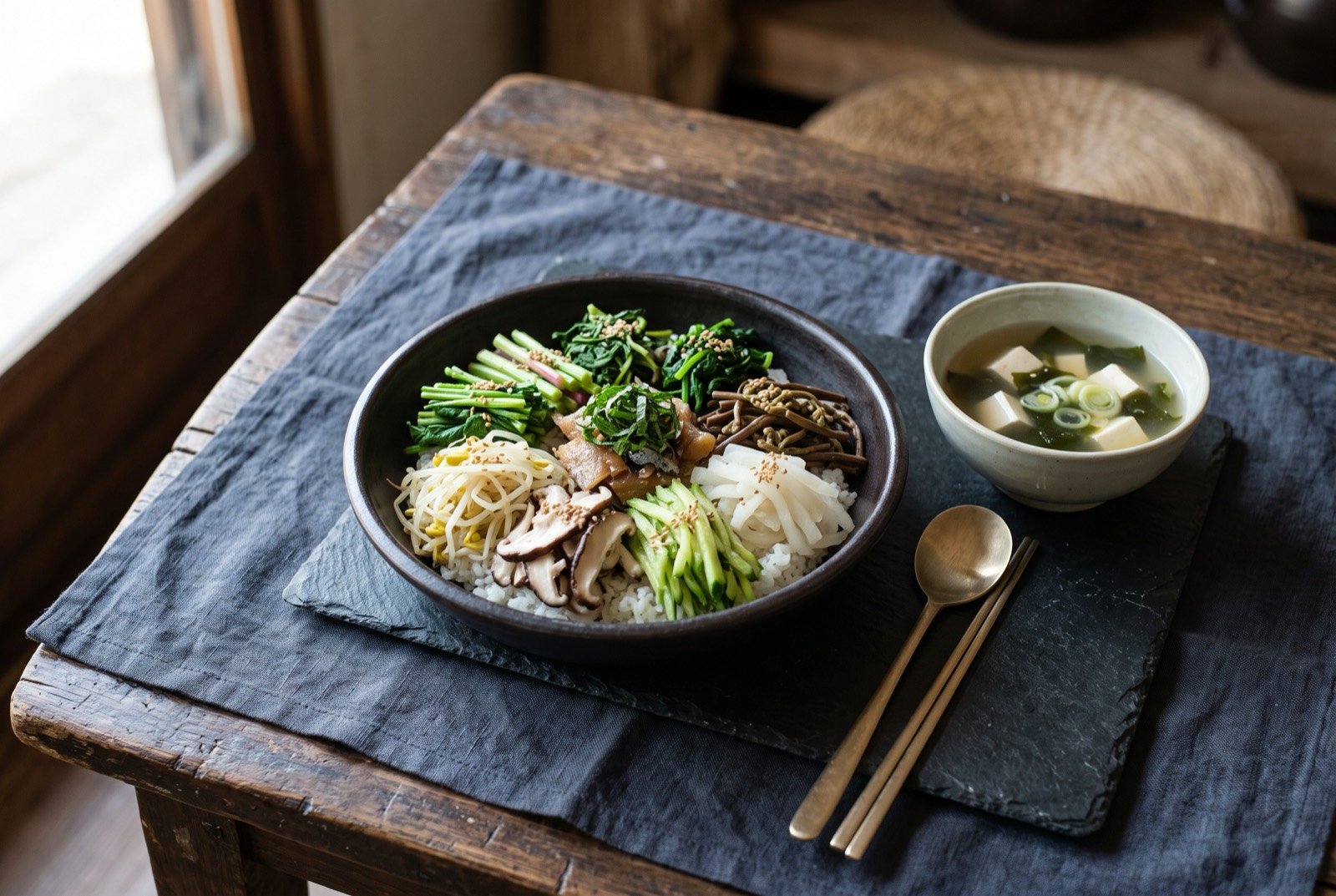
Illustration
- Time
- 45 minutes
- Researched
- 12 sources cited
Tongyeong bibimbap, and the whole meal built around it, is seasoned with myeoljang, an anchovy or small-fish liquid seasoning, rather than the soybean-based doenjang or ganjang used inland. This is the clearest single illustration in this chapter of how geography shapes even the invisible seasoning layer, not just the visible dish: coastal Tongyeong seasons with fish where inland regions season with soy.
As tradition built it
Serves 4. About 45 minutes.
Ingredients
- 700g rice (raw weight), cooked cooked short-grain rice
- 200g each of nine vegetables (bean sprouts, spinach, Chinese chives, sea tangle, fresh sea mustard, radish, courgette, aubergine, cucumber) ten or more seasonal vegetables (bean sprouts, cucumber, courgette, aubergine, spinach, water dropwort, seaweeds), each prepared and seasoned lightly with myeoljang
- 2 to 3 tbsp, to taste myeoljang, for seasoning throughout
- 260g tofu in 2 litres rice-rinse water or stock, with radish and seaweed to taste a companion soup, dubu-namul-guk (tofu, radish and seaweed, made with rice-rinse water and myeoljang), served alongside
Method
- Prepare each vegetable separately, seasoning with myeoljang rather than soy-based jang.
- Assemble over rice, arranged rather than mixed together in the pan.
- Serve alongside dubu-namul-guk, made with rice-rinse water, radish, tofu and seaweed, again myeoljang seasoned.
Notes
This chapter's research did not find institutional quantities for either the bibimbap or its companion soup; the method above is well and specifically sourced, the exact measures are not, and this chapter states that plainly rather than inventing figures to fill the gap.
What a modern chef changes
The fish-based seasoning made the whole point, not softened toward a more familiar soy flavour.
No numbered rung; a discipline of restraint rather than a technique change
Method
- Resist substituting doenjang or ganjang for myeoljang anywhere in this dish, even where a UK kitchen finds soy-based jang easier to source; the entire reason this dish exists in this chapter is to demonstrate that Korean seasoning is not one grammar with regional flavour notes, it is genuinely two different systems, and blending them here erases the point.
- Keep the vegetable count high and each component genuinely distinct, ten or more per the tradition, rather than simplifying to a smaller set; the dish's abundance is structural to its identity, the coastal answer to Jeolla's inland abundance.
- Serve the soup alongside, not as an afterthought, since dubu-namul-guk's rice-rinse-water base and myeoljang seasoning are doing the same structural work as the bibimbap itself, carrying the fish-based grammar through the whole meal rather than one dish.