Korea and Japan · Volume 55, The Jang, the Ferment and the Divided Table
Tteokbokki
Nationwide (street food)
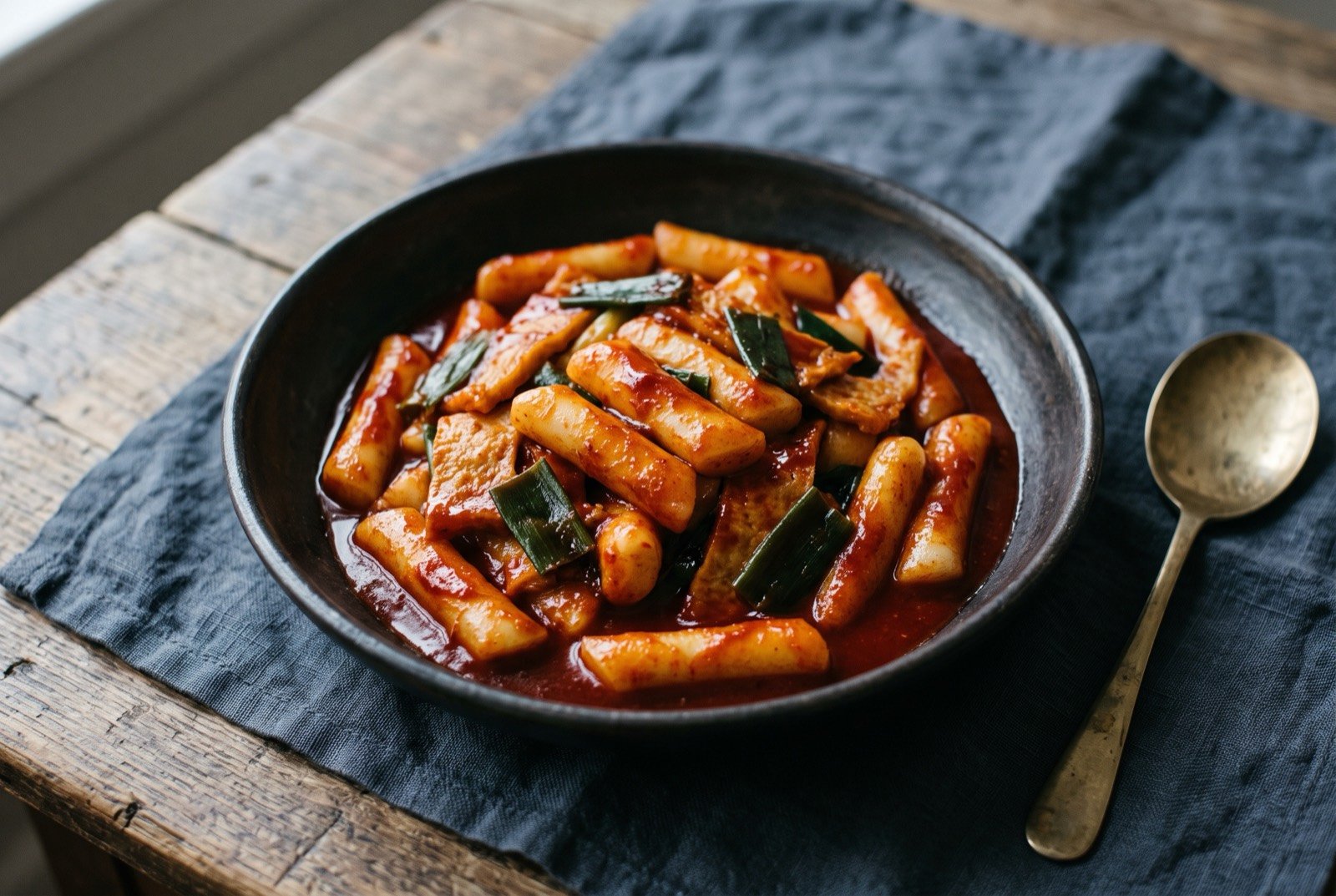
An illustration of the dish, not a photograph of it cooked.
- Time
- 20 minutes
- Researched
- 12 sources cited
- Reviewed
- Not yet reviewed from inside the tradition
- Cooked
- Not yet cooked and reported
As tradition built it
Serves 2 to 4. About 20 minutes.
Ingredients
- 400g rice cake (tteok), cylindrical
- 1 litre (with 15g dried anchovies, 5g kelp) anchovy or kelp stock
- 2 to 3 tbsp gochujang
- 1 tbsp gochugaru
- 2 to 3 tbsp sugar, 2 to 3 tsp minced garlic sugar, garlic
- 150g fish cake, half a spring onion, boiled egg to taste fish cake, spring onion, boiled egg, to finish
Method
- Bring an anchovy or kelp stock to a simmer, dissolve gochujang, gochugaru, sugar and garlic into it.
- Add rice cakes, simmering until they soften and the sauce thickens and clings.
- Add fish cake toward the end, finish with spring onion and a boiled egg if using.
Notes
This chapter's research did not find an institutionally sourced ratio for this specific dish; the method above reflects standard, reliable proportions rather than a pinned historical recipe.
What a modern chef changes
The gochujang put under the same scrutiny this chapter applies to it everywhere else.
Rung 3 and Rung 5 together
Method
- Use a genuinely long-fermented gochujang, sourced or home-made, and taste the sauce base before adding sugar, since a properly aged paste carries its own sweetness from the rice starch's own saccharification, and a factory paste's added sugar is often compensating for a step the traditional process never skipped in the first place.
- Grind a portion of the gochugaru coarse and add it separately from the smooth gochujang base, so the finished sauce carries both a smooth savoury heat and a distinct textural bite, rather than one uniform, flat spiciness.
- Do not over-reduce the sauce. The dish depends on a glossy, clinging consistency, not a dry paste; stop simmering once the rice cakes are tender rather than chasing maximum thickness.