France and the Alps · Volume 11, Butter, Cider and the Buckwheat Line
Cotriade
Brittany
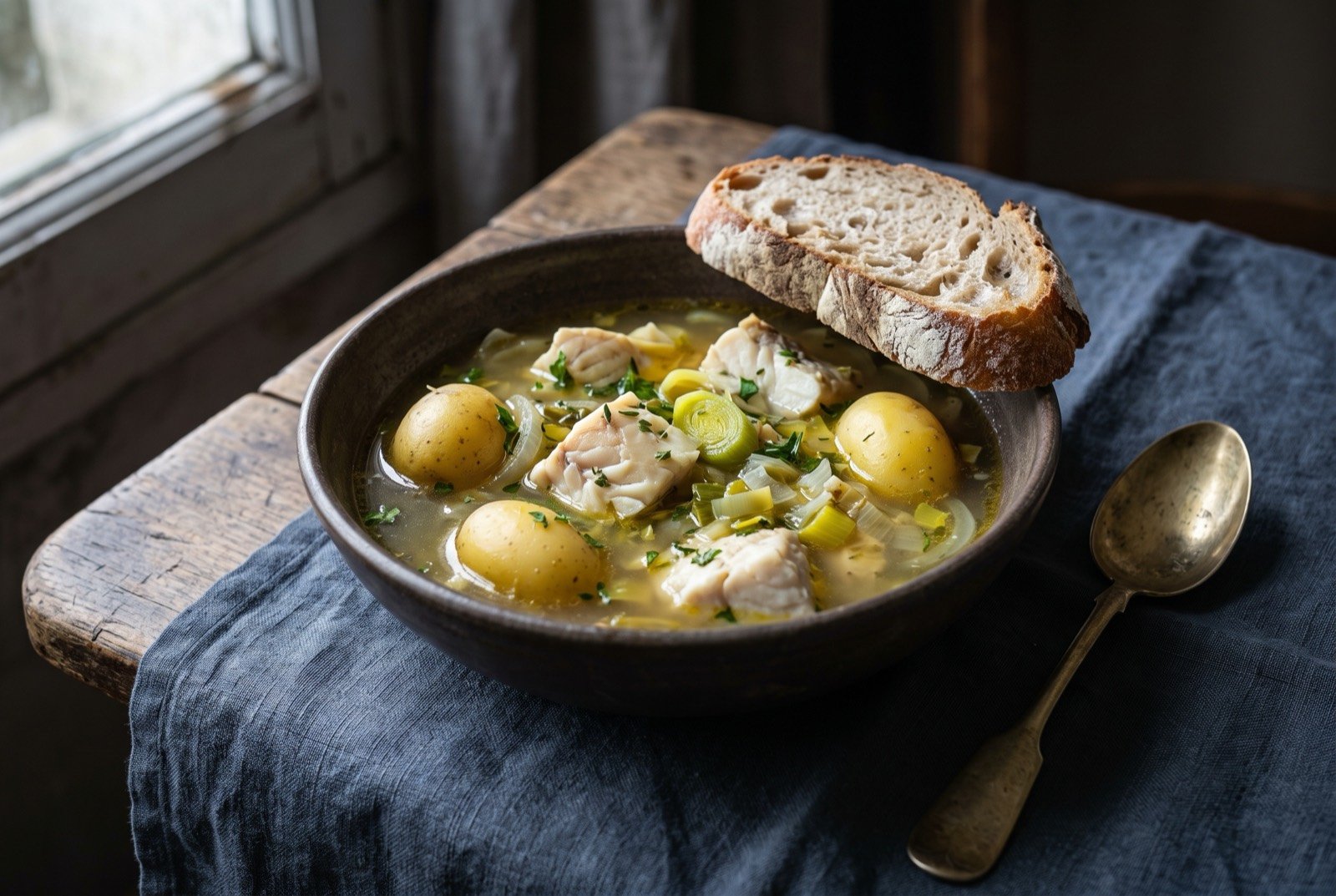
An illustration of the dish, not a photograph of it cooked.
- Time
- Not statedNo source states a time and the atlas has too few comparable dishes to estimate one.
- Reviewed
- Not yet reviewed from inside the tradition
- Cooked
- Not yet cooked and reported
From the Breton kaoter, cauldron, and kaoteriad, the cauldron's contents, though its exact regional origin is genuinely disputed even within French sourcing, one account placing it in southern Brittany from at least 1877 with older roots, another dating it specifically to the 16th century Auray area of the Morbihan; this chapter states the dispute rather than resolving it.
As tradition built it
Ingredients
An outline, not yet a recipe: the tradition's method with its ingredients named but not weighed. Quantities are being added from sources inside the tradition, lead dishes first.
- godaille, the informal portion of the catch fishermen kept as a supplement to their wages: whatever unsold fish remained, commonly mackerel, hake, pollock, conger eel, gurnard, horse mackerel, wrasse and weever
- 1 kg potatoes
- 4 to 5 onions
- 200 g salted butter
Method
- Simmer the mixed fish, the godaille, with potatoes, onions and salted butter in a plain broth: no saffron, no rouille, no elaborate garnish.
- Drink the broth first, traditionally poured over bread.
- Eat the fish afterward as a second course from the same pot.
What a modern chef changes
A properly built and clarified stock, fish cooked to their own timing, and a twice-strained broth
Rung 3
Method
- Roast a portion of the bones and trim briefly first, deglaze, and clarify the resulting stock through a chinois for real depth and clarity before the remaining fish is cooked in it, rather than the cloudier, more one-note result of simmering everything together from raw.
- Cook each fish separately, briefest first, following the timing discipline the technique ladder sets out for shellfish and applying the same logic to fin fish, so a delicate wrasse and a firmer conger eel each reach the pot only at the point that gives them their own correct doneness, rather than all going in together.
- Serve the broth first exactly as tradition does, but pass it once more through a chinois immediately before pouring, for a genuinely clean, restaurant-grade first course rather than a rustic one.