Britain and Ireland · Volume 31, The Roast, the Crust and the Clotted Cream
Pie and Mash with Liquor
London
Illustration
- Time
- 1 hour 30
- Researched
- 9 sources cited
London's first recorded pie and mash shop opened in 1862; the trade's oldest surviving shop, M. Manze on Tower Bridge Road, has traded since 1902. "Liquor," the thin green parsley sauce served alongside, carries no alcohol despite the name and was traditionally made from the cooking liquid left over from stewing eels, a detail worth keeping in the telling even though most shops today build it from a plainer stock.
As tradition built it
Serves 4. About 1.5 hours.
Ingredients
For the filling
- 1 tbsp oil
- 1 onion, finely chopped
- 2 garlic cloves
- 450g minced beef
- 1 tsp English mustard
- 1 tbsp tomato purée
- 150ml brown ale
- 100ml beef stock
- 2 tbsp plain flour
For the pastry
- 350g self-raising flour, plus 225g beef suet, for the base
- 450g shortcrust pastry, for the lid
- 1 egg yolk, to glaze
For the mash
- 900g potatoes, peeled
- 100ml hot milk, and butter
For the liquor
- 50g butter
- 50g cornflour
- 500ml stock (chicken, fish or vegetable)
- a generous bunch a generous bunch of parsley, finely chopped
Method
- Fry the onion and garlic in the oil 5 minutes, brown the mince 5 minutes more, then stir in the mustard, tomato purée, ale, stock and flour, simmer briefly to thicken, and cool.
- Mix the suet flour with water to a firm dough, roll thin, and use to line individual pie dishes.
- Fill with the cooled mince, top with rolled shortcrust, glaze with egg yolk, and bake in a water bath at 180°C for 20 to 30 minutes.
- Steam the potatoes 20 minutes, mash with hot milk and butter to a smooth, soft mash.
- For the liquor, melt the butter, whisk in the cornflour, add the stock gradually, simmer until glossy, then stir through the parsley.
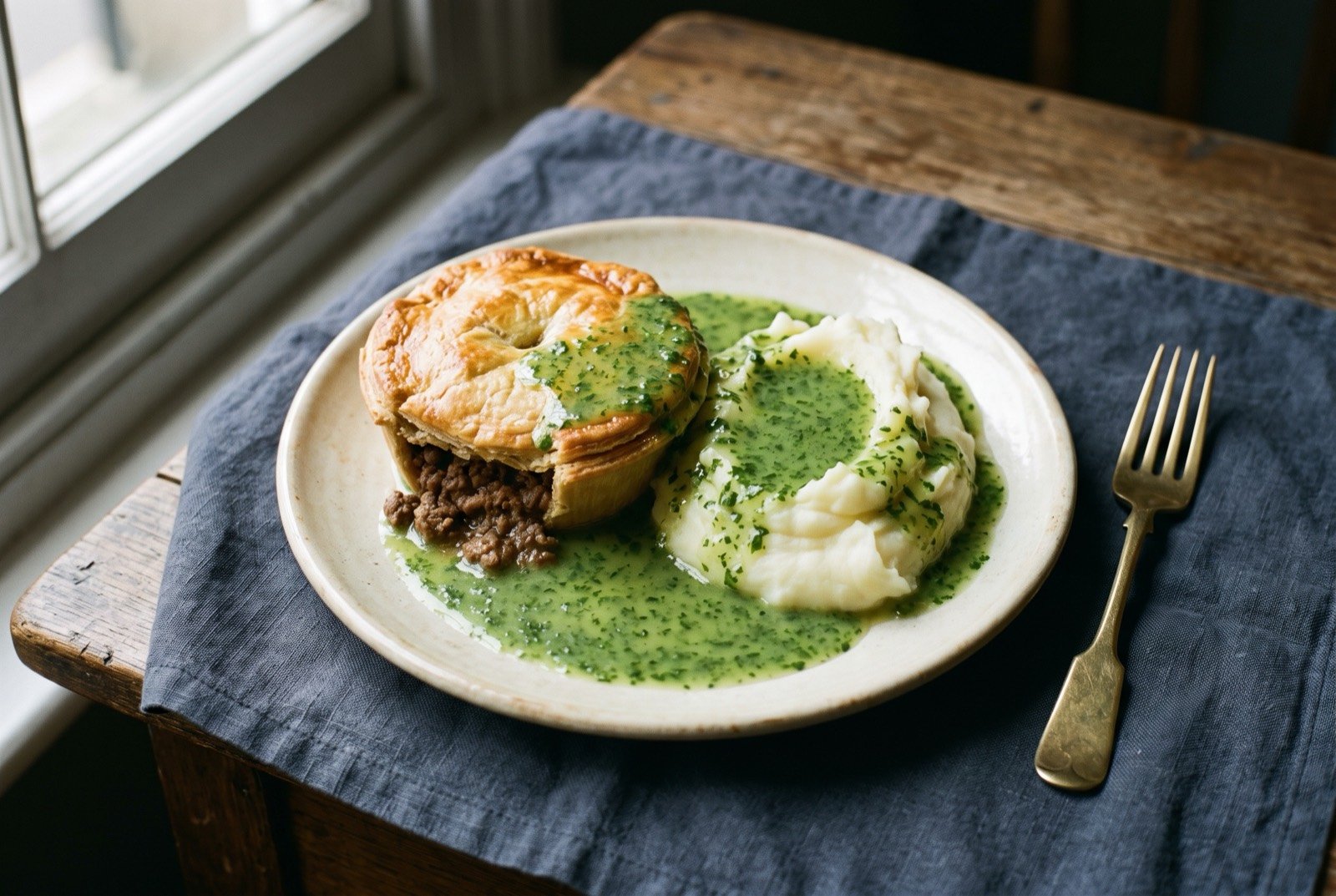
- Serve the pie on the mash, liquor spooned generously over both.
What a modern chef changes
The liquor's original logic restored, honestly, without pretending eel stock is still standard.
Rung 3, applied to the filling by analogy
Method
- Build the liquor from a real, reduced fish or chicken fond rather than a cornflour-thickened stock alone, closer in spirit to the dish's own origin as a use for eel-cooking liquid, since a liquor with real body behind it tastes nothing like the thin, purely-thickened version most shops now serve.
- Rest the suet base dough briefly before rolling, exactly as Rung 1 demands for the steamed pudding above, even though this base is baked rather than steamed, since the same gluten-avoidance principle keeps it tender rather than tough.
- Mash with real restraint on the milk, using a ricer rather than a masher for a genuinely smooth result, since a proper pie and mash mash is judged on being soft and lump-free without turning gluey, a balance an electric beater will always overshoot.