Britain and Ireland · Volume 31, The Roast, the Crust and the Clotted Cream
Roast Beef and Yorkshire Pudding
England
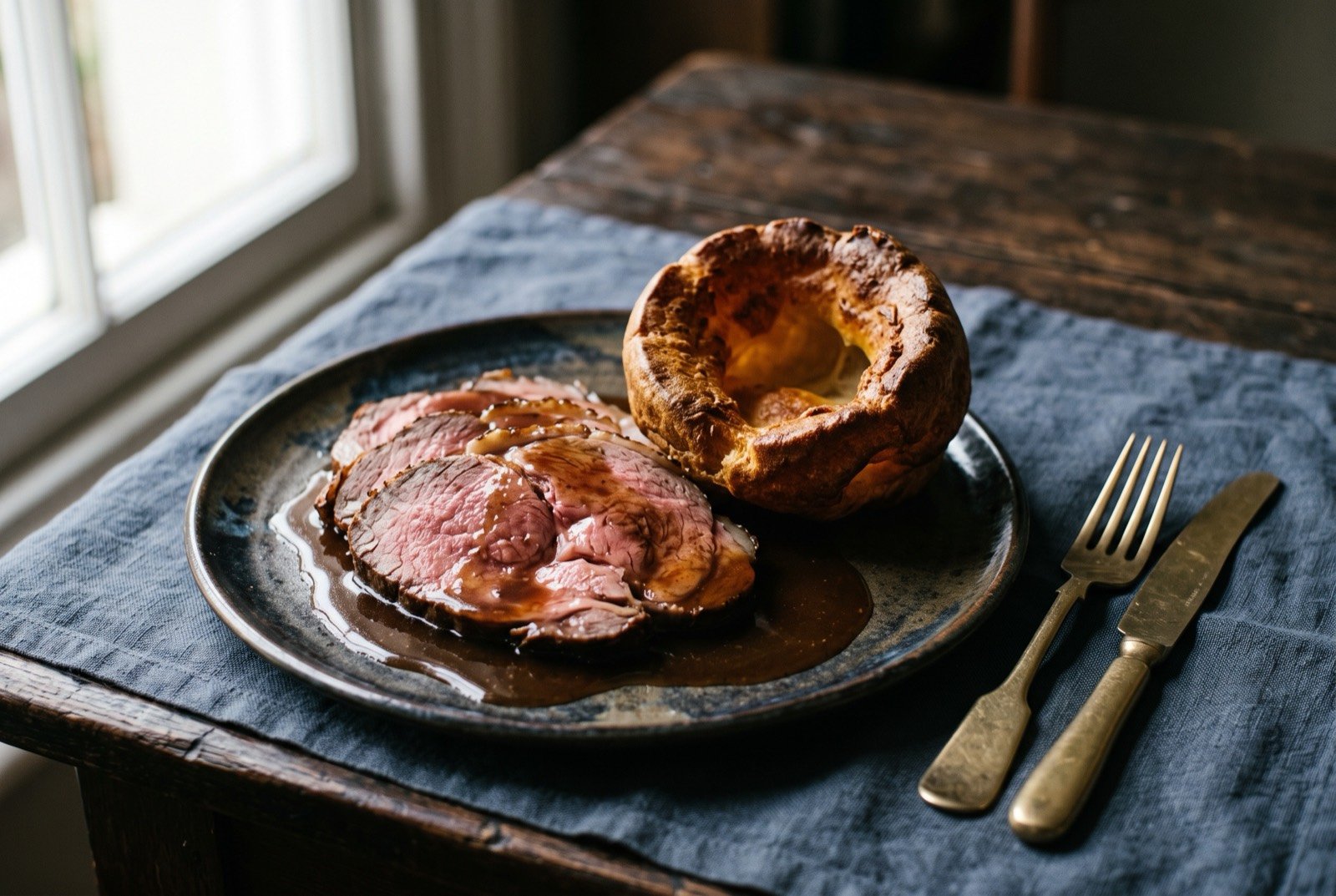
Illustration
- Time
- 2 hours
- Researched
- 9 sources cited
The batter pudding baked in beef dripping beneath a roasting joint long predates its now-fixed northern name, but by the time it reaches this chapter's southern table it has become the fixture of the English Sunday lunch across the whole country, roast beef, its own dripping-crisped pudding, root vegetables and a gravy built from the joint's own fond. This chapter treats it once, here, as the dish that sets the standard for everything roasted or gravy-finished elsewhere in the book; a second, northern telling of the same dish belongs to this volume's sibling chapter rather than being repeated here.
As tradition built it
Serves 4 to 6. About 2 hours, plus resting.
Ingredients
- 1.5 to 2kg beef joint (topside, rib or sirloin), at room temperature
- for frying beef dripping or vegetable oil
- to taste salt
- to taste black pepper
For the pudding
- 140g plain flour
- 4 eggs
- 200ml milk
- a pinch salt
- a thin layer beef dripping, for the tin
For the gravy
- 1 onion, halved
- 1 tbsp plain flour
- 300ml beef stock
- a splash red wine, optional
Method
- Whisk the flour, eggs, milk and salt to a smooth batter, at least an hour before cooking, and leave to rest at room temperature.
- Season the beef well with salt and pepper, sear briefly in dripping or oil in a hot pan if the joint is lean, and roast on a bed with the halved onion, at 220°C for 20 minutes, then reduced to 180°C, roughly 15 to 20 minutes per 500g for medium, basting with the pan's own fat twice during cooking.
- Rest the meat, loosely covered, for at least 20 minutes, reserving the pan and its fond.
- Turn the oven to its highest setting. Pour a thin layer of dripping into a muffin tin or a single roasting tin and heat until smoking hot.
- Pour in the rested batter and bake 20 to 25 minutes, without opening the door, until well risen and deeply golden.
- Meanwhile, place the roasting tin over direct heat, deglaze the fond with a splash of wine or stock, scraping up every browned bit, stir in the flour, then add the remaining stock gradually, simmering to a glossy gravy.
- Carve the beef against the grain, and serve with the pudding, gravy, and roast vegetables.
What a modern chef changes
The joint's own fond respected as the whole gravy, and the fat basting given real discipline.
Rung 2
Method
- Render and save the beef's own fat specifically for the pudding tin, rather than using a generic oil, so the pudding itself carries the same flavour base as the meat it accompanies rather than a neutral one.
- Baste with the rendered fat at least twice during roasting, not once, since it is this repeated basting, not the oven alone, that carries Maillard-browned flavour back across the joint's surface and keeps a lean cut from drying under sustained heat.
- Build the gravy from the tin's fond alone, deglazed and reduced, never from a stock cube or granules poured in cold. A gravy without a real fond to reduce is a different, much weaker dish wearing the same name, and this is the single clearest place in the whole chapter where careful and careless technique produce genuinely different results from the same ingredients.