The Sinosphere · Volume 37, The Barley Line, the Butter Churn and What Exile Carried Out
Guthuk
Ü-Tsang and pan-Tibetan
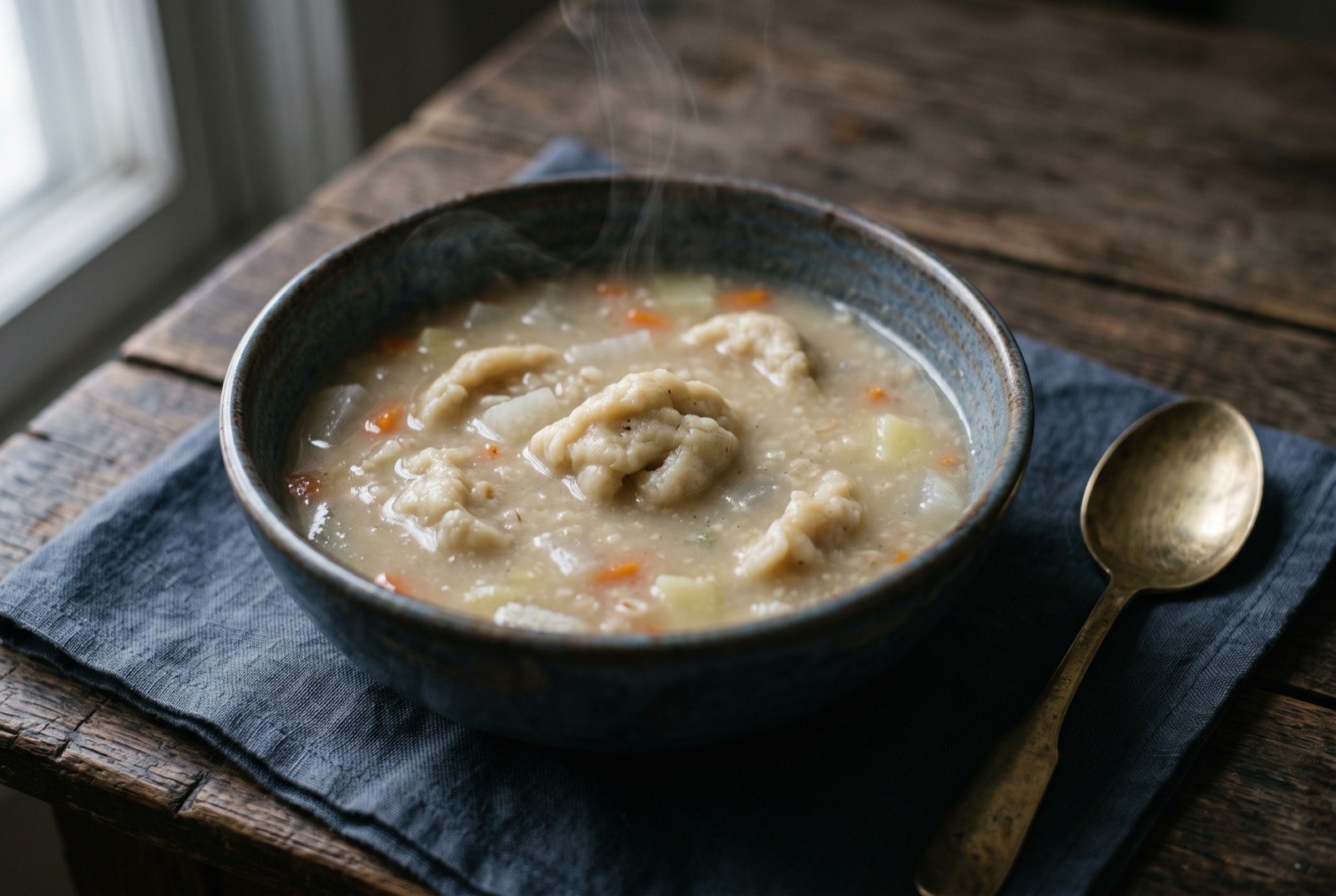
An illustration of the dish, not a photograph of it cooked.
- Time
- 1 hour 30
- Reviewed
- Not yet reviewed from inside the tradition
- Cooked
- Not yet cooked and reported
New Year's Eve soup, eaten on the 29th day of the twelfth lunar month, the night before Losar itself. The name combines gu, nine, and thuk, noodle soup, and it traditionally contains at least nine ingredients, though the exact list varies by family and this chapter does not present any single version as canonical. Alongside the soup, each diner is served one or more dumplings, each hiding an object with a divinatory, often comic, meaning about the finder's character for the year ahead: chilli for a sharp or glib tongue, salt for being "all right," wool for kindness and patience, a white stone for long life, coal for a black heart.
As tradition built it
Serves 4 to 6. About 1.5 hours.
Ingredients
For the broth
- 800 g meaty bones, beef or yak if obtainable
- 2 litres water
- 1 onion, chopped
- a thumb ginger, grated
- 2 cloves garlic, crushed
- 200 g radish, diced
- 150 g carrot, sliced
- a handful dried peas, soaked overnight
- 100 g potato, diced
- 2 tbsp roasted barley flour (tsampa)
For the divination dumplings
- About 190g flour, 150ml water plain flour and water, for a simple dough
- one per diner, hidden inside a few dumplings a chilli flake, a pinch of salt, a scrap of wool or cotton, a small clean pebble, a piece of charcoal
Method
- Simmer 800g meaty bones, beef or yak if obtainable, in 2 litres water for an hour to build a base stock, then strain.
- Sauté a chopped onion, a thumb of grated ginger and 2 crushed garlic cloves until soft, add the stock back along with 200g diced radish, 150g sliced carrot, a handful of dried peas soaked overnight, 100g diced potato and 2 tablespoons roasted barley flour stirred through to lightly thicken the broth, and simmer 20 to 25 minutes until the vegetables are tender.
- Meanwhile make a plain flour-and-water dough, rest it 20 minutes, and pinch off small nuggets, hiding a chilli flake, a pinch of salt, a scrap of wool or cotton, a small clean pebble or a piece of charcoal inside a few of them, one per diner, before dropping all the dumplings into the simmering broth for the final 5 minutes to cook through.
Notes
This chapter's exact vegetable list and quantities are a reasonable, workable version cross-checked against several diaspora sources rather than one settled traditional recipe, since no in-tradition source consulted gave a single definitive set of nine ingredients or amounts, and that gap is stated here rather than dressed up as more settled than it is.
What a modern chef changes
A longer stock, roasted roots, and the ritual kept entirely intact
Technique note: extended reduction, the divination itself left untouched
Method
- First, build the base stock with the same long-simmer discipline the rest of this chapter's meat cookery calls for, two hours rather than one, for real gelatinous body rather than thin flavoured water.
- Second, roast the root vegetables separately before they go into the pot, for a caramelised depth the straight simmer does not develop.
- Third, form the divination dumplings from a slightly thinner dough than tradition calls for and finish them briefly in a hot dry pan after they come out of the broth, for a textural contrast against the soft-cooked standard dumplings served alongside.
- Fourth, keep the game entirely intact rather than tidying it away for a smarter table: this dish's whole point is the small domestic ritual inside it, and the honest elevation here is technical, in the broth and the dumpling, not in removing the thing that makes it worth cooking in the first place.