The Sinosphere · Volume 37, The Barley Line, the Butter Churn and What Exile Carried Out
Gyuma
Kham nomad country (Drongpa and Gegye nomadic societies)
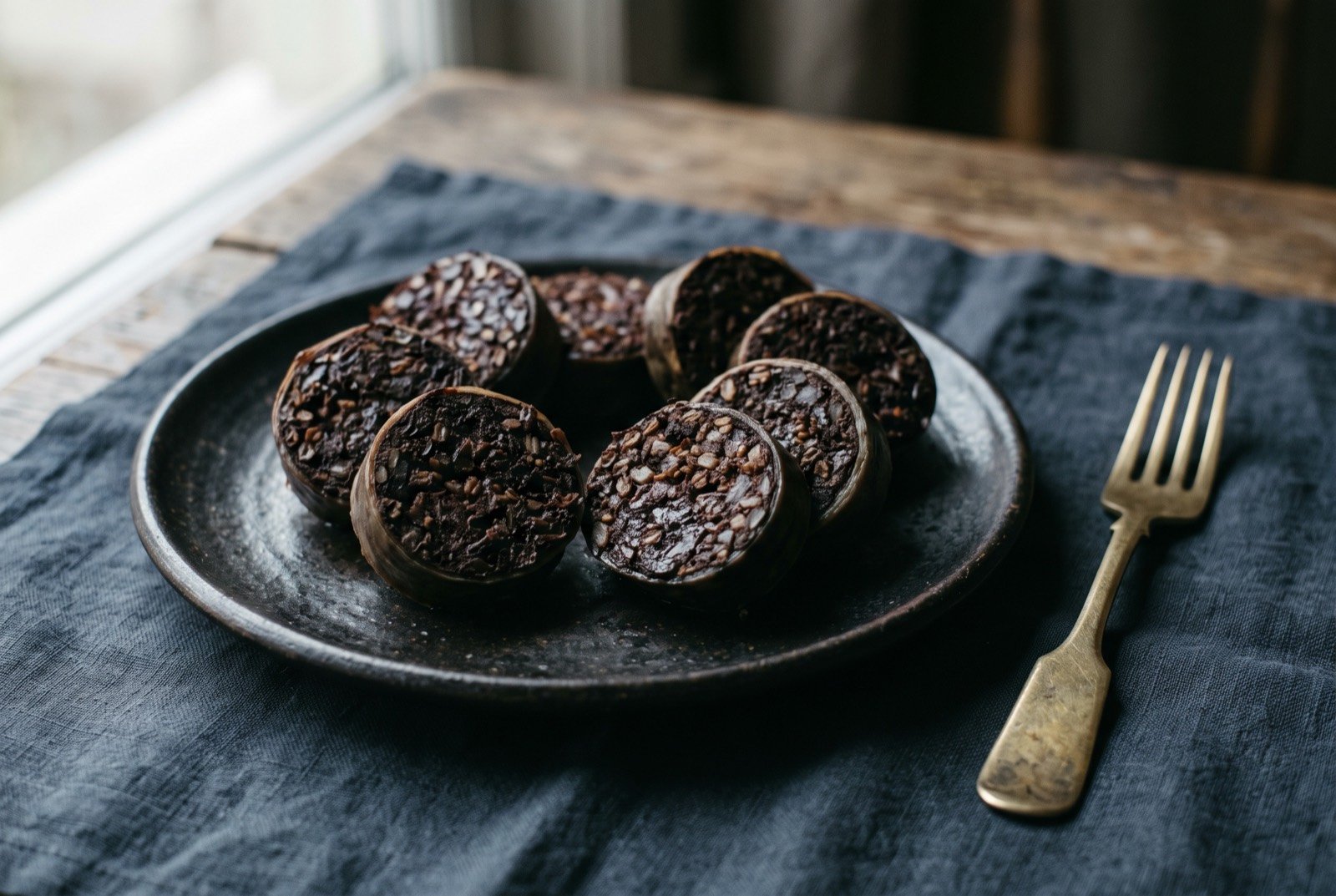
An illustration of the dish, not a photograph of it cooked.
- Time
- 1 hour
- Reviewed
- Not yet reviewed from inside the tradition
- Cooked
- Not yet cooked and reported
Blood sausage, and the one dish in this chapter's twice-given list this research could not source with confidence to central Tibet specifically. The single richest account found, an interview with Rinchen Tashi, is explicitly from a nomadic area of Kham, describing practice among the Drongpa and Gegye nomadic societies, and no equivalent Ü-Tsang-located account was found. This chapter presents it as representative of a technique family found across the plateau, not as proof of identical central Tibetan practice, and says so here rather than quietly borrowing Kham's detail under a central Tibetan label.
As tradition built it
Makes several sausage lengths. About 1 hour, plus the mid-November seasonal timing for the full winter-storage method.
Ingredients
- 600 ml fresh yak or sheep's blood
- in roughly equal measure by volume to the blood cooked rice or roasted barley flour
- a portion finely chopped meat and fat, chopped with two knives worked crosswise rather than minced
- to taste salt
- cleaned upper section intestine casing
- for winter storage, optional extra yak or sheep stomachs
Method
- Mix fresh yak or sheep's blood with either cooked rice or roasted barley flour in roughly equal measure by volume, plus a portion of finely chopped meat and fat, chopped with two knives worked crosswise over the meat rather than minced, and salt to taste.
- Fit a wooden funnel to the cleaned upper section of intestine casing and fill it with the mixture, tying off into sausage lengths.
- Poach in water held at approximately 80°C for 30 minutes, then rest in cold water for 10 minutes to firm before slicing.
- Traditionally, this work happens in mid-November, when slaughter for the season's preservation needs takes place; sausages made then are packed into extra yak or sheep stomachs, sewn shut, left overnight to freeze, and boiled again before eating through the winter.
Notes
Gyuma-making is described, in the source this chapter drew on, as men's work, while cleaning the intestine casings is women's work, a gendered division the source states directly rather than one inferred here.
What a modern chef changes
A gentler set by sous vide, and both starches shown on the plate
Rung 5
Method
- First, sous vide the filled and tied sausage at a precise, low temperature, well below a rolling boil, to set the blood protein far more gently than poaching allows, avoiding the graininess a hard boil can cause, directly transferable from any serious boudin noir technique.
- Second, finish with a hard sear on a Big Green Egg for a contrasting crust against the sausage's naturally soft interior.
- Third, use a sausage-stuffing attachment and proper hog casing rather than reconstructed intestine where the traditional casing cannot be sourced, an honest substitution rather than a pretence that the traditional casing was used.
- Fourth, serve sliced thin over a bed of the same barley used in the filling, cooked separately as a simple pilaf, so the dish's two starch options, rice or barley, both appear on the plate rather than the cook choosing one and hiding the other.