The Slavic east and the Balkans · Volume 26, Rye, the Samovar and the Sturgeon’s Retreat
Stroganina
Siberia
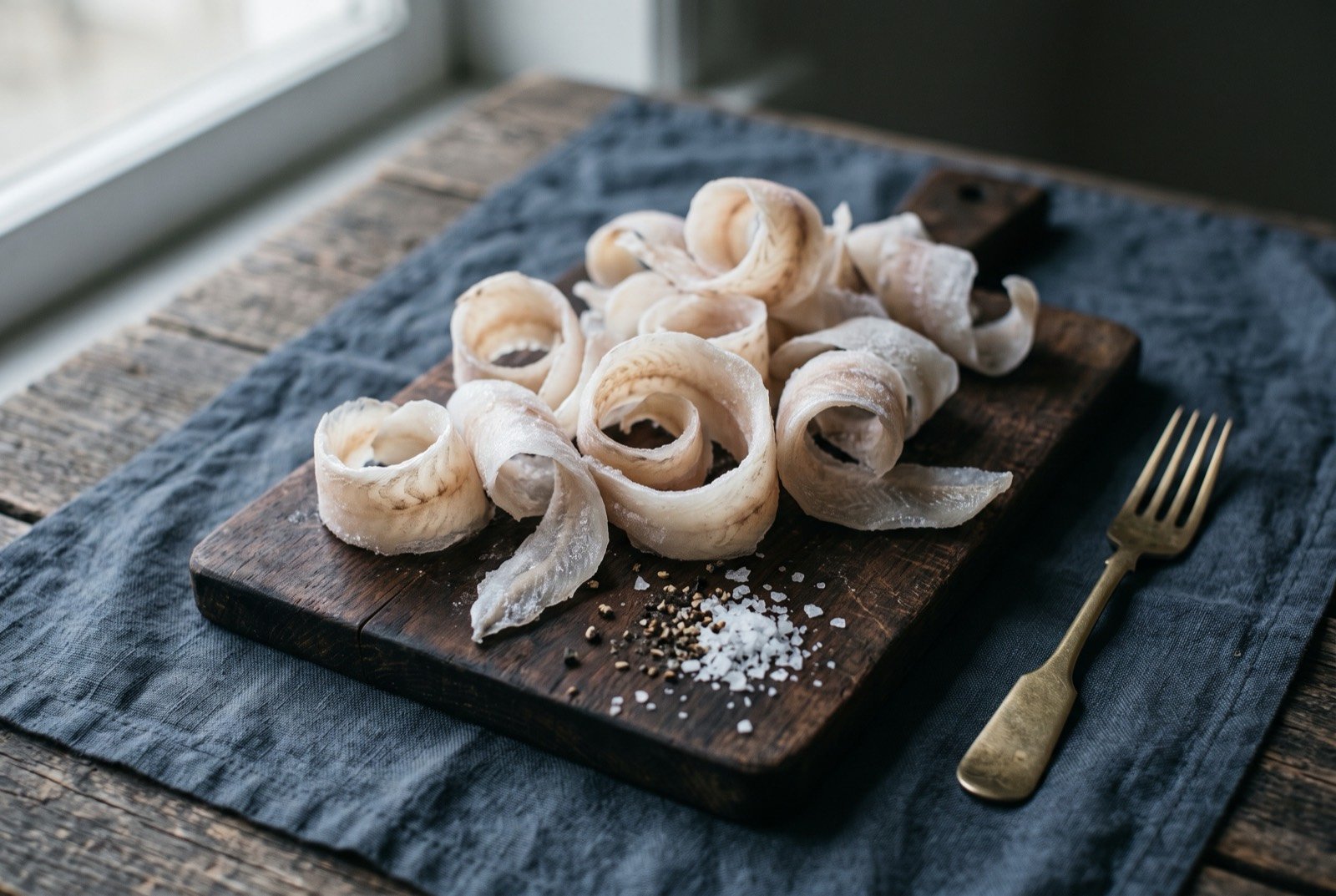
An illustration of the dish, not a photograph of it cooked.
- Time
- Not statedNo source states a time and the atlas has too few comparable dishes to estimate one.
- Reviewed
- Not yet reviewed from inside the tradition
- Cooked
- Not yet cooked and reported
Fish suitable for stroganina must be northern and oily; muksun, nelma and chir, all whitefish, are the classic choices, and the Evenki prepare the same technique with reindeer meat.
As tradition built it
Freeze the fish at least 2 to 3 days in advance; shave and serve immediately.
Ingredients
- 1 whole fish northern oily whitefish (muksun, nelma or chir)
- to taste coarse salt
- to taste cracked black pepper, to serve
Method
- Freeze the fish solid, -18 to -20°C, held for at least 2 to 3 days for a full-depth freeze.
- Cut off the head for a stable base, wrap the tail in cloth for grip, remove the fins, and peel the skin off in one piece.
- Stand the fish on its cut nose end and shave it into thin curls with a very sharp knife.
- Work and serve quickly, with coarse salt and cracked black pepper on the side, before it thaws. Never refreeze once thawed.
Notes
The Evenki prepare the same technique with reindeer meat, salted after slicing, alongside other raw preparations, fresh raw liver and bone marrow, eaten at the kill site as a matter of genuine food philosophy rather than necessity.
What a modern chef changes
A verified -20°C freeze and a proper meat slicer, with nothing added to the plate
Rung 5.
Method
- Hold the fish or venison in a dedicated deep freeze at a precise, verified -20°C, rather than a domestic freezer's fluctuating setting, for the most consistent depth-freeze and the cleanest possible shave.
- Use a proper meat slicer for the shaving itself, rather than a hand-held knife, for genuinely paper-thin, consistent curls beyond what even a very sharp knife reliably delivers.
- Serve with a small dish of coarse salt and cracked pepper exactly as tradition does, resisting the temptation to add a modern sauce or dip that would mask the point of the technique, which is the pure, cold, clean flavour of the raw protein itself.