The Mediterranean · Volume 02, Durum, Oil and the Arab-Norman Kitchen
Fenkata
Malta
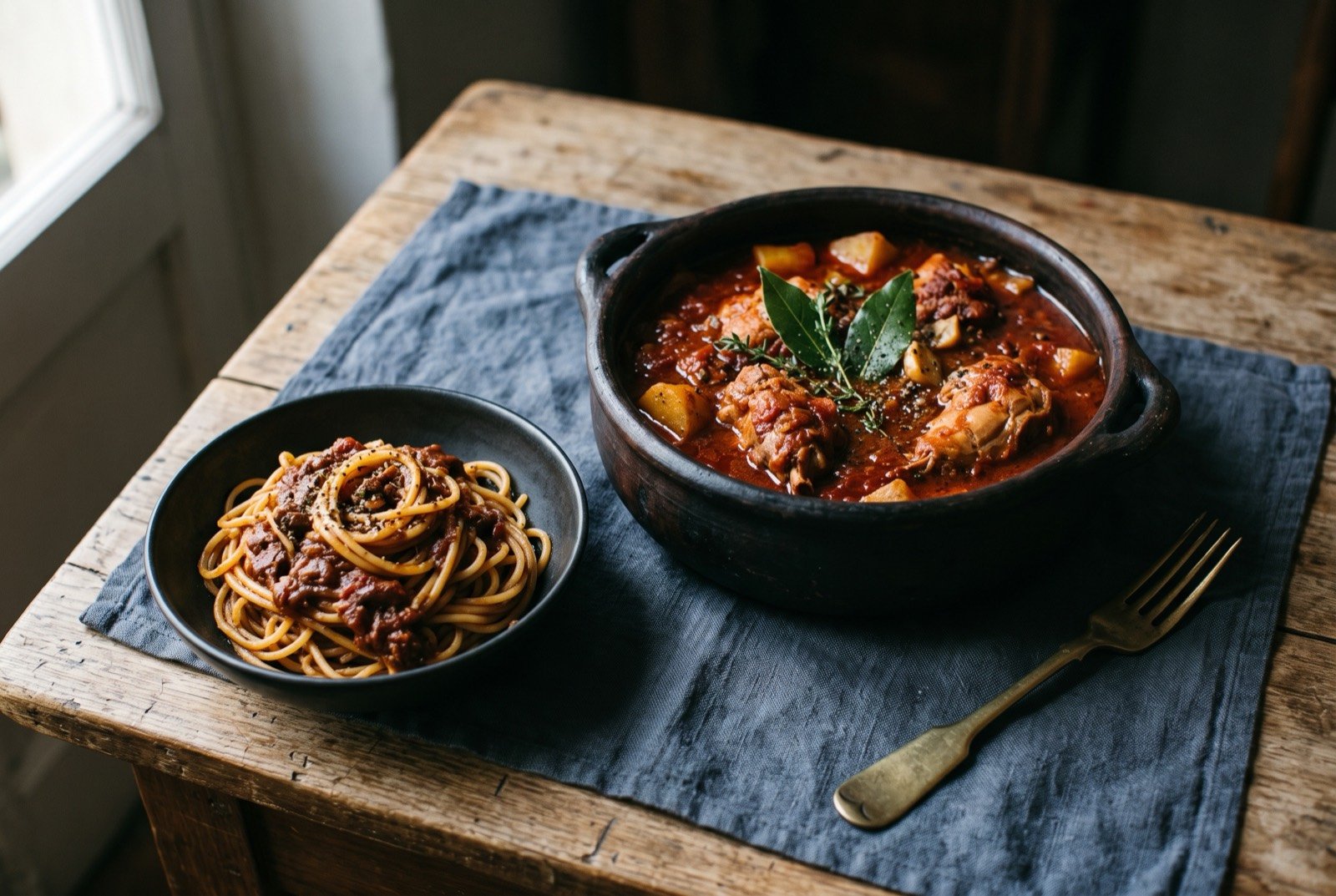
An illustration of the dish, not a photograph of it cooked.
- Time
- Hands on 3 hours · Waiting 8 hours
- Researched
- 16 sources cited
- Reviewed
- Not yet reviewed from inside the tradition
- Cooked
- Not yet cooked and reported
The core narrative, sourced to Carmel Cassar's 1994 monograph Fenkata: An Emblem of Maltese Peasant Resistance?: until the eighteenth century Malta's peasants relied heavily on wild rabbit, both as protein and as pest control; the Knights of St John imposed severe hunting restrictions, criminalising a food source poor Maltese depended on, leading to protest, civil disobedience and, per the University of Malta's own outreach summary of Cassar's work, a short-lived insurrection. When restrictions were later lifted, commonly dated to the late eighteenth century, rabbit consumption became widespread, and eating rabbit still carries the symbolism of resistance and survival. A second academic source, Elise Billiard, is explicit that this is also how the dish's "national dish" status gets constructed and promoted; both things are true at once, and this chapter holds them together rather than picking one.
As tradition built it
Serves 6, as the shared, multi-course meal it traditionally is. Overnight marinating, then 2 to 3 hours.
Ingredients
An outline, not yet a recipe: the tradition's method with its ingredients named but not weighed. Quantities are being added from sources inside the tradition, lead dishes first.
- 2 whole rabbits, jointed, with offal, liver, kidney, heart
- 500 ml red wine
- to taste, for the marinade garlic, bay leaf, herbs, spices
- tomato, for the stewed version
- spaghetti, to serve as a first course
Method
- Marinate the rabbit and offal separately overnight in the red wine with garlic, bay leaf, herbs and spices.
- Preparation genuinely splits into two schools here, frying or stewing, a real, unresolved regional and family division, not a case of one correct method. For the fried version, drain, pat dry and fry in batches until deeply coloured. For the stewed version, brown the rabbit, then simmer slowly in the marinade with tomato and vegetables 2 to 3 hours until tender.
- Cook the offal separately, briefly, since it wants far less time than the meat.
- Serve the cooking liquor, or a portion of it, tossed through spaghetti as a first course.
- Bring the rabbit to the table as the second course. Diners traditionally add peas, olive oil, house wine, kunserva or even Bovril to taste, a flexibility Billiard reads as allowing the dish to accommodate different tastes across the population.
Notes
Centrally associated with L-Imnarja, Malta's national summer festival, where historical hunting amnesties provided important nutrition for poorer communities; Billiard also notes the modern Maltese summer barbecue as essentially a modern version of the fried fenkata as it was once prepared by men during Imnarja.
What a modern chef changes
Both schools respected, and the marinade's wine reduced rather than discarded
Rung 6
Method
- Do not pick a side between frying and stewing. Cook half the rabbit each way for a genuinely composed plate that honours the real, documented division rather than flattening it into a single "correct" method.
- Reduce the marinade separately while the rabbit cooks, rather than discarding it, to a glossy sauce base for the stewed portion, concentrating the wine and aromatics that would otherwise be lost.
- Serve the offal as its own small course, briefly seared rather than long-cooked with the meat, since it needs a fraction of the time and turns grey and tough if left in with the main braise.