The Mediterranean · Volume 02, Durum, Oil and the Arab-Norman Kitchen
Ftira
Malta
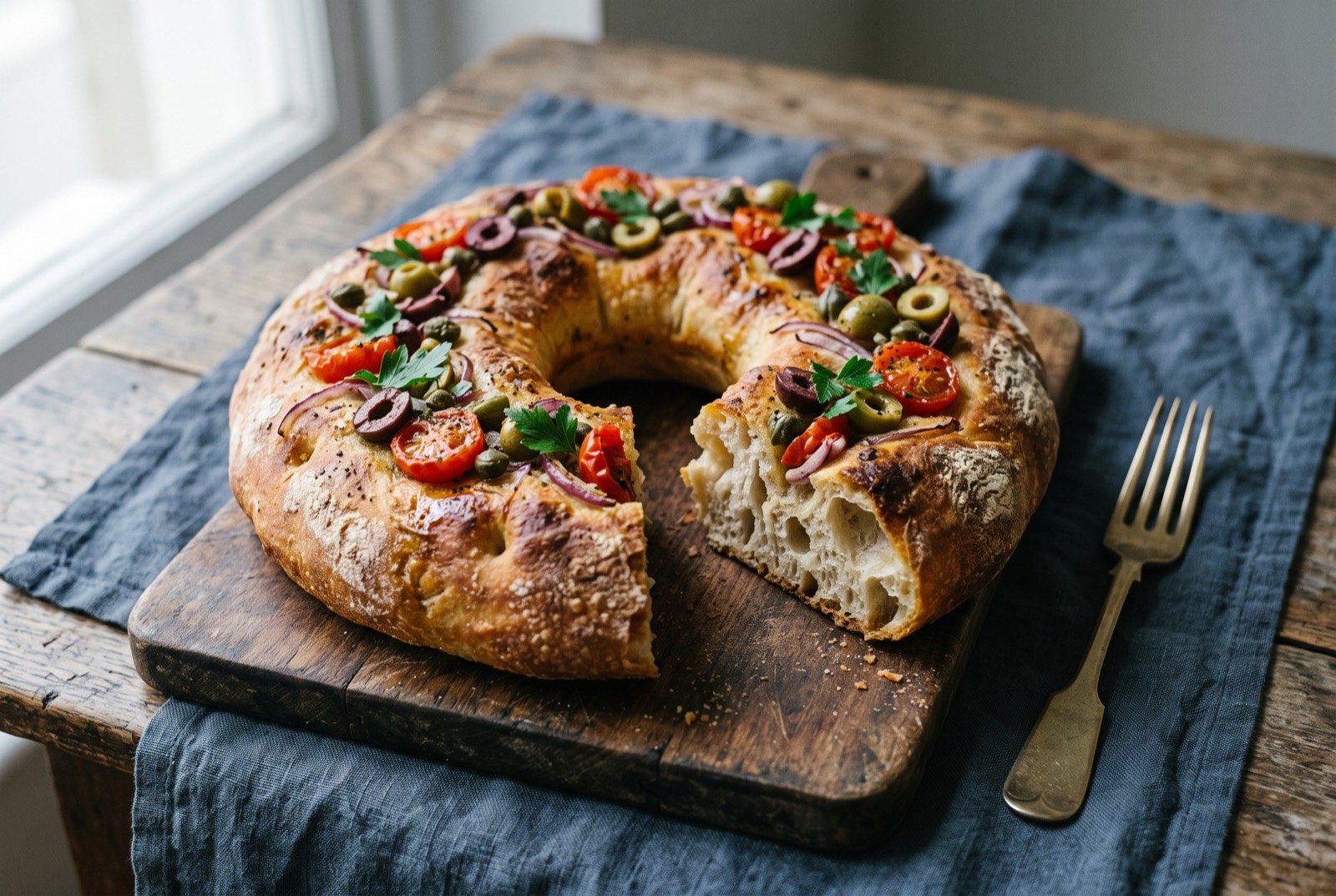
An illustration of the dish, not a photograph of it cooked.
- Time
- 4 hours
- Researched
- 16 sources cited
- Reviewed
- Not yet reviewed from inside the tradition
- Cooked
- Not yet cooked and reported
Maltese ftira was inscribed on UNESCO's Representative List of the Intangible Cultural Heritage of Humanity in December 2020, the first Maltese product on that list, following Malta's 2017 ratification of the UNESCO 2003 Convention. Maltese-language sources are explicit that the nomination was driven by popular and civil-society effort rather than solely a government initiative. A separate claim dating "the making of the Ftira Maltija" to the sixteenth century rests on a single lifestyle site's paraphrase of an unnamed local expert and is not asserted here as fact.
As tradition built it
Makes 2 large loaves. About 4 hours, mostly proving.
Ingredients
An outline, not yet a recipe: the tradition's method with its ingredients named but not weighed. Quantities are being added from sources inside the tradition, lead dishes first.
- 500 g strong white flour
- 10 g fresh yeast
- 300 ml water
- 10 g salt
- a drizzle olive oil
- tuna, tomato, potato, onion, capers, olives, to fill or top
Method
- Mix the flour, yeast and water to a soft dough, add the salt once it comes together.
- Knead 10 minutes until smooth and elastic.
- Prove until doubled, about 2 hours.
- Shape into a flat ring, pressing a hole through the centre and stretching it wide.
- Prove again, about 1 hour.
- Top or fill with tuna, tomato, sliced potato, onion, capers, olives and a thread of olive oil, or fold as a calzone-like parcel for the Gozo variant.
- Bake hot, around 220°C, 20 to 25 minutes, until deeply golden.
What a modern chef changes
The ring shape and the topping treated as separate problems
Rung 1
Method
- Give the dough a proper long, cool ferment overnight in the fridge rather than the shorter room-temperature prove, for a more developed flavour and a chewier crumb, the same fermentation discipline Rung 1 applies to pizza dough.
- Bake on a preheated stone or steel, which gives the base a proper lift and colour a plain baking tray does not, closer to the traditional communal bakery oven's retained heat.
- Treat the filling as a genuinely composed dish, not an afterthought scattered on top: dress the tuna, tomato and onion together with olive oil and seasoning before assembling, so the flavours meet properly rather than sitting as separate elements on the bread.