Mesoamerica · Volume 03, The Port, the Delta and Vanilla's Own Country
Huachinango a la veracruzana
Veracruz, Mexico
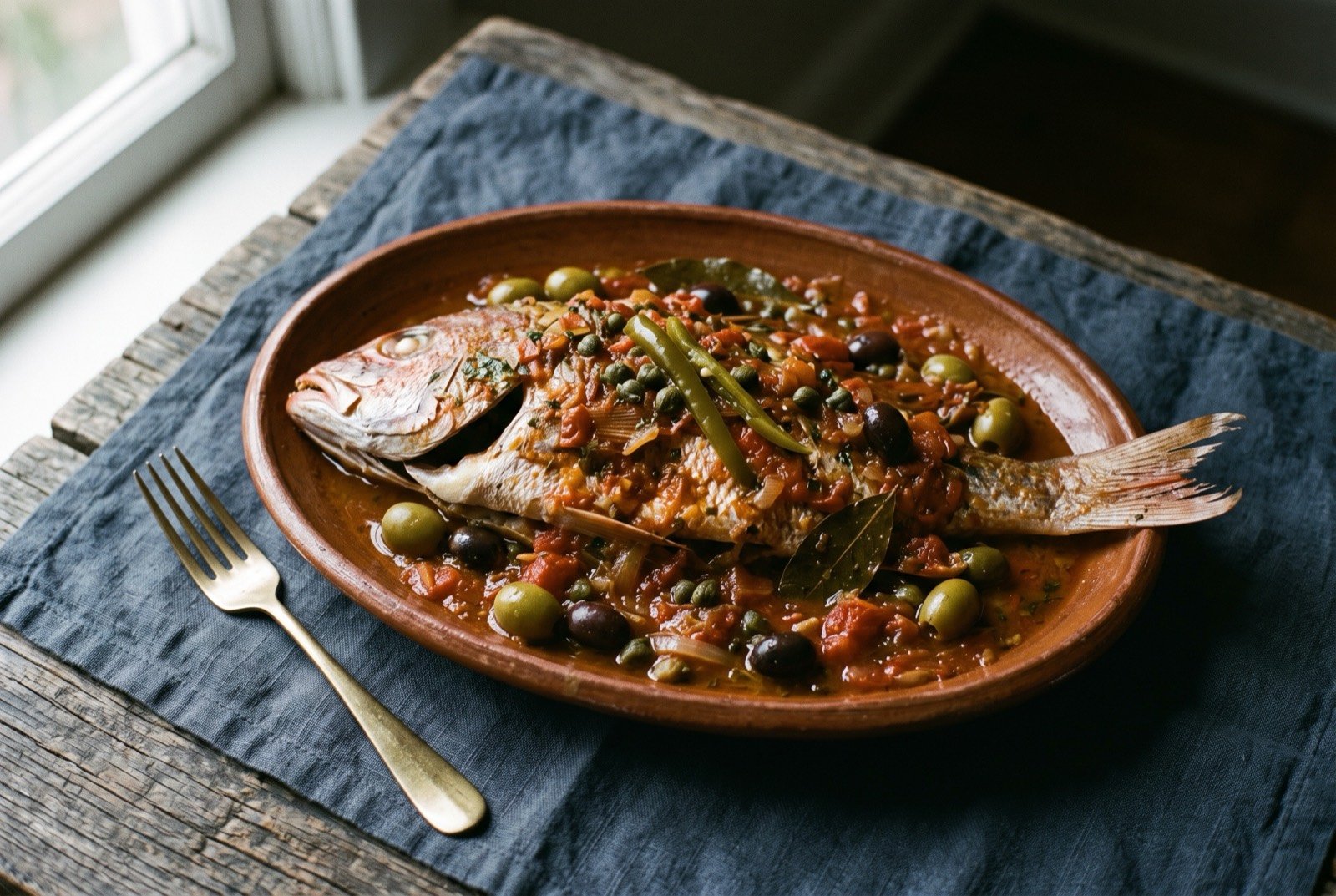
An illustration of the dish, not a photograph of it cooked.
- Time
- Not statedNo source states a time and the atlas has too few comparable dishes to estimate one.
- Reviewed
- Not yet reviewed from inside the tradition
- Cooked
- Not yet cooked and reported
As tradition built it
Huachinango a la veracruzana
Larousse Cocina Mexicana; serves six
Ingredients
Fish
- 1.5 to 2kg whole red snapper, cleaned
- 4 limes, juiced
- to taste salt
- to taste pepper
- roughly 2 cups salsa veracruzana (below)
Salsa veracruzana
- 1 large, finely chopped onion
- 15 cloves garlic
- 15, pitted green and black olives
- 10 capers
- 1.5kg, blended tomato, blended
- to taste hierbas de olor (bay, thyme and marjoram bundle)
- 5, poached and chopped tomato, chopped fresh
- to taste chiles en escabeche, pickled
Method
Salsa veracruzana
- Sauté the onion and garlic until lightly golden.
- Add the green and black olives and capers and sauté a further two minutes.
- Add the blended tomato and simmer on low heat for twenty five minutes.
- Add the hierbas de olor bundle, chopped fresh tomato and pickled chiles en escabeche and cook a further ten minutes, until thickened.
Fish
- Clean the whole red snapper.
- Rub with the juice of four limes and rest fifteen minutes.
- Season with salt and pepper.
- Coat with roughly two cups of the salsa veracruzana.
- Bake at 180°C for 15 to 20 minutes. Serves six.
Notes
Larousse Cocina Mexicana, the standard in-country recipe reference, notes this sauce is unusual among Mexican salsas for carrying no real heat at all, and that household versions add sugar, raisins, red pepper or carrot, a live, ordinary variation rather than a single fixed formula.
What a modern chef changes
Bled fish, a patient sofrito, an Egg-roasted whole snapper
Rung 01, 02
Method
- Buy the whole snapper from a fishmonger who can confirm it was bled and iced promptly, the sangrado principle applied at the point of purchase rather than the point of catch.
- Build the sofrito with the full twenty five minutes rather than rushing it.
- Pass the finished sauce through a chinois for a smoother coating than the traditional rustic texture gives, keeping a spoonful of the unstrained solids back to fold in at the end for body.
- Finish the fish on a Big Green Egg run indirect at 180°C with the ceramic deflector in, rather than a domestic oven, for a faint wood aromatic and a more even, gentler heat around a whole fish's uneven shape.