Mesoamerica · Volume 03, The Port, the Delta and Vanilla's Own Country
Mone de pescado
Tabasco, Mexico
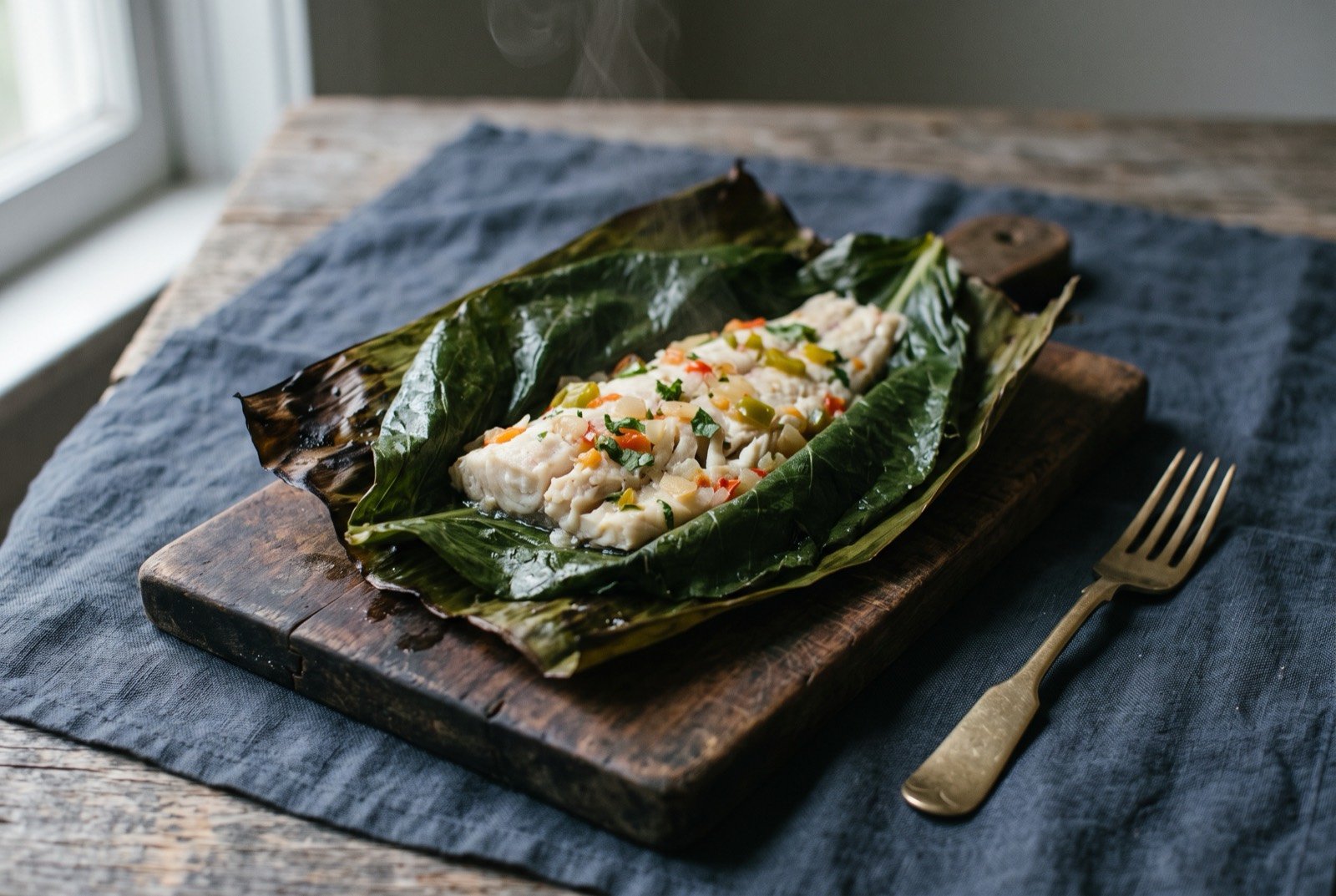
An illustration of the dish, not a photograph of it cooked.
- Time
- Not statedNo source states a time and the atlas has too few comparable dishes to estimate one.
- Reviewed
- Not yet reviewed from inside the tradition
- Cooked
- Not yet cooked and reported
As tradition built it
Mone de pescado
Tabasco
Ingredients
- 800g (robalo loin) fish (bobo, mojarra, robalo or huachinango, depending on availability)
- 3 leaves hoja santa (momo or mumu)
- 1 leaf, for wrapping banana leaf or hoja de tó
- 2 green plantains, sliced plantain
- 2 tomato
- 1 onion
- 1 sweet chile
- 2 cloves garlic
- 10g cilantro
Method
- Season the fish and layer with plantain, tomato, onion, sweet chile, garlic and cilantro, as in a documented version of this dish.
- Wrap first in hoja santa, then in banana leaf or hoja de tó, and tie.
- Traditionally roast directly over coals, though home versions are now often baked or steamed.
Notes
The word's own etymology, offered by some as deriving from monear, to tie, in the way sugarcane tips were once bundled against frost, is a plausible folk etymology stated as exactly that rather than as settled fact.
What a modern chef changes
Brined fish, Egg-sealed steam
Rung 05
Method
- Cure the fish briefly in a light salt-and-lime brine before wrapping, for firmer flesh through the parcel's longer cook.
- Cook the wrapped parcel on a Big Green Egg run indirect with the deflector in, genuinely closer to the enclosed, moisture-trapping mechanism of the traditional coal-roast than a domestic oven.
- Where hoja santa cannot be sourced, wrap in banana leaf alone and accept the loss of the inner leaf's own aniseed character honestly, rather than reaching for an aggressive substitute like fresh tarragon that would misrepresent the flavour rather than merely thin it.