Britain and Ireland · Volume 33, The Bakestone, the Broth and the Salt Marsh
Gower Salt Marsh Lamb, Roasted
The Gower
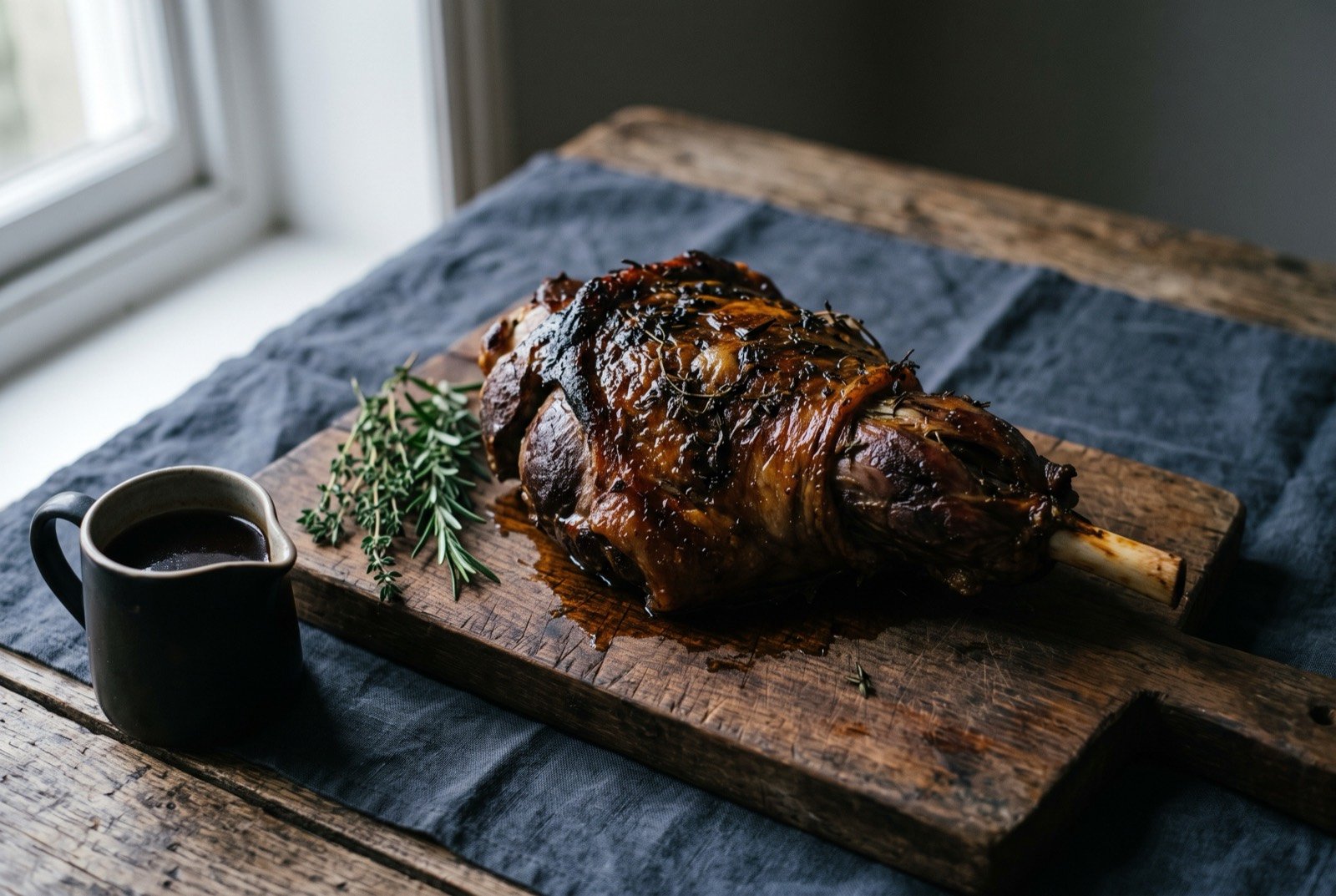
An illustration of the dish, not a photograph of it cooked.
- Time
- 1 hour 20
- Researched
- No outside sources linked
- Reviewed
- Not yet reviewed from inside the tradition
- Cooked
- Not yet cooked and reported
Weobley Castle Farm's own PDO product, the tidal grazing itself doing the flavouring work.
As tradition built it
PDO product. Shoulder roasts in about 1 hour 20 minutes, plus resting.
Ingredients
- 1 leg or shoulder of Gower Salt Marsh Lamb
- to taste salt
- to taste black pepper
- a scatter thyme or rosemary
Method
- Season the joint of Gower Salt Marsh Lamb simply with salt, black pepper and a scatter of thyme or rosemary.
- Roast slowly: cover a shoulder for the first hour at a moderate heat, then uncover and turn up the heat to colour the skin for the final twenty minutes.
- Rest for at least twenty minutes before carving, longer for a larger joint, to let the fat redistribute through the meat.
- Serve without further dressing; the marsh has already done the seasoning.
Notes
The animal must have spent at least half its life grazing salt marsh vegetation on the Gower's tidal flats, with no supplementary concentrate feed, per the PDO specification itself.
What a modern chef changes
Sous vide to render the connective tissue, seared over direct ember, with a marsh-plant purée
Rung 4
Method
- Cook the shoulder sous vide at 58°C, held for eight hours, to render its connective tissue gently without pushing past the point where the marsh-fed fat's own character is lost.
- Finish over the Big Green Egg's direct high heat for a genuine seared crust in a few minutes, rather than the longer oven-roast finish, minimising the time the rendered fat spends at a temperature that would otherwise cook it away entirely.
- Make a purée of the marsh's own samphire and sorrel, blitzed in a high-power blender and passed through a chinois.
- Serve the purée alongside, naming the animal's own feed directly on the plate rather than leaving it implicit in the meat alone.