Britain and Ireland · Volume 33, The Bakestone, the Broth and the Salt Marsh
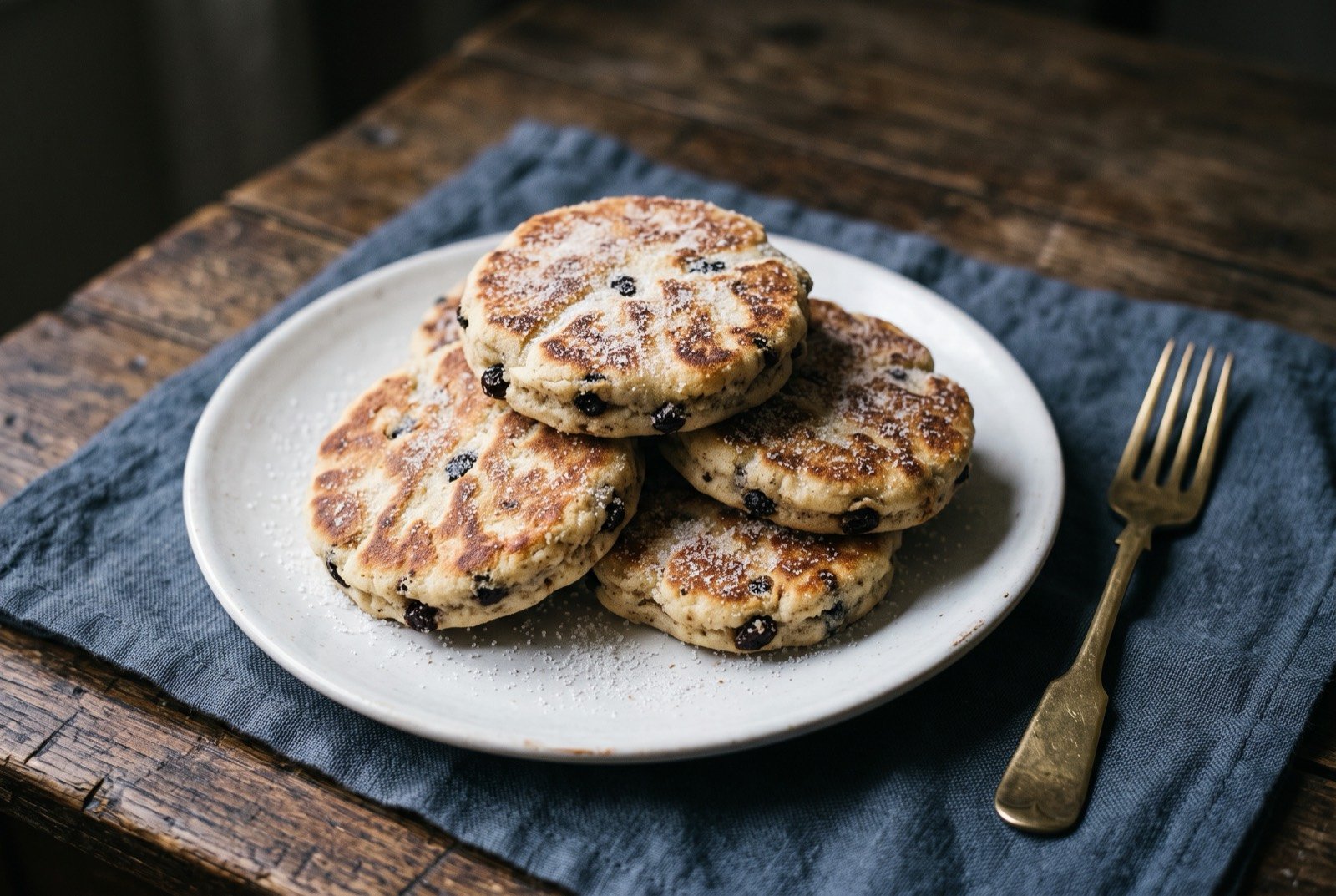
Welsh Cakes
Wales
Illustration
Pice ar y maen, bakestone-cooked, and one of the country's best-known exports, though this chapter could not source a historic ratio behind the modern version.
As tradition built it
Dated only to the second half of the nineteenth century; no archival ratio survives.
Ingredients
- 225g flour
- 125g lard, rubbed into the flour
- 75g sugar
- 75g dried currants
- 1/2 tsp cinnamon, mace or a touch of nutmeg
- 1 egg, to bind
- a splash milk
- a scatter caster sugar, for tossing
Method
- Rub the lard into the flour, then work in the sugar, dried currants and warming spice, a pinch of cinnamon, mace or nutmeg.
- Bind with egg and a splash of milk to a stiff, short dough.
- Roll and cut into small rounds.
- Cook directly on a hot, lightly greased bakestone, a few minutes a side, until golden and just cooked through.
- Toss in caster sugar while still warm.
Notes
Historically dated only to the second half of the nineteenth century, once a household pantry reliably held flour, sugar, eggs, lard and dried fruit together; every source giving an exact ratio for this dish is a modern print or recipe source rather than an archival one, not a preserved historic recipe.
What a modern chef changes
Browned fat, a vacuum-rested dough and an even bakestone heat
Rung 1
Method
- Brown the butter, or a portion of the lard, before it goes into the dough, for a depth the traditional version's plain fat does not reach.
- Rest the dough under vacuum for twenty minutes before rolling, relaxing the gluten more evenly than a bench rest and giving a more consistent bite once cooked.
- Cook on the Big Green Egg's plancha plate rather than a domestic griddle, holding a genuinely even, properly hot dry heat across the whole batch rather than the uneven heat a stovetop pan gives as it cools with each new cake added.