Britain and Ireland · Volume 32, The Mill, the Pie and the Steel Pan
Singin' Hinnies
Northumberland
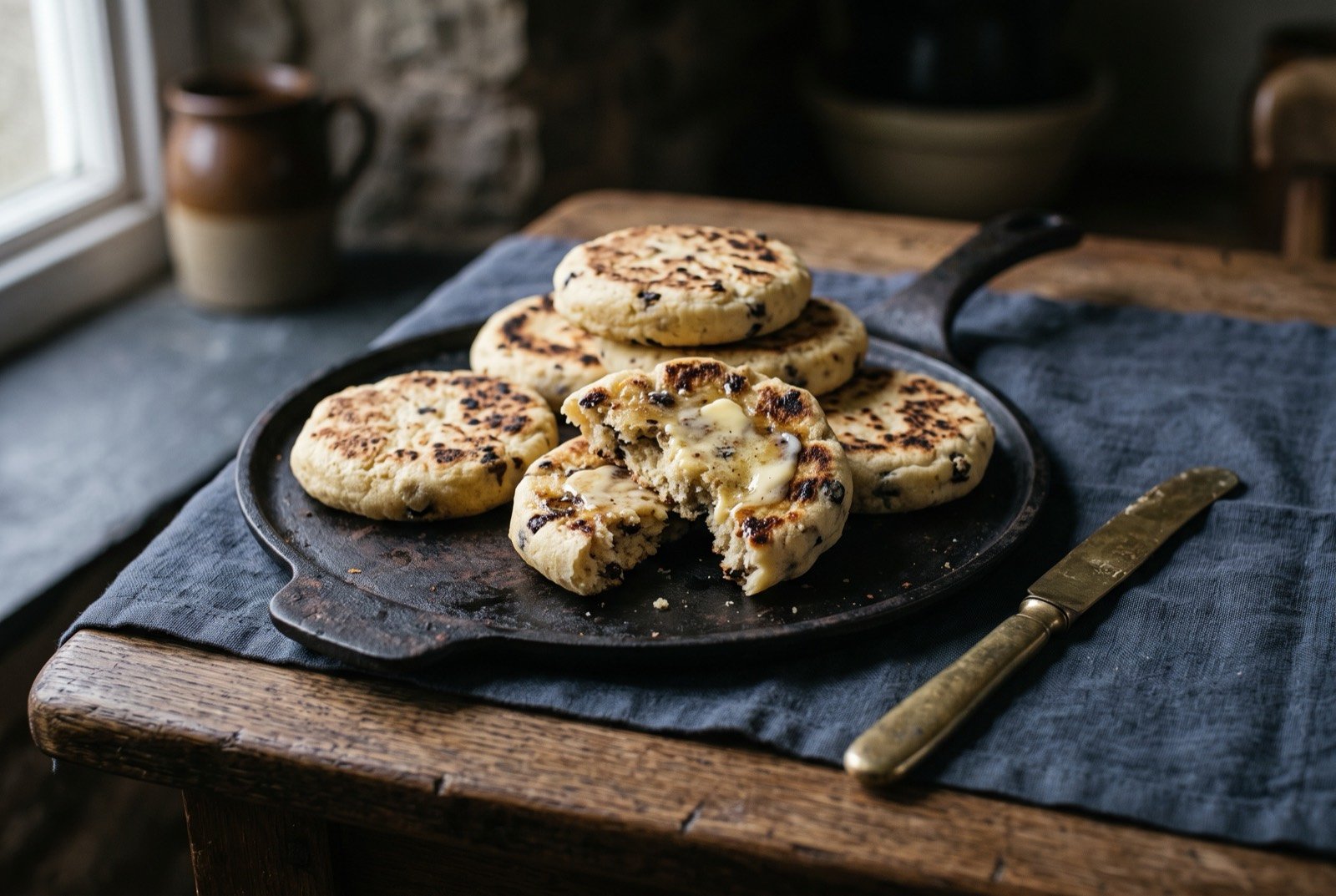
An illustration of the dish, not a photograph of it cooked.
- Time
- 12 minutes
- Researched
- No outside sources linked
- Reviewed
- Not yet reviewed from inside the tradition
- Cooked
- Not yet cooked and reported
Equal parts butter to lard is the correct traditional ratio for a proper "sing," the sizzle of fat against the hot iron the cakes are named for; poorer households using less fat would genuinely have heard less of it. Documented in print from 1844 (a German travel writer, J.G. Kohl, noting the cakes "must never be absent on a holiday from the table of a genuine pitman") and again in 1873 (Richard Fynes's own history of Northumberland and Durham mining communities), traditionally made for children's parties with small coins hidden inside, an affordable substitute birthday cake.
As tradition built it
Makes 8 to 10. About 12 minutes each, griddled in batches.
Ingredients
- 500g plain flour
- 1 tsp baking powder
- 3/4 tsp salt
- 125g lard, diced
- 125g butter, diced
- 180g dried mixed fruit
- 220 to 240ml milk
Method
- Rub the flour, baking powder and salt with the diced lard and butter to a fine breadcrumb texture.
- Stir in the dried mixed fruit, then bind with the milk, cutting it in with a knife rather than working it by hand, and knead briefly to a smooth dough.
- Roll to roughly 3/4cm thick and cut into 6 to 8cm rounds.
- Cook on a well-heated, dry griddle or bakestone for 5 to 6 minutes per side until golden, per rung four, then split open while warm, butter generously and eat immediately.
What a modern chef changes
A properly bakestone-hot Big Green Egg, and a whipped cultured butter to finish
Rung 4
Method
- Cook the dough on a Big Green Egg fitted with a flat plancha plate, run properly hot and dry per rung four, for a more even, more genuinely bakestone-like heat than a domestic hob griddle gives across a whole batch.
- Brown a portion of the butter before it goes into the dough, for a depth the traditional recipe's plain fat does not reach.
- Dehydrate a portion of the dried fruit further before it goes in, concentrating its natural sugars so the finished cake needs no added sweetness to taste properly rich.
- Finish the split, warm cakes with a whipped cultured butter rather than a plain one, the same modern move to an old pairing this atlas has used elsewhere for a tea-and-toast tradition, changing the butter rather than the cake itself.