Britain and Ireland · Volume 32, The Mill, the Pie and the Steel Pan
Cumberland Sausage
Cumberland
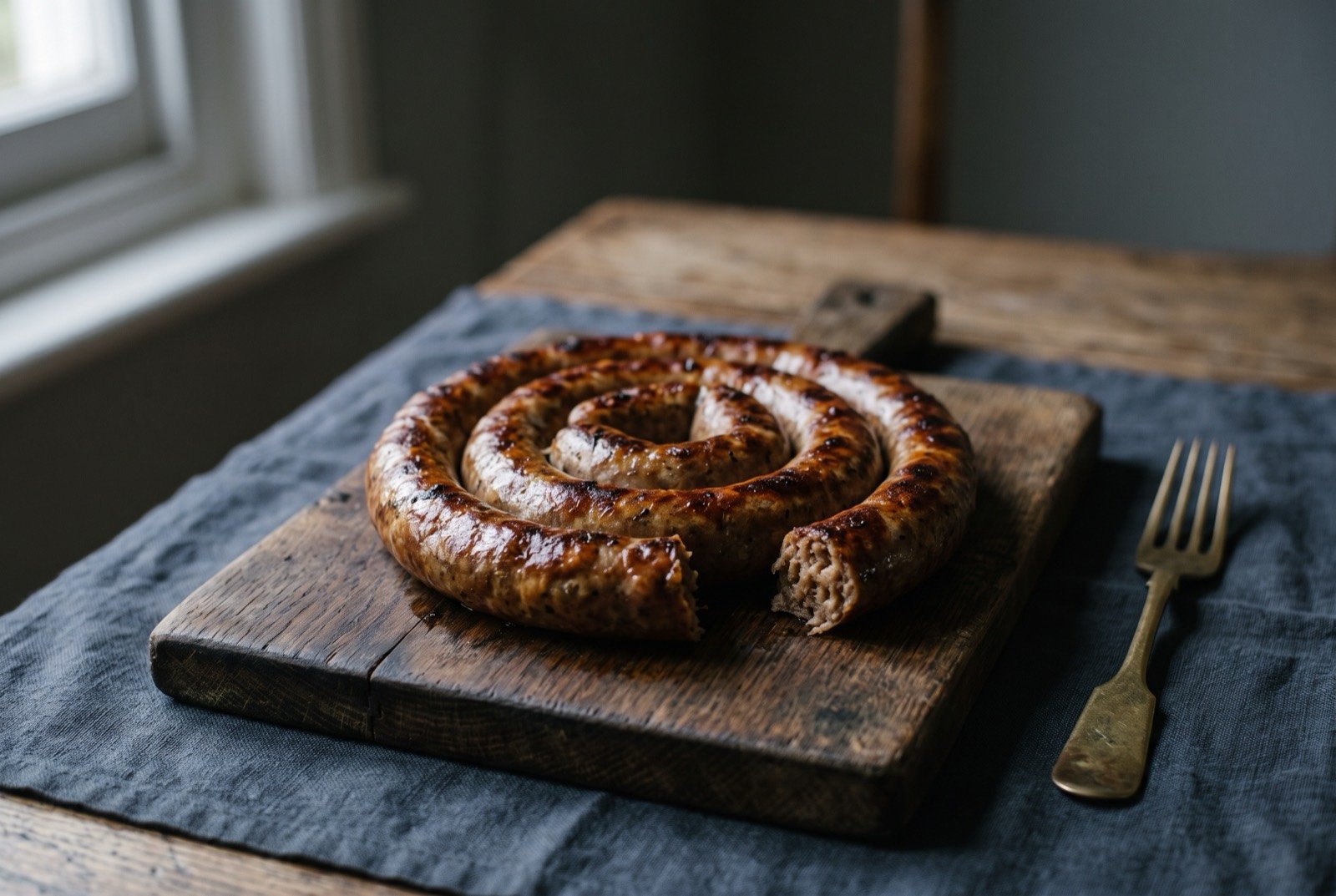
An illustration of the dish, not a photograph of it cooked.
- Time
- Not statedNo source states a time and the atlas has too few comparable dishes to estimate one.
- Researched
- No outside sources linked
- Reviewed
- Not yet reviewed from inside the tradition
- Cooked
- Not yet cooked and reported
This differs materially from the legally protected version: the Traditional Cumberland Sausage Protected Geographical Indication, granted in 2011, sets a lower floor of 80% meat, a different named herb balance (thyme, mace and cayenne alongside pepper, salt and sage, rather than the traditional recipe's marjoram-led blend), and a total seasoning cap of 4.5% with rusk permitted up to 8%. Treat the PGI specification as a legal minimum standard protecting the name, not as the tradition itself codified; they are honestly not the same thing, and this chapter follows the higher-meat traditional recipe rather than the PGI floor.
As tradition built it
Makes one 50cm coiled sausage. Made, not yet cooked; grill, fry or bake to finish.
Ingredients
An outline, not yet a recipe: the tradition's method with its ingredients named but not weighed. Quantities are being added from sources inside the tradition, lead dishes first.
- boneless pork cuts and pork fat only, up to 98% of the total, no rusk or filler
- black pepper, white pepper, nutmeg, marjoram and sage
- 1 natural pig intestine casing, traditionally up to 50cm
Method
- Chop the meat rather than mincing it finely, for the distinctly coarse, chunky texture that separates a real Cumberland sausage from a smooth, emulsified one, and season generously with the black pepper, white pepper, nutmeg, marjoram and sage, since the very high meat content can otherwise taste flat.
- Fill into the casing, traditionally up to 50cm, and coil it into a flat spiral rather than twisting it into individual links.
Notes
The genuinely traditional recipe, documented by the Slow Food Foundation's Ark of Taste as now maintained by only one producer, runs to as much as 98% meat content: boneless pork cuts and pork fat only, no rusk or filler, seasoned with black pepper, white pepper, nutmeg, marjoram and sage, filled exclusively into natural pig intestine casing.
What a modern chef changes
A precise, even poach, finished for genuine colour rather than a cure
Rung 5
Method
- Poach the coiled sausage sous vide at a gentle 62°C until just set through, holding the very high meat content at a precise, even temperature rather than risking it drying out under a domestic grill's direct heat, then finish briefly on a Big Green Egg's direct fire for genuine colour and a crisped casing, per rung five's own logic: fresh, uncured meat browns rather than turning pink, and that Maillard colour, not a cure, is what should be read as doneness here.
- Toast and grind the marjoram, sage, nutmeg and pepper together fresh in a dedicated spice grinder immediately before mixing, rather than using pre-ground spice, for a genuinely sharper aromatic profile than the traditional recipe's own pantry would usually have allowed.
- Use natural casing exclusively, as tradition demands, resisting any collagen substitute, since the natural casing's own slight variation in texture and snap is part of what the 98%-meat version is actually for.