Mesoamerica · Volume 04, Cattle, Wheat and the Border World
Discada norteña
Comarca Lagunera, Coahuila/Durango border (adopted regional staple in Chihuahua and Sonora)
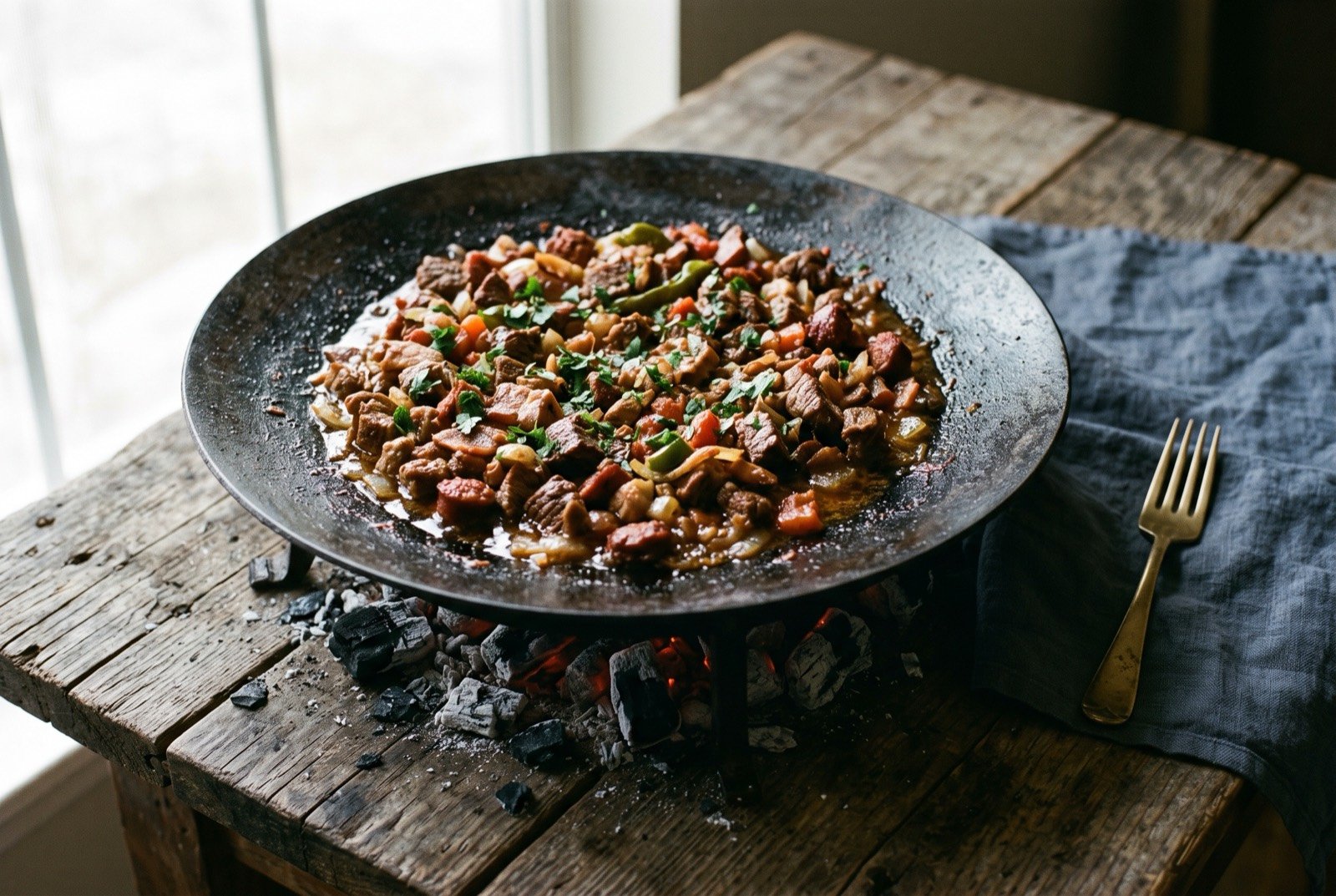
An illustration of the dish, not a photograph of it cooked.
- Time
- Not statedNo source states a time and the atlas has too few comparable dishes to estimate one.
- Reviewed
- Not yet reviewed from inside the tradition
- Cooked
- Not yet cooked and reported
As tradition built it
Discada norteña
Comarca Lagunera (Coahuila/Durango), adopted in Chihuahua and Sonora
Ingredients
An outline, not yet a recipe: the tradition's method with its ingredients named but not weighed. Quantities are being added from sources inside the tradition, lead dishes first.
- 2kg beef pulp
- 1kg pork leg
- 500g smoked bacon
- 500g ham
- 500g, sausage and/or chorizo sausage or chorizo
- 3 onion
- 6 tomato
- 3 cloves garlic
- 1 bunch, chopped cilantro
- to taste black pepper
- to taste thyme
- to taste oregano
- to taste cumin
- up to 350ml (1 can), optional beer, a splash, sometimes
Method
- Cook the beef pulp, pork leg, smoked bacon, ham, sausage or chorizo together with onion, tomato, garlic, cilantro, black pepper, thyme, oregano and cumin, sometimes a splash of beer, all together on the disc over mesquite fire.
Notes
This chapter's research places the dish's origin outside Sonora and Chihuahua: the Comarca Lagunera, the Coahuila and Durango border region, with current Mexican coverage debating Coahuila against Durango, not either of this volume's own states. Chihuahua's own tourism material lists it as an adopted regional staple, which is the honest framing kept here.
What a modern chef changes
A disc set into the fire ring, fat rendered in order
Method
- Set a cast-iron or carbon-steel disc directly on the Big Green Egg's fire ring over mesquite lump charcoal, the closest home reproduction of the original plough-disc rig, the curved surface holding fat and juices centrally while searing the meat at the edges.
- Render the bacon and chorizo first to build a proper fat base before the other meats go in, rather than adding everything at once as some modern versions do, so the dish's fat genuinely comes from the meats cooking down together.