Britain and Ireland · Volume 33, The Bakestone, the Broth and the Salt Marsh
Bara Ceirch
North Wales (Bala and Meirionnydd)
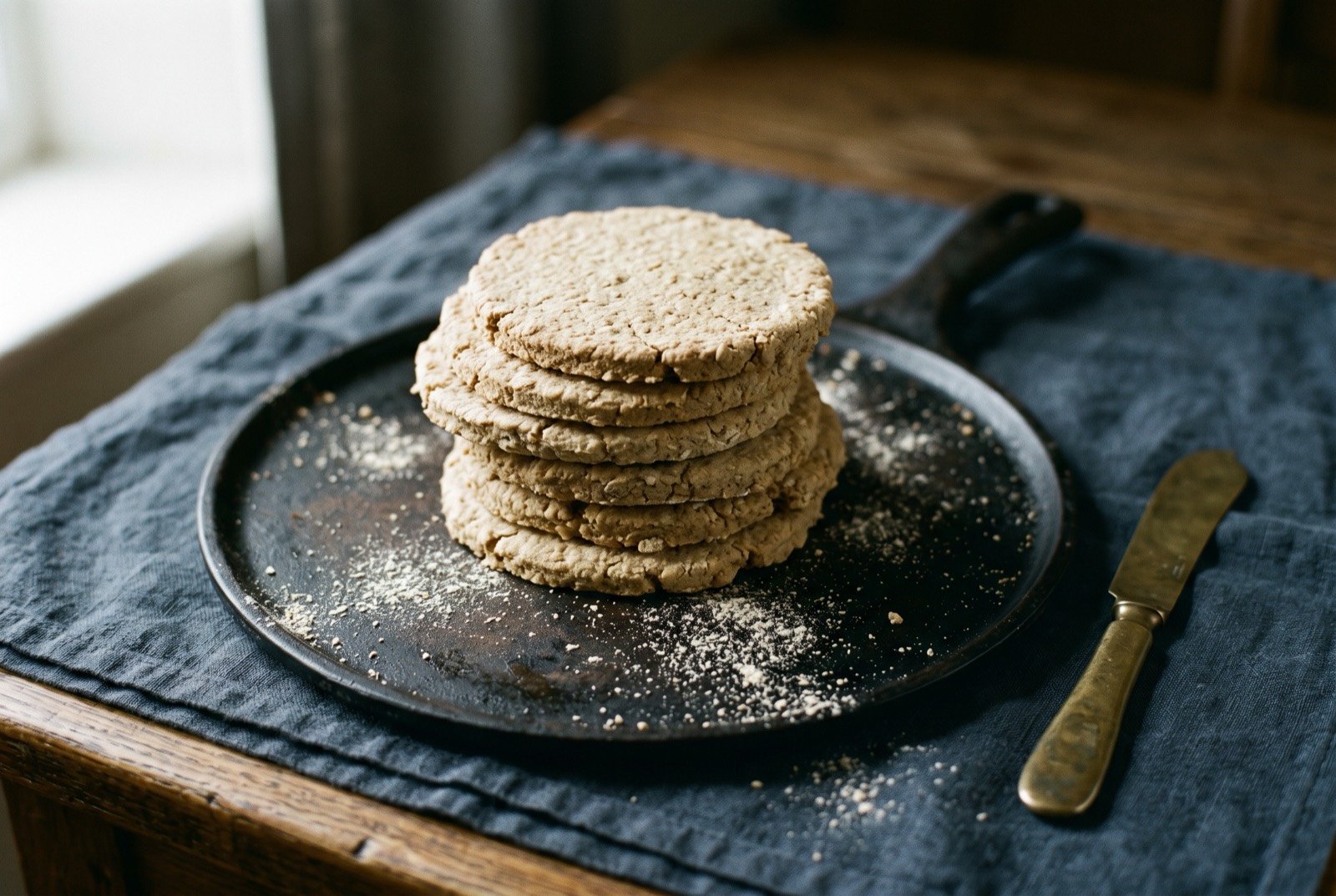
An illustration of the dish, not a photograph of it cooked.
- Time
- Not statedNo source states a time and the atlas has too few comparable dishes to estimate one.
- Researched
- No outside sources linked
- Reviewed
- Not yet reviewed from inside the tradition
- Cooked
- Not yet cooked and reported
North Wales oatcakes, in two genuinely different regional methods: fat-enriched from Bala, lean from Meirionnydd.
As tradition built it
Bala (fat-enriched) and Meirionnydd (lean) methods.
Ingredients
Bala method
- 1/2 tsp melted pork fat
- 1 cup lukewarm water
- roughly 3 handfuls oatmeal flour
Meirionnydd method
- 1 cup water
- roughly 3 handfuls oatmeal flour
Method
- Bala method: dissolve half a teaspoon of melted pork fat in a cup of lukewarm water, then work in roughly three handfuls of oatmeal flour by hand to a soft dough.
- Shape into rounds and flatten with a rolling pin to the size of a dinner plate, rotating the dough a quarter turn at a time and pressing the edges with the fingertips to stop them cracking as they thin.
- Griddle on a hot bakestone until dry and lightly coloured on both sides.
- The Meirionnydd version drops the fat entirely, water and oatmeal alone, a leaner, harder oatcake historically ground further into a coarse meal called siot and eaten soaked in buttermilk rather than fresh.
Notes
Thinness was the mark of a skilled baker in both traditions.
What a modern chef changes
Freshly milled oats on a Big Green Egg bakestone, finished two ways
Rung 1
Method
- Mill the oat groats to order in a dedicated spice grinder rather than buying pre-ground oatmeal, for a finer, fresher flour than either traditional method had access to.
- Cook the Bala dough on a Big Green Egg fitted with a flat plancha plate, run properly hot and dry, for a more even, more genuinely bakestone-like heat than a domestic hob griddle gives.
- Dehydrate a portion of the finished oatcakes at low heat until fully crisp and shelf-stable, closer to the Meirionnydd hard oatcake's original keeping purpose than the softer modern version.
- Serve both textures, fresh-griddled and dehydrator-crisp, alongside each other.